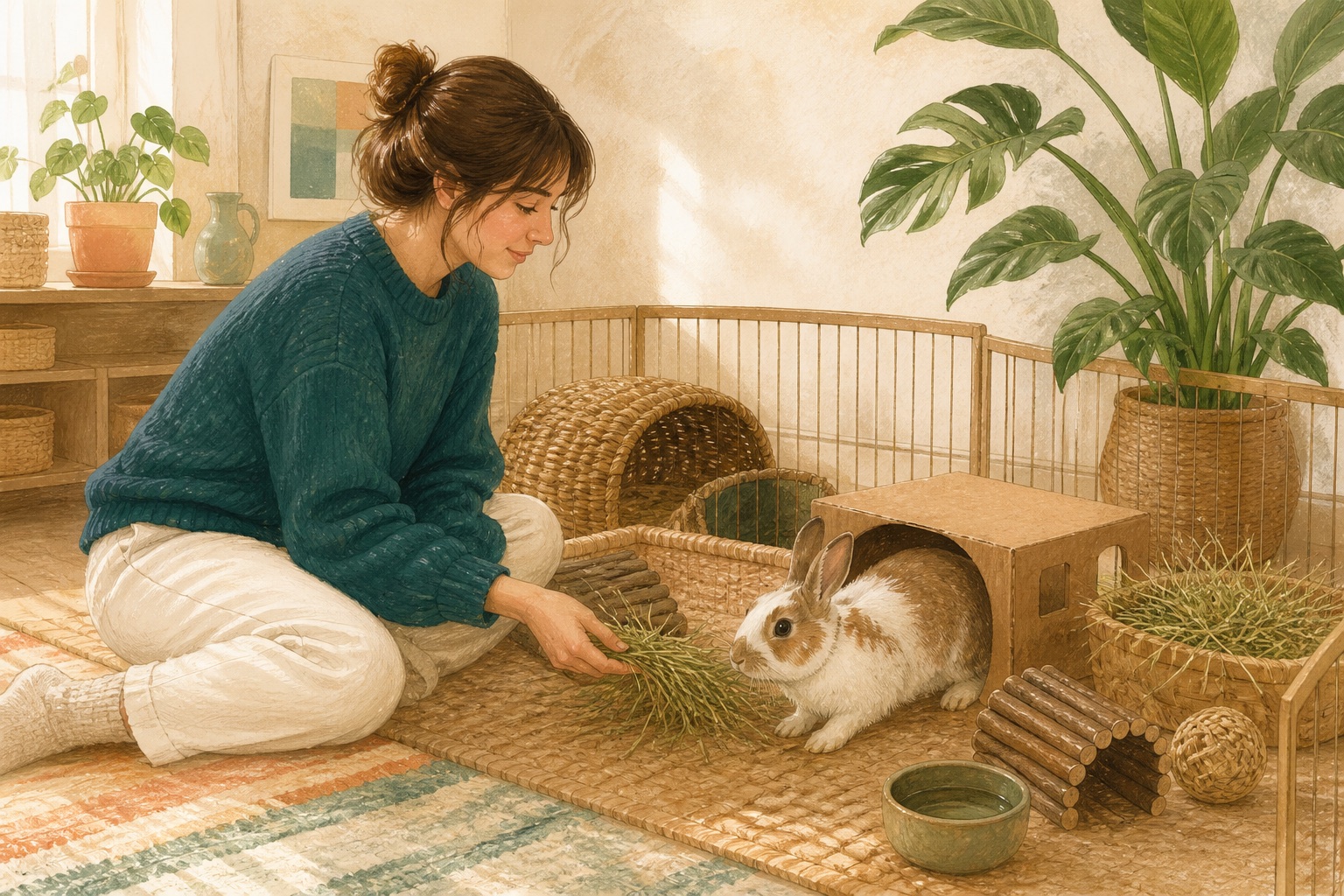
Not every companion shares a home in the same way. Their spaces, routines, and signals can be different — but care still begins with curiosity, respect, and a willingness to learn their usual rhythm.
Learn from their ordinary day
Notice when they rest, explore, eat, and seek space. The more familiar their ordinary rhythm becomes, the easier it is to make thoughtful choices around it.
Species-specific needs matter, so seek reliable professional guidance for the animal you share your life with.
Make their space theirs
A well-considered environment gives small companions room to move, hide, forage, and rest according to their needs. It is their home inside yours.
Choose changes that make the space more supportive, not just more decorative.
Let care stay individual
General ideas can be a starting point, but every animal has their own history and needs. Keep asking what helps this particular companion feel safe and engaged.
When health or welfare concerns arise, a qualified species-appropriate professional is the best next step.
The short answer
The most respectful starting point for any species is to learn its normal behaviour, environment and social needs from species-appropriate welfare and veterinary sources. General pet advice is not interchangeable between a dog, cat, rabbit, bird or other companion.
Care that starts with the real species and individual
- Use species-specific sources
Before changing diet, housing, companionship or enrichment, look for guidance written for that animal. A qualified exotics or species-appropriate veterinary professional is the right source for health decisions.
- Design for normal behaviour
A space should support the animal’s need to move, rest, hide, forage, explore and interact in species-appropriate ways. Start with welfare needs before decorative choices.
- Observe without forcing contact
Some companions communicate comfort through quiet, everyday behaviour rather than approaching people. Create a routine for care and observation that does not require handling or interaction every time.
- Plan for change with an expert
Diet, enclosure, social arrangement and health decisions can have species-specific consequences. Ask an appropriate professional before making a large change based on a general online article.
For rabbits in particular
Rabbit welfare guidance emphasises a safe, spacious environment that allows free movement, exploration and a sense of security. A small enclosure is not a substitute for meeting behavioural needs; use current rabbit-specific welfare guidance and veterinary advice for your setup.
Further reading
This article is general guidance, reviewed against the following animal-welfare or veterinary source:
These articles offer general, everyday guidance. They do not replace advice from a qualified veterinary professional.