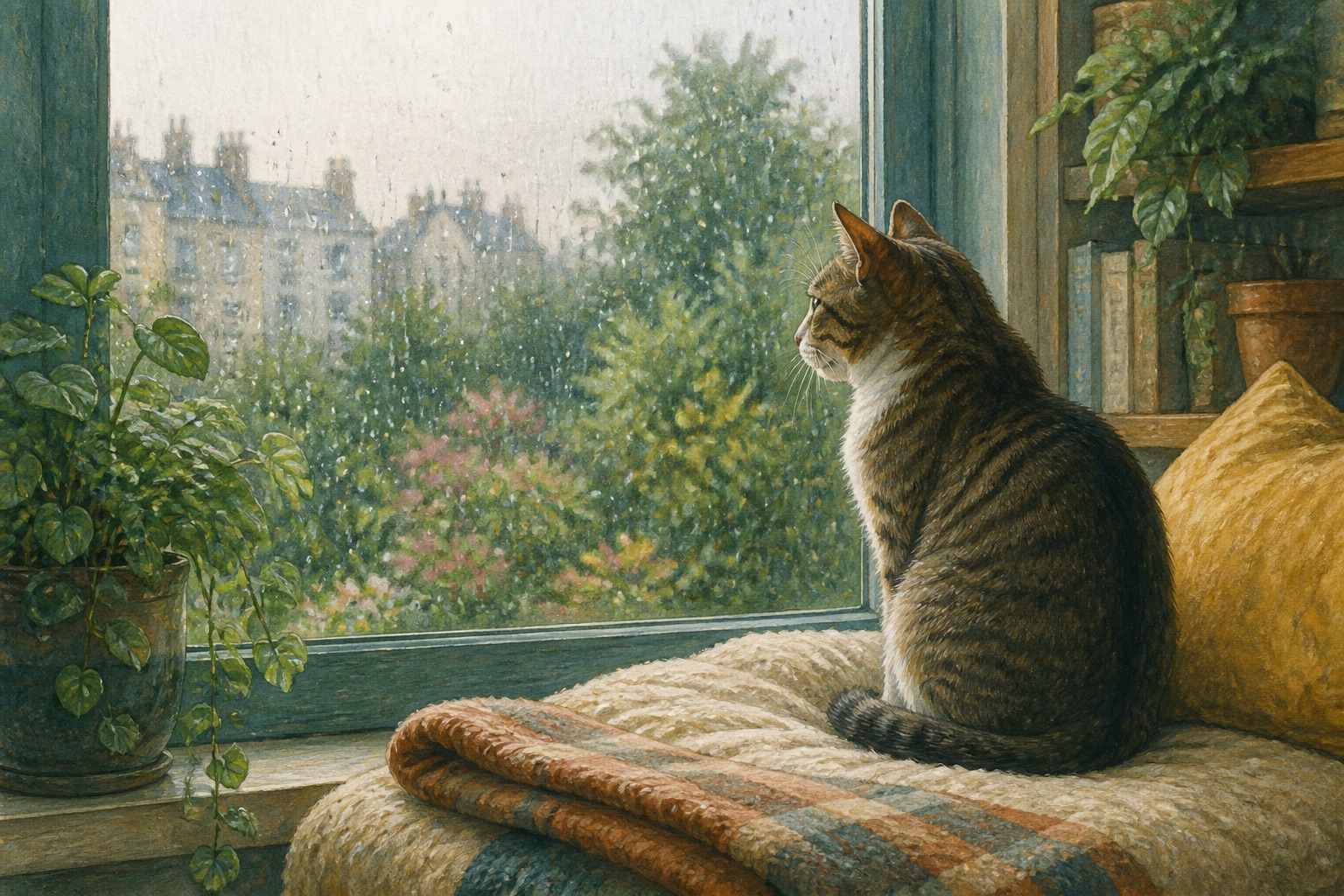
Enrichment does not have to mean buying more things. Often it means noticing which ordinary details invite your companion to explore, rest, or simply watch the world go by.
Make room for their senses
A safe window view, a cardboard box, a different walking route, or a familiar blanket in a new quiet spot can introduce interest without overwhelm.
Try one small change at a time so you can see how they respond.
Value rest too
A rich environment includes places where nothing is expected. Soft hiding spots, a raised perch, or a room with less traffic can be just as useful as an activity.
Curiosity and rest are both part of a day that feels safe.
Let repetition be reassuring
Something does not need to be new every day to be meaningful. Returning to a favourite perch or sniffing spot can be a kind of enrichment too.
Keep what they love and make changes gently around it.
The short answer
Enrichment is not a pile of products. It is a home that makes room for species-appropriate behaviour: resting, hiding, climbing, sniffing, exploring and interacting at a pace the individual can manage.
Four changes with a lot of everyday value
- Protect rest and hiding places
Offer a quiet, dry place away from traffic and do not turn every resting space into an interaction point. Choice of retreat is part of feeling secure.
- Use the vertical space when appropriate
Cats often benefit from safe high resting places and routes. Check stability and access first; height should add choice, not create a difficult or unsafe jump.
- Rotate, do not overwhelm
Put away part of a toy selection and reintroduce it later, or change one safe element of a familiar activity. Smaller changes are easier to evaluate than a complete reset.
- Keep essential resources separate
For cats, keep resting, eating, drinking and toileting areas comfortably distinct. This is not decoration; it helps the home stay usable when they need different things.
What to notice after a change
Look for voluntary use: does your companion approach, return, rest, explore or ignore the new option? Ignoring it is useful information too. Remove or adapt anything that appears to create fear, conflict or a safety risk.
Further reading
This article is general guidance, reviewed against the following animal-welfare or veterinary source:
These articles offer general, everyday guidance. They do not replace advice from a qualified veterinary professional.