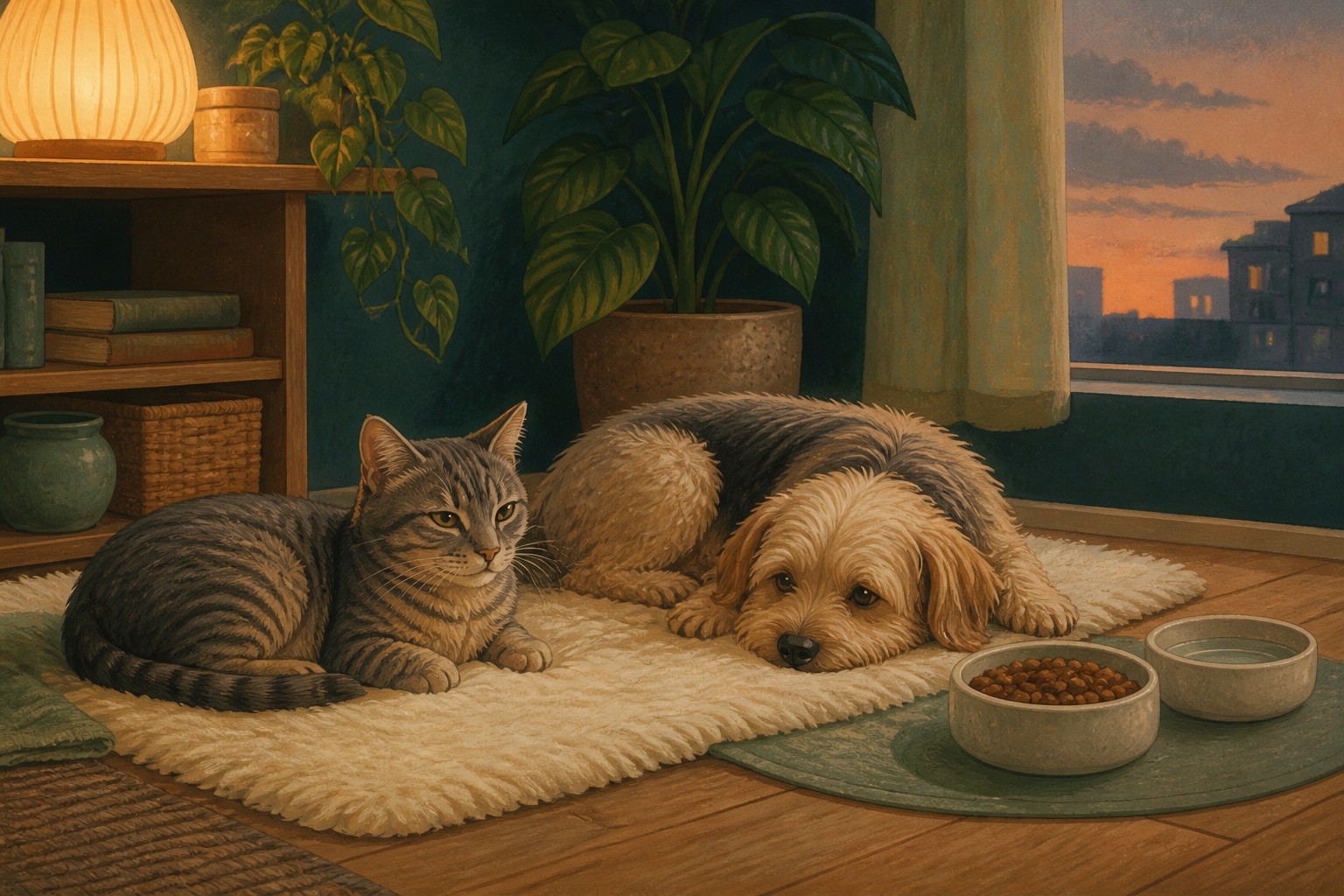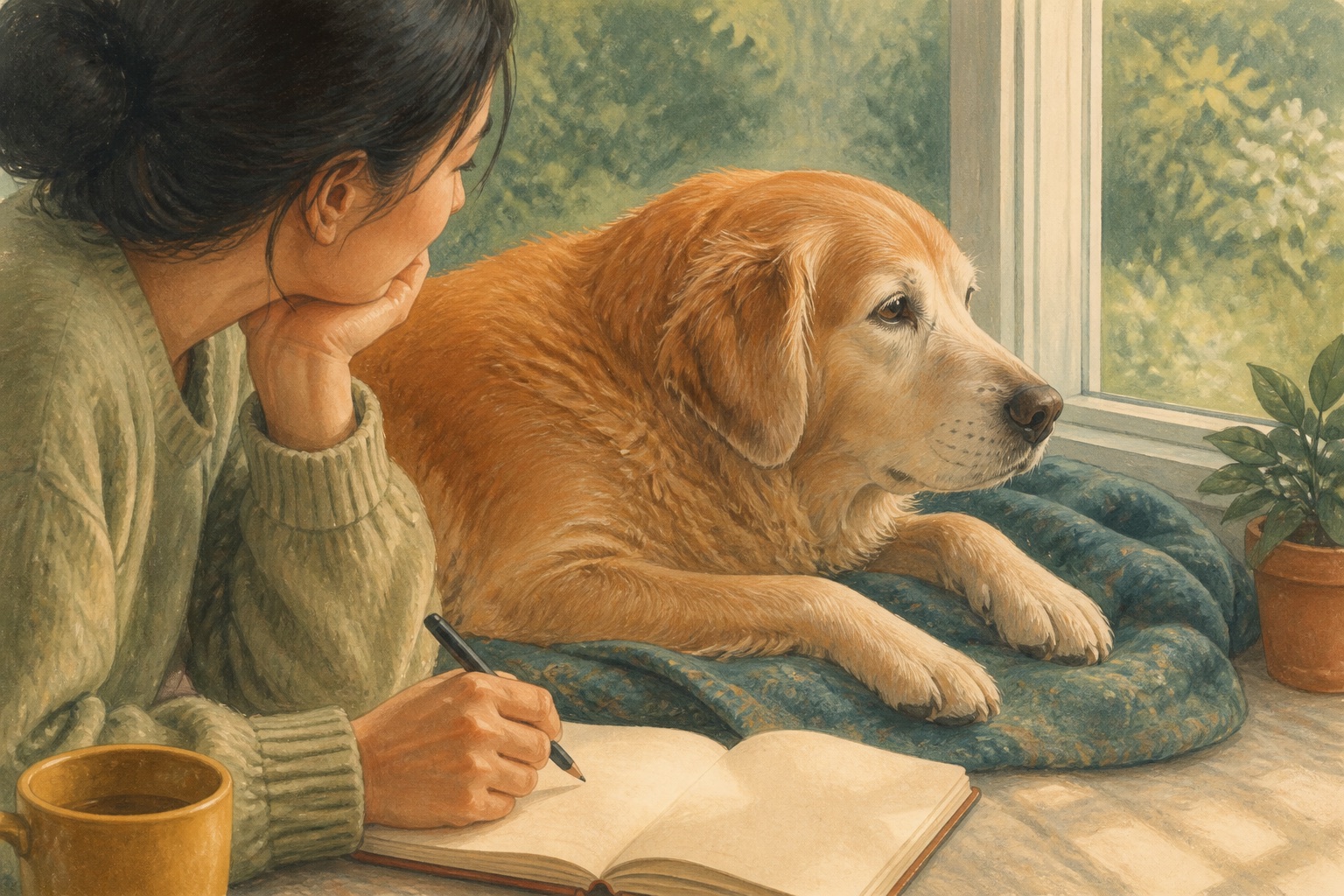
Living with an animal teaches you their usual rhythm: the places they choose, the way they greet you, their appetite, their energy. That quiet familiarity can be one of the most useful parts of care.
Begin with what is usual
A change only makes sense in context. A sleepy afternoon may be normal after visitors. A different appetite may follow a hot day. Before drawing a conclusion, ask what has been ordinary for them lately.
Small notes can make this easier. You do not need to document everything — a date, a short observation, and anything unusual around it can be enough.
Use observations as a bridge
A short record can help you describe a pattern clearly if you ever need to speak with a veterinary professional. It gives a conversation more shape than trying to remember a feeling from several weeks ago.
An observation is not a diagnosis, and a note should never replace professional advice. Its job is simply to help you be specific about what you have seen.
Keep care compassionate
Paying attention does not mean watching for danger at every turn. It means knowing your companion well enough to notice when something deserves a little more curiosity or support.
When you are unsure or concerned, a qualified veterinary professional is the right person to help assess it. Your observations can make that next step calmer and clearer.
The short answer
Observation is most useful when it captures a pattern and its context, not when it turns every ordinary variation into an alarm. A short, consistent record gives you better questions and can help a veterinary professional understand what you have actually seen.
A calm way to make a useful note
- Name the observable detail
Write what happened without guessing why: “left half of breakfast”, “paused on stairs” or “slept in a new spot”. This keeps the note factual and easier to share.
- Add the surrounding context
Include date, time, recent changes at home, activity, food or weather only when relevant. Context can show whether a detail is isolated or part of a repeatable pattern.
- Use photos and video carefully
A short, naturally captured clip can sometimes describe movement or behaviour more clearly than memory. Do not provoke, repeat or delay care to obtain it.
- Bring questions, not conclusions
When you need professional help, share the timeline and ask what information matters next. The role of your record is to support the conversation, not to diagnose.
When to move beyond observation
Contact a qualified veterinary professional promptly for a sudden, severe, persistent or worsening change, or whenever your instincts tell you your companion is not themselves. In an urgent situation, seek emergency veterinary help rather than waiting to collect more notes.
Further reading
This article is general guidance, reviewed against the following animal-welfare or veterinary source:
These articles offer general, everyday guidance. They do not replace advice from a qualified veterinary professional.