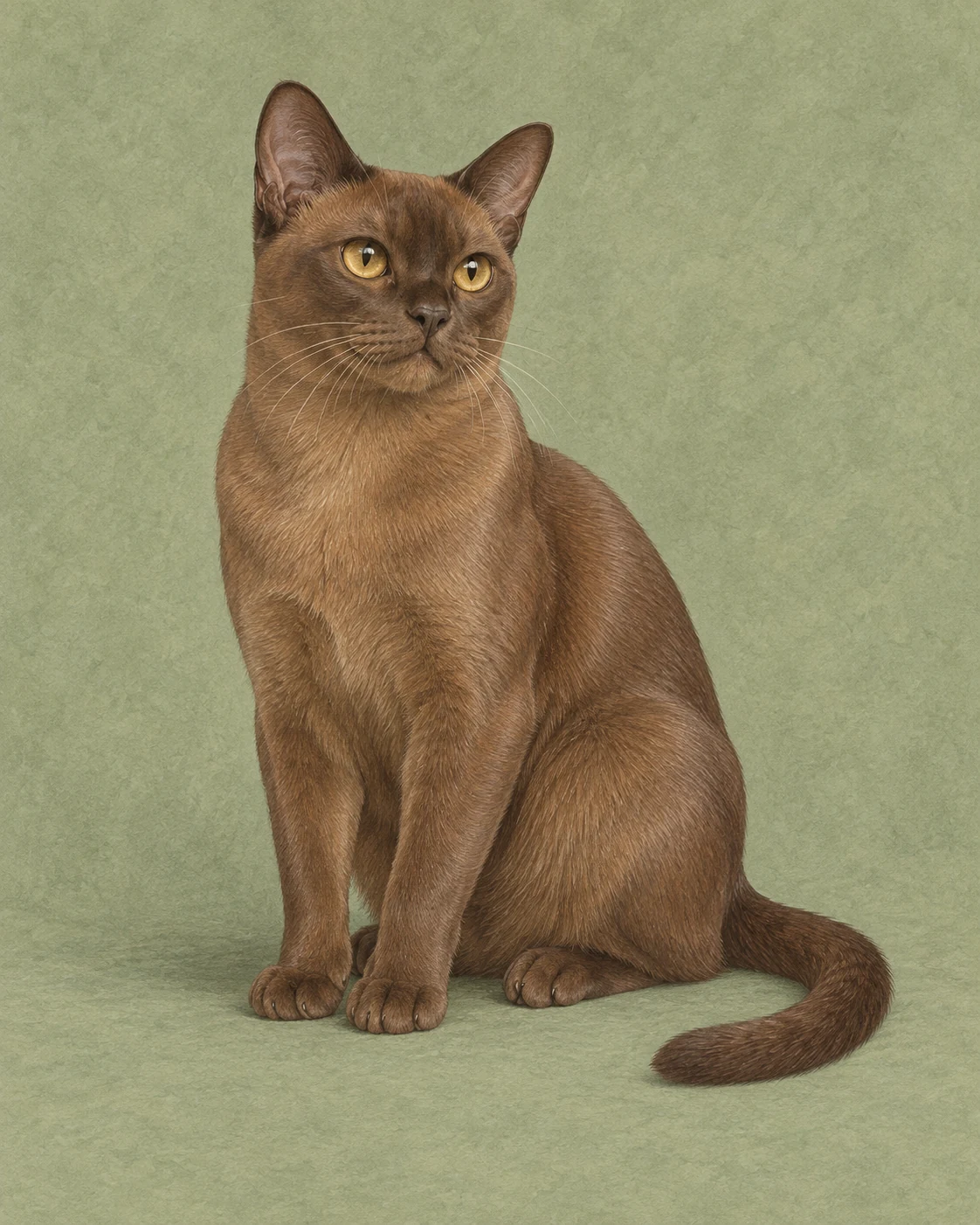
A practical breed overview. Adult ranges are broad references, not targets, and appearance or breed label cannot predict an individual cat’s health or temperament.
Adult weight (kg)
3.6–5.4
Typical lifespan (years)
15–20
Coat
Very short, fine and glossy coat
Origin
Myanmar; developed in the United States and Britain
A breed can help you prepare, but it is not a diagnosis or a care prescription. Ask your veterinarian to shape an individual plan.
Burmese
Breed-specific care focus
Use a soft grooming glove for the fine coat. Offer regular social play and puzzle toys, while preserving the option to withdraw. Keep treats within the daily food allowance and monitor body condition beneath the compact build.
Health context
Health context
Inherited hypokalemia occurs in some Burmese lines and can cause episodes of muscle weakness. Discuss family history and suitable testing with your vet; weakness or a drooping neck needs prompt assessment, not home potassium supplements.
Nuzzleway
A cat-centred daily rhythm
Food and water
Choose a complete food suited to life stage and health. Measure the daily amount with your veterinary team, divide it into a pattern that suits the cat, and keep fresh water available in a separate, accessible place. Do not infer calories or portions from breed weight ranges.
Litter and shared resources
Keep boxes clean, easy to reach and away from food and noisy traffic. A common starting point is one box per cat plus one extra, placed in separate locations where possible. Scoop at least daily; provide distinct resting, scratching, hiding and feeding areas in multi-cat homes.
Play and enrichment
Offer several short, choice-based play opportunities across the day: wand play, safe searching or food puzzles. Let the cat catch the toy, pause or leave. Add stable vertical space, hiding places and scratching surfaces; rotate toys and supervise strings or small parts.
Medication and handover
Record only medication prescribed for this cat: name, prescribed dose, route, interval, food instructions, dates, and who gave it and when. Check the record before repeating a dose. For a missed dose or reaction, contact the clinic; do not double a dose or change treatment yourself.
Sleep and quiet rest
Sleep and quiet rest
Cats rest in many short periods across day and night, and the pattern varies with age, health and the home. Provide a warm, quiet, accessible choice of resting places where the cat can retreat undisturbed. A sudden change in sleep, comfort or ability to settle deserves veterinary discussion.
Life stages: adapt the plan
Life stages: adapt the plan
Newborn and very young kitten
From birth, follow a veterinary or experienced rescue plan for warmth, nursing or safe feeding, elimination and individual weight checks. Weakness, feeling cold, difficulty breathing or inability to feed needs prompt veterinary help; an adult schedule must never delay care.
Kitten: birth to 1 year
Support steady growth with a complete kitten diet, frequent age-appropriate meals, safe play and regular veterinary preventive care. Follow the clinic’s vaccination, parasite and sterilization advice; activity and feeding needs change quickly as the kitten grows.
Young adult: 1–6 years
Build a stable rhythm around measured complete meals, daily play, clean litter and routine preventive visits. Adjust food and activity to body condition, indoor access, health and the cat’s response rather than breed assumptions.
Mature adult: 7–10 years
Keep preventive reviews and note changes in appetite, thirst, weight, grooming, movement or litter habits. Ask the veterinarian whether the check-up schedule or screening should change for this cat.
Senior: over 10 years
Make food, water, litter and favourite resting places easy to reach. Discuss check-up frequency with the veterinarian and record subtle changes in appetite, comfort, sleep, mobility or social behaviour; do not dismiss a new sign as age alone.
Very senior or frail at any age
Prioritise comfort, warmth, low-effort access to essentials and help with grooming or litter when needed. Review pain, night waking and quality of life with the veterinary team; do not apply a younger cat’s activity target.
When to contact a veterinarian
Seek emergency veterinary care for open-mouth or difficult breathing, collapse, seizure, major injury or sudden inability to use the back legs. Repeated straining with little or no urine may be a urinary blockage: seek emergency veterinary care immediately; do not wait overnight.
Contact a clinic promptly for not eating, repeated vomiting, marked behaviour change or persistent pain. Kittens, older cats and cats with known illness may need faster assessment.