You cannot confirm that your cat is sick at home from one sign alone. Notice changes from their usual breathing, movement, eating, drinking, grooming or litter-box habits and contact your vet when something changes or concerns you. Open-mouth breathing or repeated straining to pass urine with little or none produced needs immediate attention.
Cats · Cat health and care
How to tell if my cat is sick: signs and when to call a vet
Notice changes in your cat, recognise signs that need urgent veterinary attention and explain what happened without trying to diagnose it at home.
Educational guidance with AI assistance and veterinary source checking. No individual veterinary review.
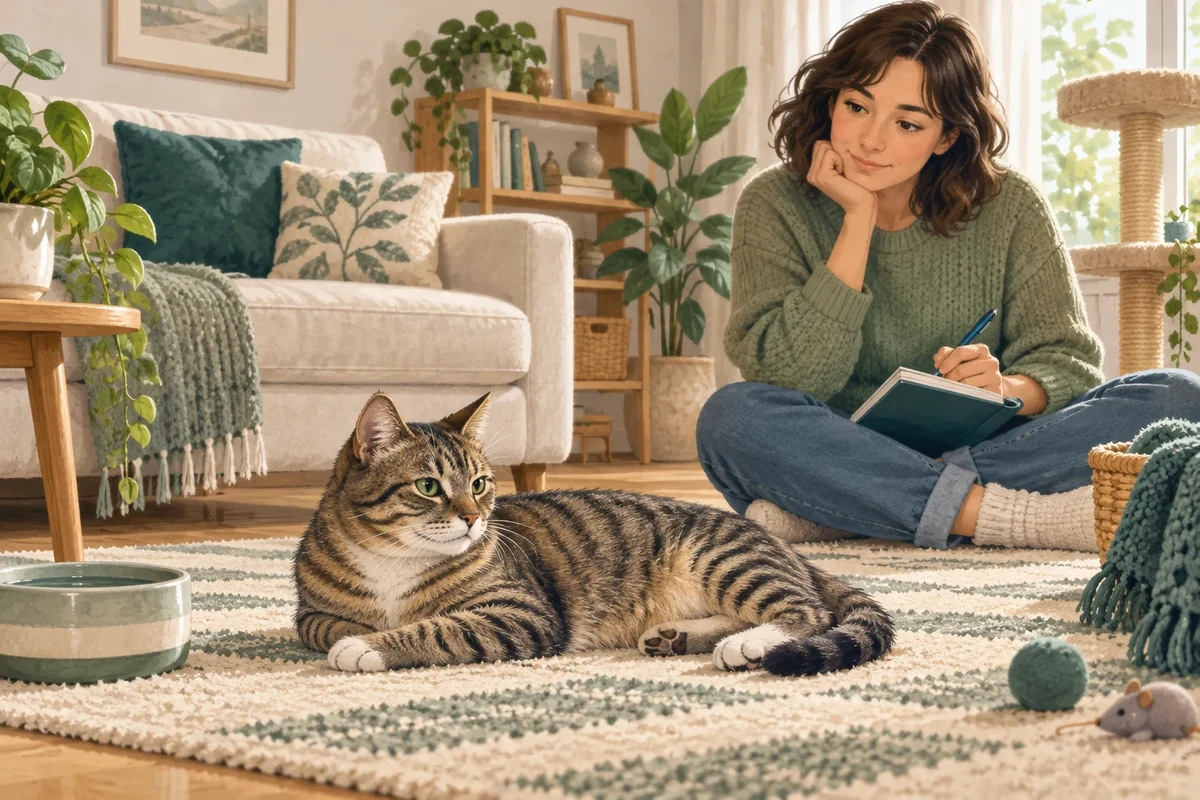
Cats can show discomfort in subtle ways. Cats Protection highlights changes such as hiding more, drinking differently, losing interest in food or changing grooming habits. None identifies a particular illness. A veterinary examination helps establish what is happening; an online list helps you frame the conversation.
Which signs need immediate veterinary help?
Contact an emergency veterinary service if your cat struggles to breathe, breathes with their mouth open, collapses, loses consciousness or has a seizure. Do not wait to finish a record or for other signs to appear. PDSA recommends immediate attention for difficulty breathing, open-mouth breathing or collapse; Banfield includes seizures and loss of consciousness among urgent signs.
A cat repeatedly straining to urinate while passing very little or no urine also needs immediate attention. It may look like constipation, but do not try to distinguish the two by handling their abdomen. Cornell warns that a urinary obstruction is an emergency requiring immediate treatment.
Stay calm and call while preparing to travel as instructed by the clinic. Do not force food, water or medication, or delay care to record a video.
Changes to consider together
Compare with what is usual for this cat. Resting in a quiet room may be normal; newly avoiding their usual places and interactions is new information. Watch without chasing them or making them move.
| What changed | What you can describe | Next step |
|---|---|---|
| Different breathing at rest | When it started and whether you see effort or an open mouth | Immediate attention for effort or open-mouth breathing; ask your vet about any breathing change. |
| Repeated litter-box visits | Whether there is straining and whether you saw urine passed | Immediate help for straining with little or no urine. |
| Movement or grooming | Which activity stopped or which area is no longer groomed | Discuss the change, especially if it is new or progressing. |
| Food or water | What you offered and what you actually observed | Contact the clinic; do not infer individual intake from a shared bowl. |
| Social contact or hiding | What differs from their usual behaviour | Explain when it started and the context without assuming a cause. |
This table organises the conversation. It does not confirm that waiting is safe or rule out a problem if your cat does not fit one row. If you are unsure, call.
Movement and grooming: your cat need not cry out
A cat may change how they climb, move or respond to touch without meowing or showing an obvious limp. AAHA explains that pain can alter everyday behaviour and be missed when it is automatically attributed to personality or ageing.
Describe the action: “They used to jump onto the sofa and now stay on the floor” says more than “They are getting old.” Do not make them jump to test it or press an area to look for pain. A brief video of natural behaviour may help if recording it does not disturb your cat or delay the consultation.
Different grooming, neglected areas or increased licking also matter. Notice what happens without deciding that it is a skin or behavioural problem: that interpretation belongs to the professional.
Food, water and the litter box: avoid conclusions from the bowl
If several animals live together, an empty bowl does not show who ate or drank. Explain what you saw directly and say which parts are approximate or unknown. A drinking change may matter, but does not identify its cause by itself.
If refusing food is the main concern, see our guide to what to do when your cat is not eating. That question needs its own precautions; a trick to stimulate appetite or a universal waiting period does not resolve it.
With the litter box, distinguish a change of location from repeated straining or discomfort when eliminating. Cornell describes different possible causes for similar urinary signs. Changing the litter does not rule out a medical problem.
Could a change of surroundings explain it instead of illness?
A move, visitors, noise or living with other animals provides context. Tell your vet, but do not use it to conclude that stress caused the change. The timing helps you ask a question; it does not prove a cause.
The same applies to rest: sleeping a lot does not establish illness. What matters is what changed from their pattern and whether other signs appeared. To understand sleeping routines, see how much cats sleep, without turning its ranges into a health test.
Four details to explain when you call
While contacting the clinic, have ready what changed, when you first noticed it, which other signs appeared and the current history or treatment. You do not need to finish a form to ask for help.
Fictional example: “Luna has gone to the litter box several times this morning, is straining and I have not seen urine. I do not know whether she urinated earlier.” These specific details explain the concern; they do not diagnose an obstruction or justify waiting.
Then follow the professional advice. Our guide to preparing for a veterinary visit can help with the practical preparation.
How Nuzzleway helps you explain changes in your cat
When someone asks “When did it start?”, remembering several days of care can be difficult. Nuzzleway helps with that practical task: saving what you noticed, finding it again and bringing it to the veterinary conversation. For an urgent sign, contacting the clinic remains the first step.
Retrieve what changed and when you saw it
You can keep dated notes, context and photos in the journal. An observation such as “This morning they did not climb onto their usual spot on the sofa” lets you return to the specific fact without relying on memory or assigning a cause. Save the advice you received to refer to during follow-up. If a photo would mean disturbing your cat or recreating the situation, leave it out.
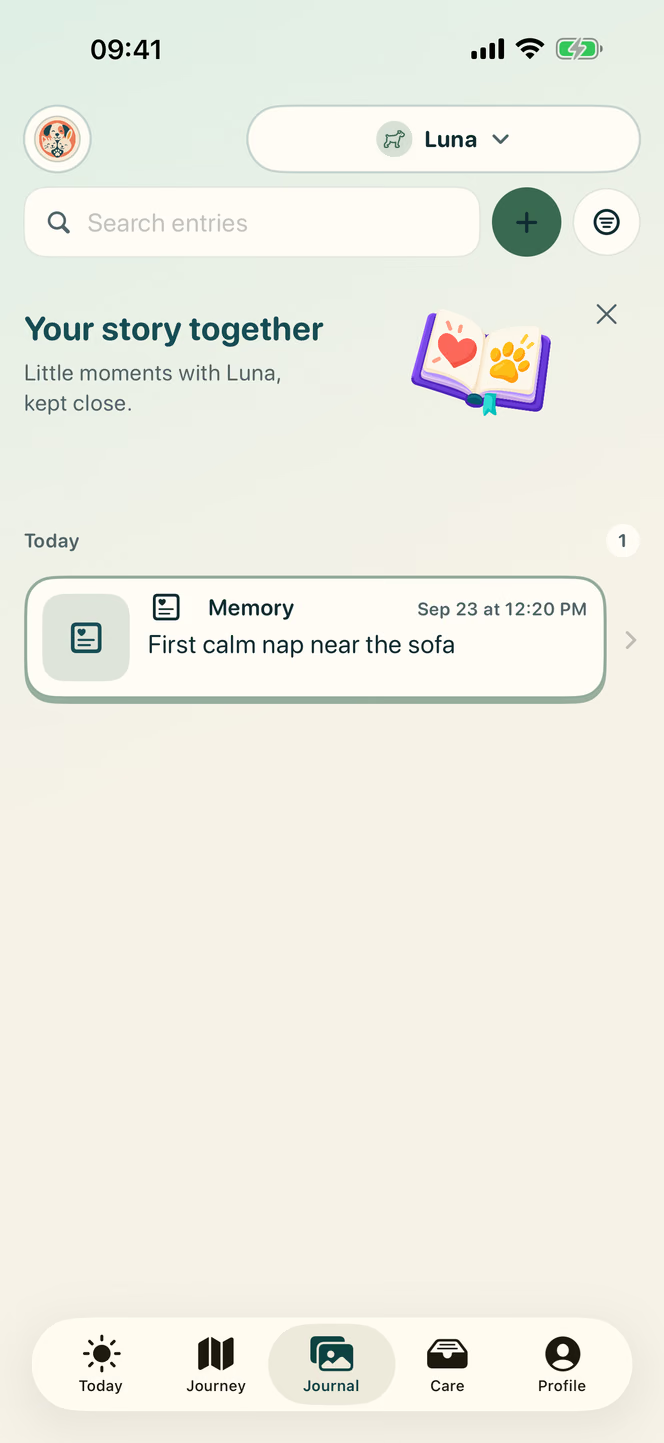
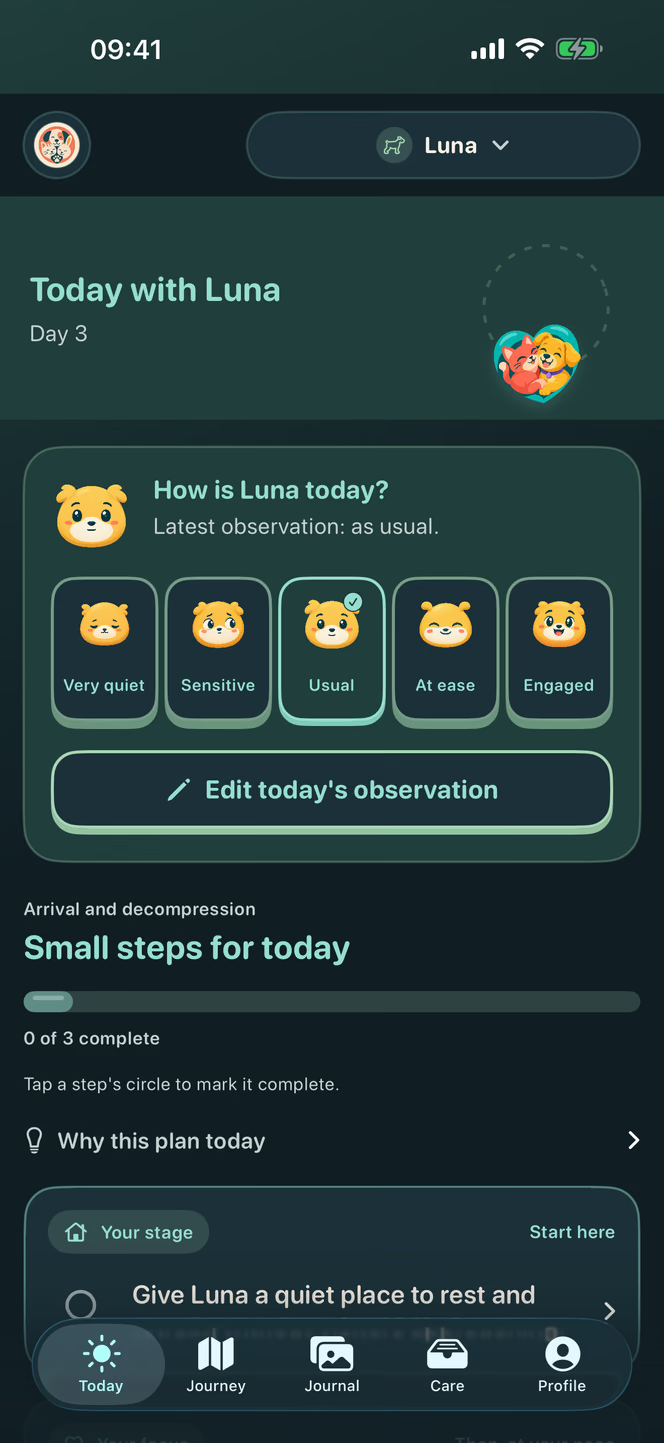
The daily observation also lets you save an impression of how your pet was and compare it with your notes. That context helps you recall the day without determining whether your pet is ill.
Know what each water entry means
The app distinguishes measured amounts, estimates and water refills. You can explain how you obtained a figure: adding 500 ml to a bowl does not mean your cat drank that amount. This is especially useful with several animals at home. You enter the records; the app preserves the method rather than automatically measuring consumption.
Prepare the period you want to discuss with your vet
The report lets you choose the period of records you will share. If your clinic asks for context from recent days, you can gather it, check the summary and decide how to send it. The report contains the information you saved and helps explain the changes; your veterinary team interprets those details and decides the next steps.
Explore Nuzzleway’s private journal to keep those observations. For more on the method, see what to track in a pet care journal. Start with the detail that is useful for the consultation, without delaying care to complete a record.
These articles offer general, everyday guidance. They do not replace advice from a qualified veterinary professional.
Context for your consultation
Keep what you noticed and when within reach.
Save dated notes, photos and professional instructions in Nuzzleway’s journal. Gather the context for a conversation with your vet without relying on memory alone.