The short answer
You cannot make every veterinary visit stress-free, but you can remove avoidable surprises. Preparation is about practical comfort, accurate information and leaving enough time for the veterinary team to do their work.
Preparing for a veterinary visit means making the journey safer, bringing the information the team needs and reducing avoidable surprises. It does not mean trying to perform an examination at home or deciding what a symptom means before the appointment.
Confirm the clinic instructions first
When you book, ask whether the clinic needs records, photographs, a sample or a particular arrival time. Follow its instructions about food and current medicines; those directions depend on the animal, the reason for the visit and any planned procedure.
Tell the clinic in advance about mobility needs, intense fear, attempts to escape or a history of difficult handling. The veterinary team can plan a safer arrival and tell you whether another form of support is appropriate. Do not give calming products or change prescribed medicine without veterinary direction.
Make the carrier or travel equipment familiar
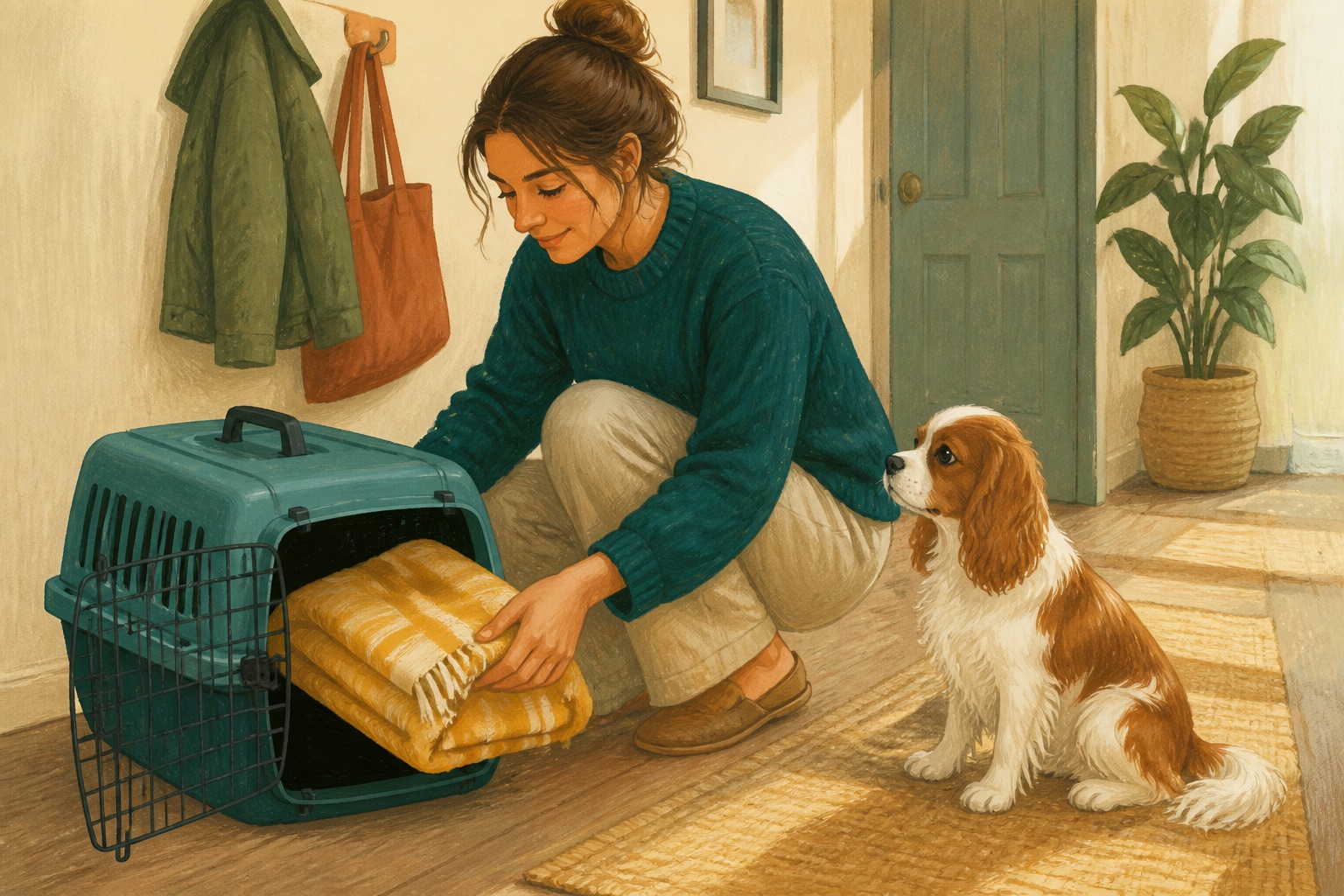
Do not let the carrier appear only when something stressful is about to happen. When practical, keep it accessible with comfortable bedding and allow voluntary exploration. For a cat, use a secure, well-ventilated carrier with enough room to turn and lie down; support it from underneath during transport rather than letting it swing by the handle.
For a cat that avoids the carrier, practise with the step-by-step carrier training guide well before the appointment.
For a dog, use a secure carrier or a correctly fitted travel restraint appropriate to the journey. A familiar towel, blanket or mat can add a predictable scent, but the equipment must remain safe and well ventilated.
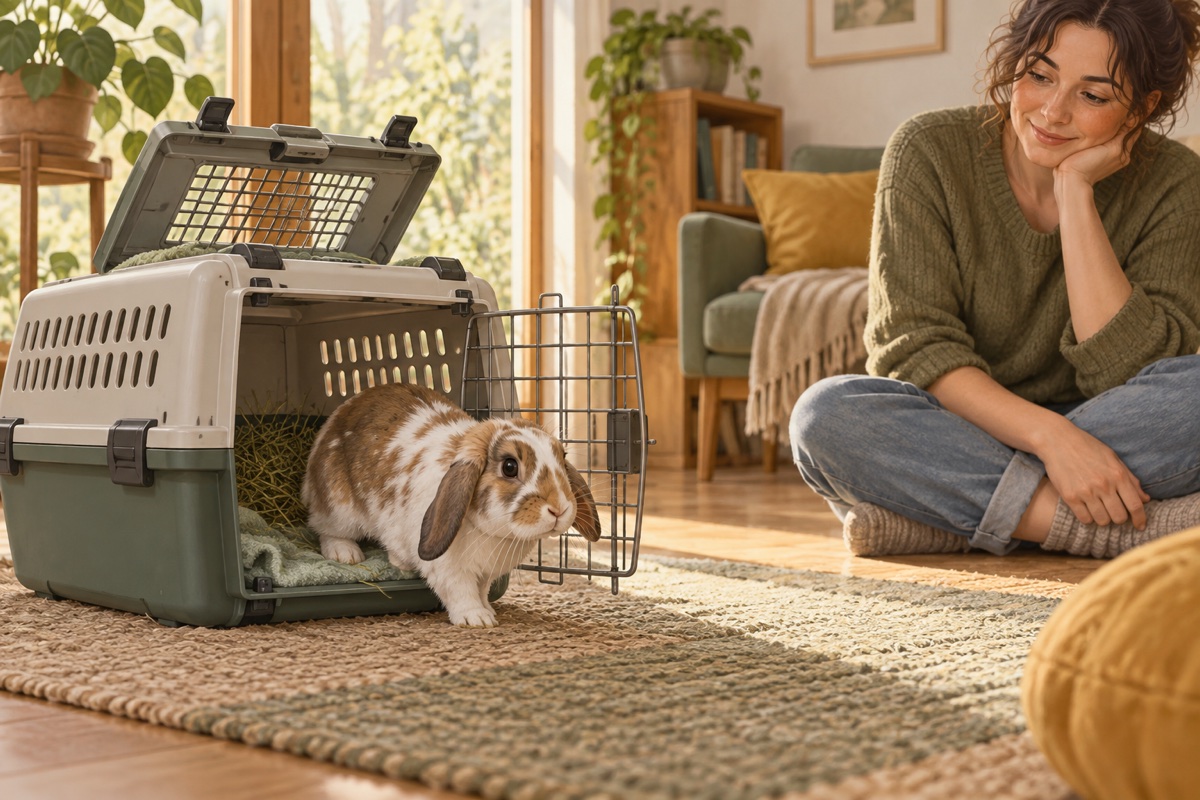
For a rabbit, use the rabbit-specific carrier and journey guide to plan the trip with the clinic.

What should you take to a veterinary appointment?
Bring a concise, current set of information rather than an unsorted archive. Put essential documents and questions somewhere you can reach without opening the carrier or losing control of the lead.
Medication details should match the current label or veterinary instructions. Include prescription medicines, over-the-counter products and supplements, with the dose and schedule exactly as provided by the veterinary team.
| Bring | Useful detail | Why it helps |
|---|---|---|
| Appointment information | Time, address and clinic instructions | Prevents avoidable delays or missed preparation |
| Current medicines | Name, strength, dose, schedule and original label or a clear photo | Gives the team an accurate current list |
| Short timeline | When the concern began, frequency and what changed | Makes the history easier to understand |
| Safe travel equipment | Carrier, restraint, lead and familiar bedding when suitable | Supports safer handling and transport |
| Top questions | Two or three questions in priority order | Keeps the conversation focused under stress |
Only bring food, treats or samples when the clinic says they are appropriate for this visit.
Turn observations into a short timeline
Write what you saw, when it began, how often it happened and whether it changed. “Tuesday evening — left dinner unfinished — ate normally the next morning” gives the team more usable context than “has not been themselves”. Add a photo or video only when it was captured naturally and safely.
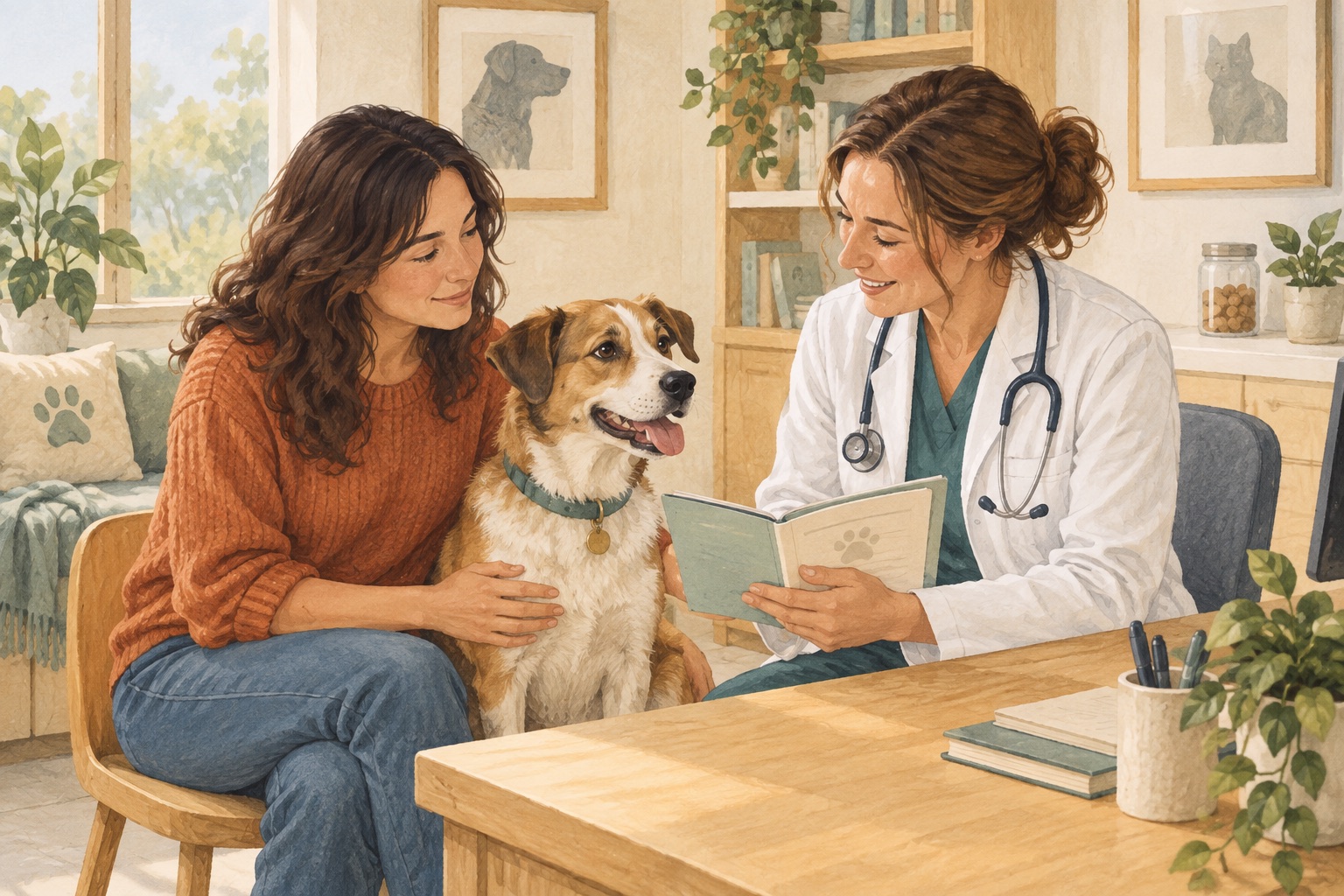
Start the appointment with the reason for the visit and your most important concern. Share observations without naming a diagnosis, then ask what to monitor, what would justify another call and how to follow the plan you receive.
During the visit, let the team guide handling
Keep cats in their carrier until the veterinary team asks otherwise, and avoid pulling an animal out or restraining them without direction. Tell the team what usually helps, but let them choose the safest way to examine the animal in that setting.
If waiting near other animals is difficult, ask whether you can wait elsewhere. Small changes such as moving directly to a quiet room may be possible when the clinic knows what is needed.
Plan a quiet return and write down the next step
At home, offer access to water, a familiar resting place and the level of quiet recommended by the clinic. Follow the discharge instructions you were given. If several animals share the home, ask the veterinary team whether they should be reintroduced gradually after the visit.
Before the details fade, record the plan, dates, medicine changes and the signs the clinic asked you to monitor. If an instruction is unclear, call the clinic rather than reconstructing it from memory.
Prepare the visit before the day arrives
- Make travel equipment familiar
Leave the carrier or travel harness where it can be seen on ordinary days, with familiar bedding when suitable. This is more helpful than producing it only when leaving.
- Write a one-page summary
Include current medicines or supplements, recent observations, changes in routine and your top questions. Take it with you so details do not depend on a stressed memory.
- Ask the clinic what they need
Follow the clinic’s own instructions about food, medication, arrival time and samples. Individual circumstances matter, so do not use a generic article to replace their directions.
- Plan the return home
Keep the first part of the return quiet and give access to familiar resources. If animals share the home, follow your veterinary team’s advice on reintroducing them after a visit.
Use the appointment well
Start with your two most important concerns and share your factual timeline. Ask what you should monitor, which changes warrant a call, and how to follow the plan you receive. Those questions make the next step clearer without asking you to make clinical decisions alone.
Sources and further reading
This general guidance was researched against the following veterinary and animal-care sources:
Frequently asked questions
What should I bring to a veterinary appointment?
Bring clinic instructions, current medicines, a concise timeline, safe travel equipment and two or three priority questions.
Should I withhold food before the visit?
Only follow the clinic’s instructions. Food requirements depend on the animal, reason for the visit and any planned procedure.
How can I make the carrier less stressful?
Keep it accessible on ordinary days, add familiar bedding when suitable and allow voluntary exploration instead of producing it only before travel.
How much history should I bring?
Bring a concise relevant timeline and current medicine list, with the full archive available if the veterinary team requests more detail.
What should I write down after the appointment?
Record the plan, dates, medicine changes, follow-up instructions and the signs the clinic asked you to monitor.
These articles offer general, everyday guidance. They do not replace advice from a qualified veterinary professional.
Bring the useful context
Keep a private timeline ready for the next conversation.
Nuzzleway helps you keep dated observations and care details together on your device, so you can prepare a concise summary when you need it.