The short answer
For a planned veterinary visit, let the rabbit explore a secure, hard-sided ventilated carrier before the day arrives. Add a familiar non-slip base and suitable hay, check the latches, and secure the carrier during a quiet, well-ventilated journey. Tell the clinic about a bonded companion and follow its individual advice on travelling together and monitoring after the visit. Never postpone urgent care to complete carrier training, and seek immediate veterinary advice if eating or droppings stop.
A veterinary trip is sometimes essential even though travelling can be stressful for rabbits. Put a secure carrier into the rabbit’s ordinary environment before a planned appointment, provide a familiar non-slip base and suitable hay, then keep the journey quiet and the carrier stable. An urgent health concern takes priority over carrier practice: call the clinic and follow its instructions without delaying care.
| Moment | Prepare | Check |
|---|---|---|
| Before leaving | Secure carrier, familiar base, hay and clinic contact details. | The rabbit has normal access to food and the door and latches work. |
| During the journey | Stable carrier, ventilation, shade and a calm route. | No sliding, overheating, direct sun or blocked vents. |
| At the clinic and home | Share ordinary eating and droppings, concerns and companion arrangements. | Each rabbit resumes ordinary eating and droppings; call promptly if not. |
The treating veterinary team can change this general plan for illness, surgery, pregnancy or an individual transport need.
Choose a carrier that protects the rabbit
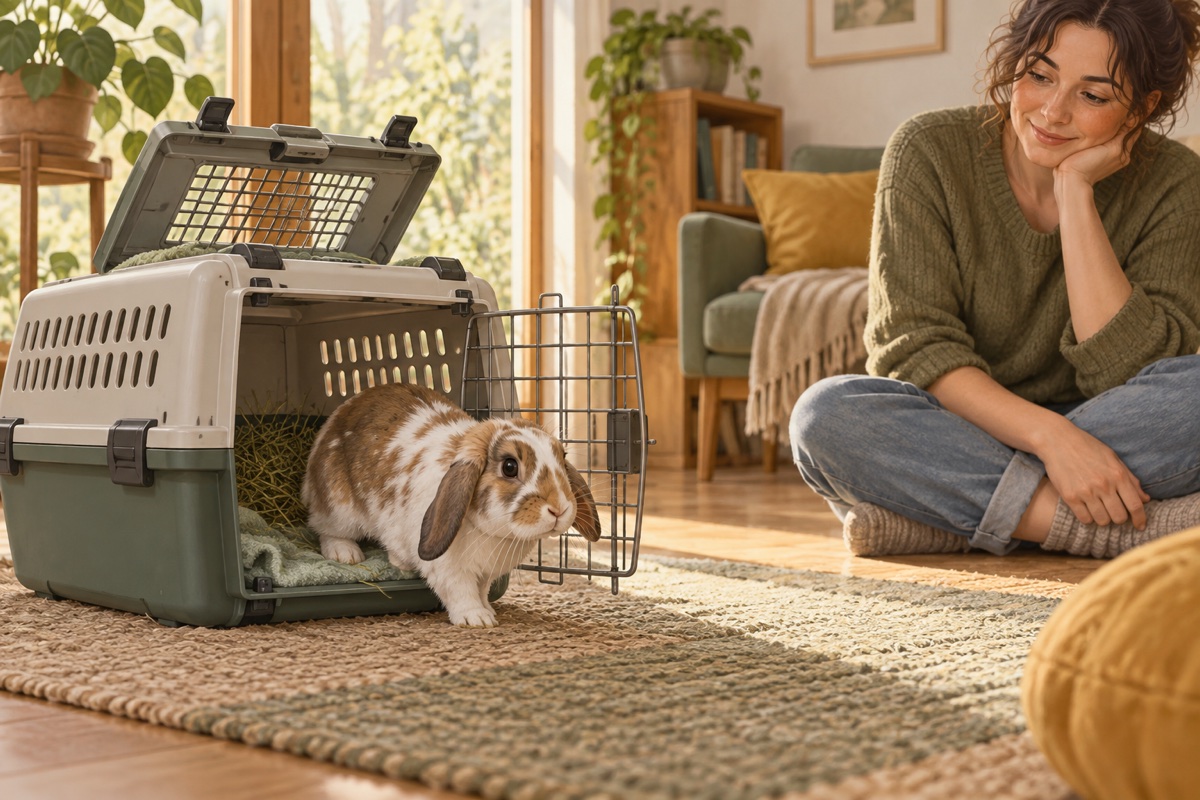
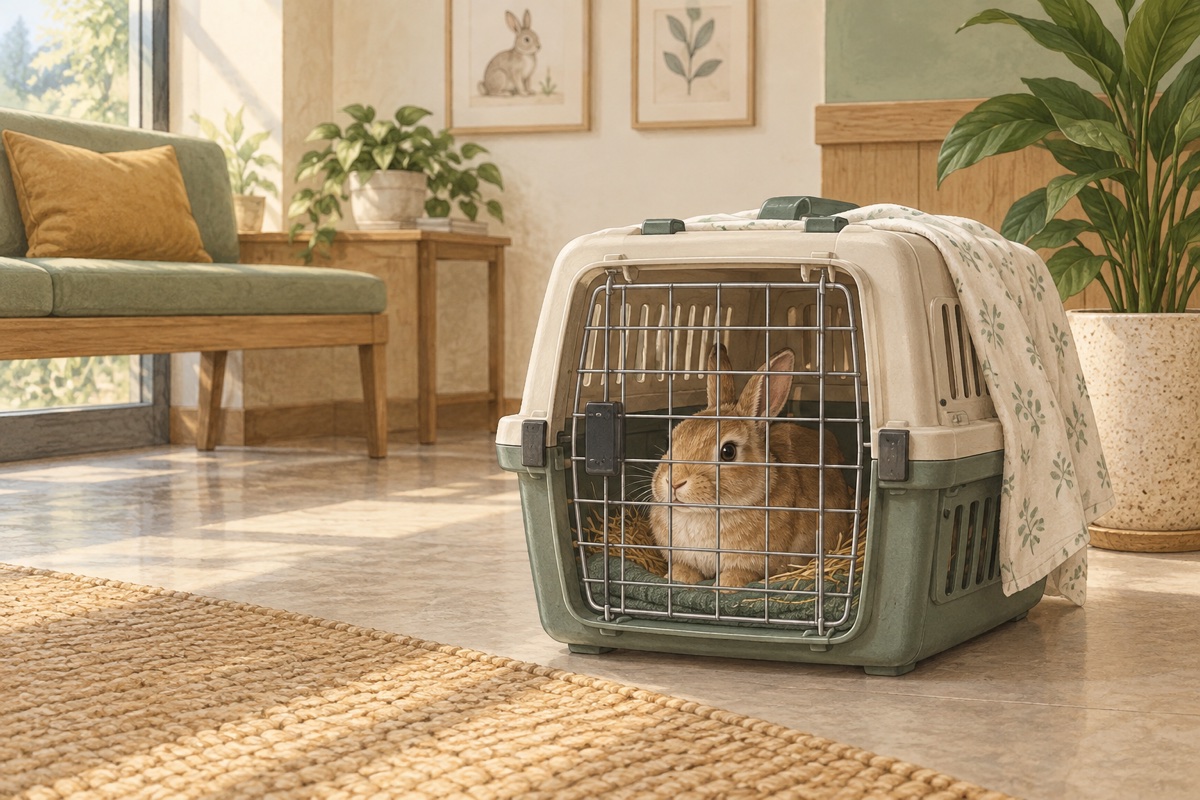
Use a rigid, non-collapsible carrier that closes securely, ventilates well and cannot easily be chewed through. It must let the rabbit lie comfortably and turn around, without being so oversized that they slide about. Front and top openings can make voluntary entry and veterinary handling easier, as the Rabbit Welfare Association & Fund transport guide explains. Check every latch, handle and join before travel; a cardboard box is not a secure substitute.
Line the floor with a familiar, non-slip material and offer suitable hay. Keep air openings clear. A light cover over part of the carrier can reduce visual disturbance, but only if ventilation stays good. Avoid direct sunlight and extremes of temperature. Ask the clinic about an individual plan when the rabbit is unwell, has reduced mobility or needs a long journey.
Make the carrier familiar before a planned visit
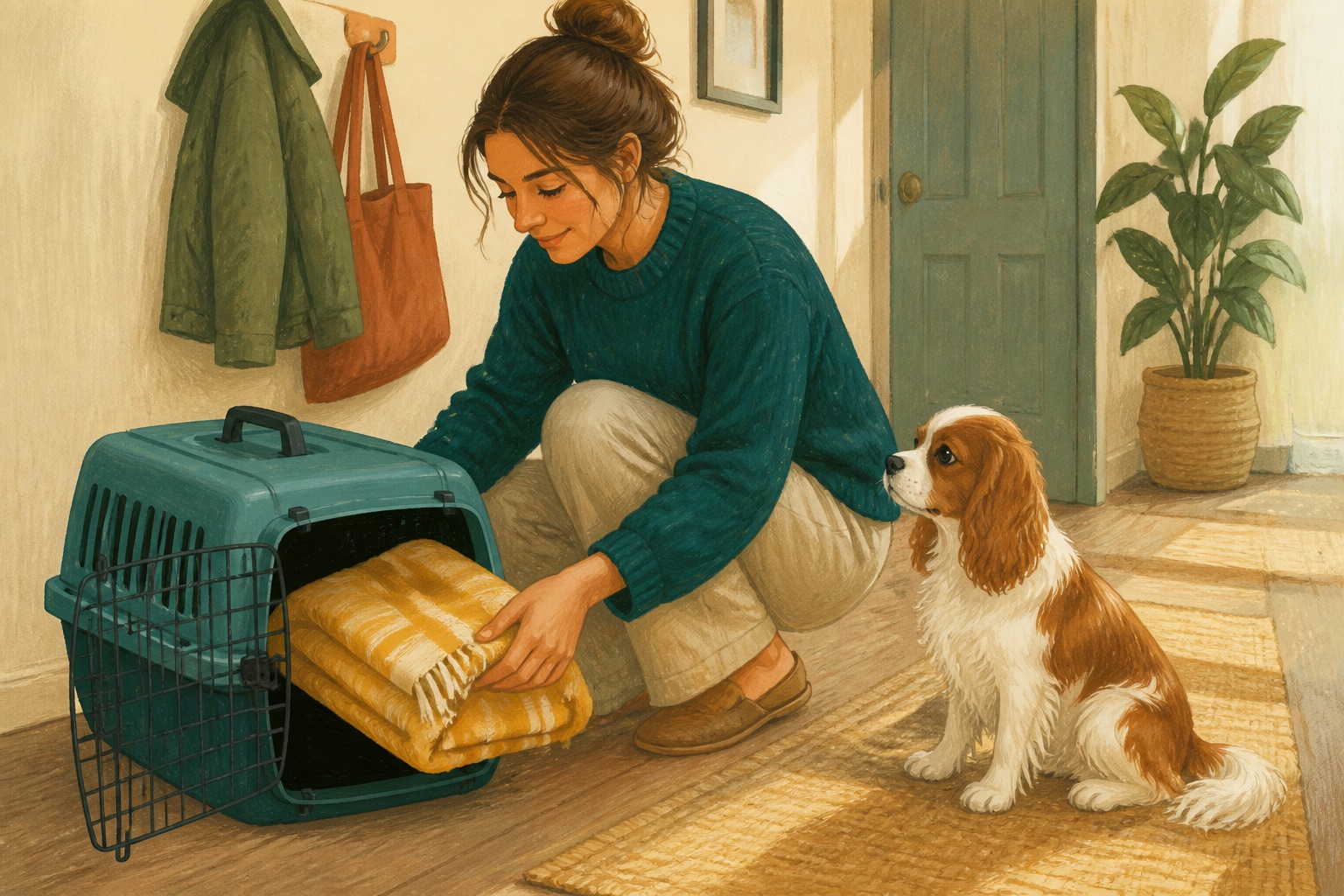
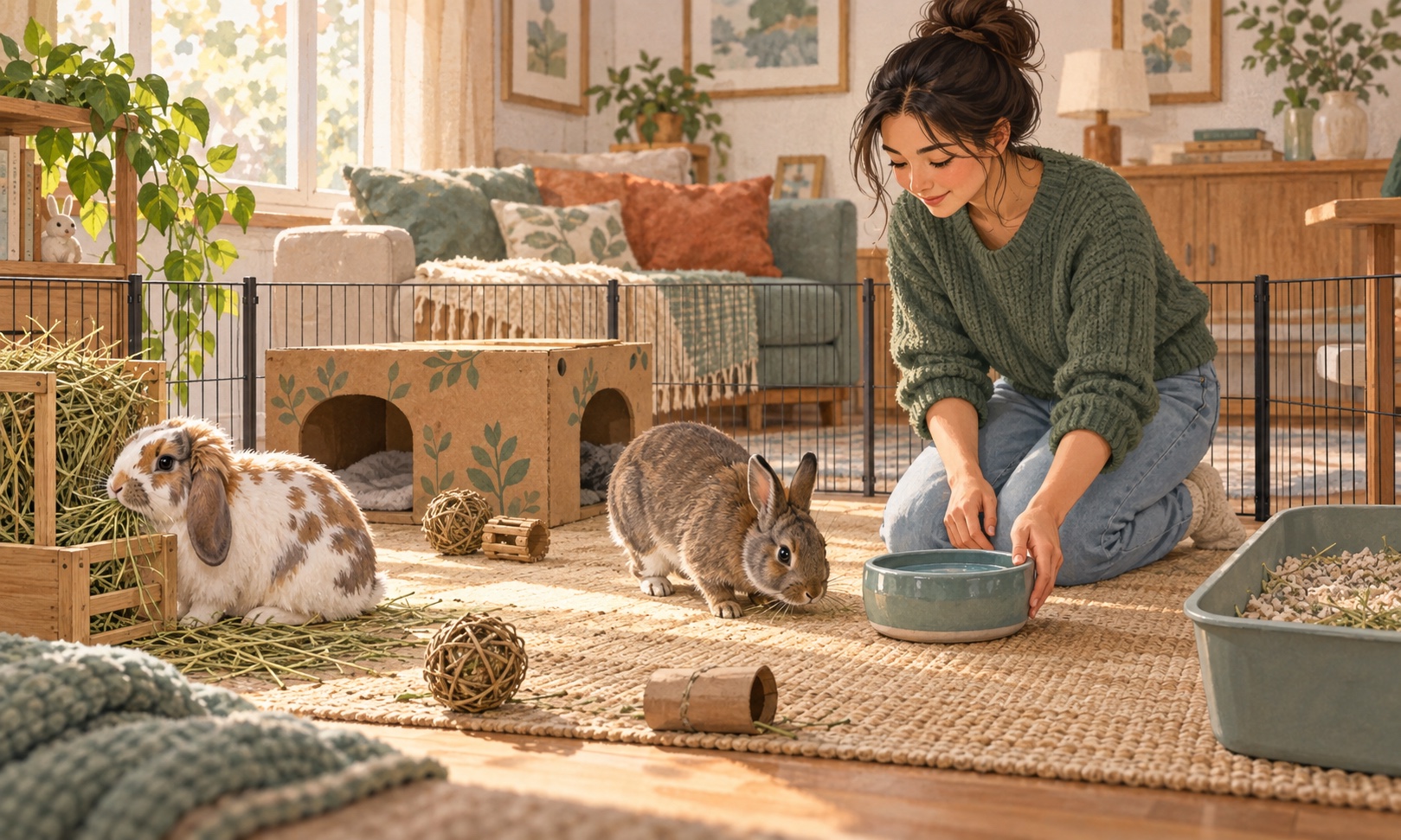
Leave the open carrier in the rabbit’s safe space before a routine appointment. Put familiar bedding inside and allow exploration without chasing, lifting or closing the door during the first approach. If the rabbit enters calmly, practise closing the door briefly, then opening it again. Introduce lifting and a short stationary period only after the earlier step is comfortable.
There is no fixed training timetable. If the rabbit freezes, rushes out or avoids the area, make the next practice easier. This preparation applies to planned visits; for an emergency, call the clinic and transport the rabbit as directed rather than postponing treatment for another practice session.
Plan for a bonded companion
If the rabbit lives in a stable pair or group, tell the clinic before the appointment. Rabbit welfare organisations generally advise taking bonded companions together: separation and a different smell on return can unsettle the relationship. Ask whether they should share a suitable carrier or travel separately in sight and smell of one another, and how they will be monitored if one is admitted. The clinic’s individual care plan comes first.
Bring a short factual account for each rabbit: usual appetite, droppings and activity; what changed; when it changed; medicines exactly as prescribed; and any previous records. The general veterinary-visit guide helps organise questions and documents. This page focuses on the rabbit’s physical journey.
Keep the car journey stable and quiet
Secure the carrier so it cannot slide or jolt. RSPCA transport guidance describes using a seat belt or a suitable footwell behind a seat; follow the carrier’s instructions and local vehicle safety requirements. Do not place a rabbit in direct sun or an unventilated boot. Keep noise low and ventilation comfortable, without directing a strong draught at the carrier.
Rabbits should not be fasted based on a generic assumption about anaesthesia. Keep suitable hay accessible and follow only the treating veterinary team’s preparation instructions for that appointment. For a longer trip, ask the clinic beforehand how to offer water and monitor eating and droppings on the route.
On return, check the rabbit rather than the clock
Follow the clinic’s discharge plan and keep the home environment familiar. Watch whether each rabbit resumes eating and passing droppings, and whether the bonded pair remains comfortable together. A rabbit that stops eating or passing droppings needs immediate rabbit-competent veterinary advice; do not attribute it to ordinary travel stress or wait to complete a log.
The daily rabbit-care guide gives a light framework for observing the ordinary baseline, while the care journal can hold a brief timeline to share with the clinic.
Before, during and after the journey
- Check the carrier
Use a sturdy non-collapsible carrier with secure doors and clear ventilation. Add a non-slip base and hay, leaving room to lie and turn.
- Call about the companion
Tell the clinic if the rabbit is bonded. Ask whether both should travel together and how the team will monitor them if one needs treatment.
- Keep the journey stable
Secure the carrier according to its instructions and local vehicle rules. Keep it away from direct sun and blocked airflow.
- Follow the discharge plan
On return, check eating, droppings and comfort for each rabbit. Contact the treating team promptly about a concerning change.
Food and droppings matter after travel
A rabbit can appear quiet after a stressful trip, but a stop in eating or droppings is not something to explain away as travel stress. Contact a rabbit-competent veterinarian immediately. Keep a factual timeline, but do not wait for a pattern before calling.
Sources and further reading
This general guidance was researched against the following veterinary and animal-care sources:
Frequently asked questions
What carrier should I use for a rabbit?
Use a sturdy, secure, non-collapsible and well-ventilated carrier that lets the rabbit lie and turn comfortably. A front and top opening can help the rabbit enter and the clinic examine them with less handling.
Should I take a bonded companion to the vet too?
Rabbit welfare organisations generally advise taking bonded companions together to reduce stress and avoid difficulties on return. Tell the clinic about the bond and follow its plan, especially if one rabbit needs separate monitoring or treatment.
Should I withhold food before the appointment?
Do not fast a rabbit because of a generic online instruction. Keep suitable hay available and follow the specific instructions from the treating veterinary team for that visit.
Where should the carrier go in a car?
Secure it so it cannot slide or jolt, following the carrier instructions and local vehicle safety requirements. Welfare guidance describes securing it with a seat belt or in a suitable footwell; do not put it in direct sun or an unventilated boot.
What if the rabbit stops eating after the trip?
Contact a rabbit-competent veterinarian immediately if the rabbit stops eating or passing droppings. Do not wait for the next routine check or assume travel stress is the whole explanation.
These articles offer general, everyday guidance. They do not replace advice from a qualified veterinary professional.
Keep the visit details together
Prepare the appointment without guessing.
Nuzzleway can hold the confirmed date, clinic details and a short note about eating and droppings. Follow the veterinary team's instructions for the journey and care.