The short answer
A daily rabbit-care routine should confirm five things: every rabbit can reach suitable hay or grass and fresh water; the habitat is dry, secure, ventilated and free from hazards; litter and the rear area are clean enough to reveal a change; each rabbit is moving, resting, eating and interacting in their usual way; and known veterinary care remains visible. Observe without repeatedly lifting or chasing the rabbit. Compare appetite, droppings, posture, movement and social behaviour with that individual’s ordinary pattern. A rabbit that stops eating or passing droppings, appears painful, becomes unusually quiet or weak, breathes differently, or has a dirty rear needs prompt advice from a rabbit-competent veterinarian. The checklist helps you notice and describe change; it must never become a reason to wait.
Rabbit care at home is easier to sustain when it follows the rabbit’s real day: fresh water and species-appropriate food, a safe and clean habitat, room for normal behaviour, compatible company and a brief check of appetite, droppings and activity. The aim is not to handle or examine a rabbit constantly. It is to know what is usual, notice meaningful change early and act without delay when something is wrong.
What should a daily rabbit-care routine cover?
A useful routine covers needs, not chores for their own sake. Food and water, a suitable environment, normal behaviour, appropriate company and protection from pain or illness belong together. A clean bowl means little if the rabbit has stopped eating; a tidy pen is not enough if there is no room to move or hide.
Use the table as a reading order rather than a rigid timetable. Adapt the setup with a rabbit-competent veterinarian or welfare professional when age, disability, illness, weather or the social group changes.
| Care moment | What to check | Useful comparison | Do not wait when |
|---|---|---|---|
| Food and water | Hay or grass access, clean water and whether each rabbit is actually eating and drinking | Their own ordinary appetite and feeding pattern | Eating or drinking changes, or a rabbit stops eating |
| Litter and droppings | Quantity and appearance of droppings, urine, damp areas and a clean rear | What is normal for this rabbit or bonded pair | Droppings reduce or stop, diarrhoea appears, or the rear is soiled |
| Habitat | Dry resting areas, safe barriers, ventilation, shade, hides, footing and hazards | The setup before weather or household changes | There is overheating, injury, escape risk or another immediate hazard |
| Behaviour and movement | Interest in hay, movement, resting posture, social contact and response to the usual routine | Several ordinary days, not an online ideal | The rabbit is unusually quiet, weak, painful, unresponsive or breathing differently |
| Weekly review | Supplies, deeper cleaning, nails and visible front teeth without forcing the mouth open | The last review and professional care plan | You find an injury, overgrown or misaligned teeth, or a persistent change |
This checklist cannot diagnose illness. A rabbit that stops eating or passing droppings, appears painful or has a sudden concerning change needs prompt rabbit-competent veterinary advice.
Begin with the habitat, not with handling
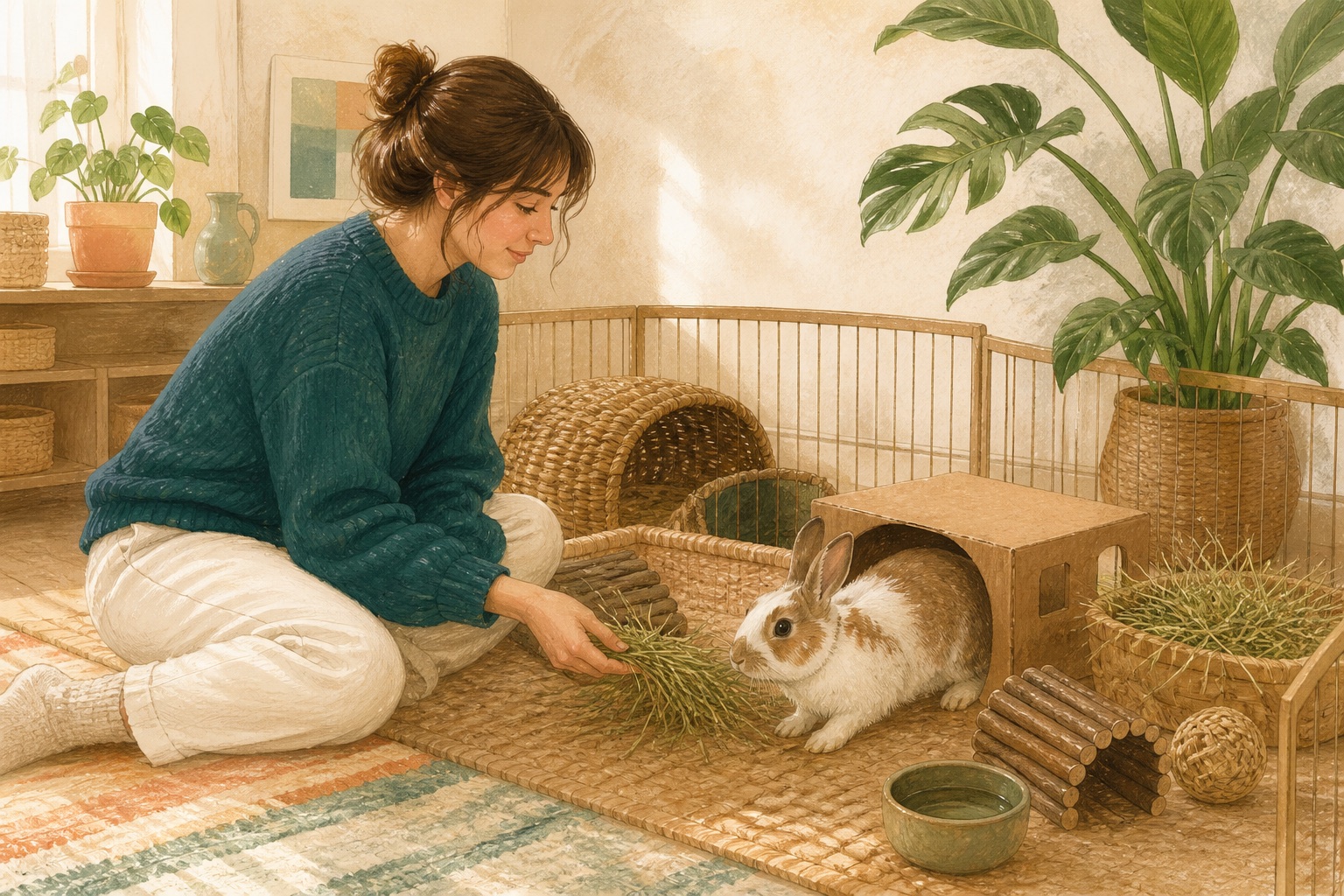
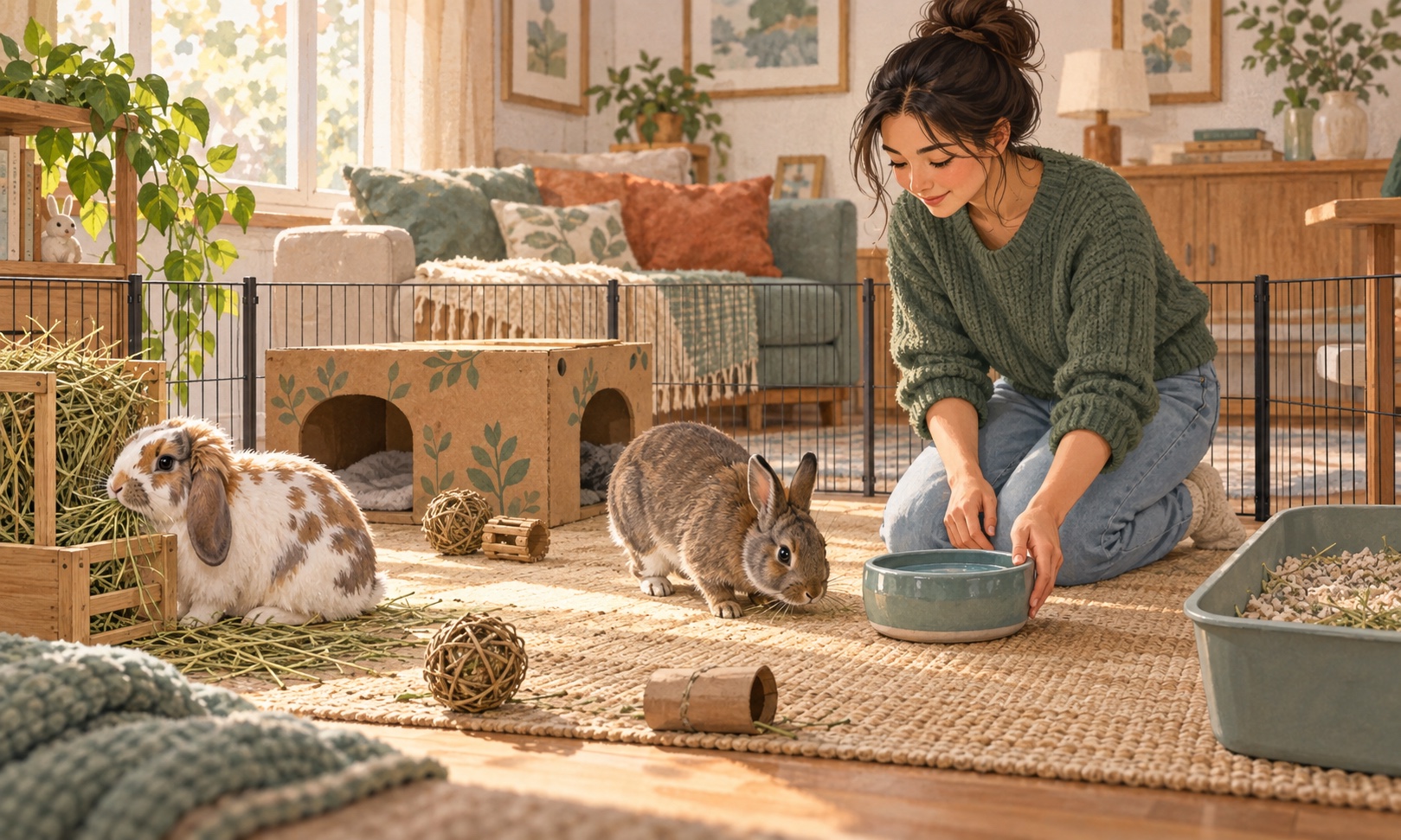
Daily care should be possible without repeatedly lifting or chasing a rabbit. Arrange hay, water, litter and resting areas so you can refresh and observe them with minimal disruption. Provide dry non-slip footing, secure boundaries and more than one place to hide; a hide with two exits helps another rabbit avoid blocking the only doorway.
Rabbit-proof the wider area as well as the enclosure. Protect electrical cables, remove toxic materials and plants from reach, block unsafe gaps and plan for temperature changes. For a room-by-room safety check, use the rabbit-proofing guide before expanding access. A small cage cannot be made suitable by adding toys. Permanent space for movement and normal behaviour is the foundation.
Food and water checks are about access and change
Rabbits need continuous access to suitable hay or grass and fresh water, but an online article cannot set the complete diet for every rabbit. Age, health, weight and previous diet matter. Follow a rabbit-competent veterinary plan for pellets, greens and any transition, and avoid sudden diet changes.
In a bonded group, seeing food disappear does not prove that every rabbit ate. Watch each individual reach the hay and water. A blocked bottle, tipped bowl, dominant companion or painful mouth can change access. Clean containers and check that any delivery mechanism actually works.
Litter care also creates a useful health baseline
Cleaning the toilet area is a chance to notice what is usual: where the rabbits eliminate, the broad quantity and appearance of droppings, whether bedding is damp and whether fur around the rear stays clean. Keep the observation factual. Do not diagnose a gut or urinary problem from appearance alone.
Warm weather requires particular attention to a soiled rear because flies can cause flystrike. If eating or drinking changes, droppings reduce or stop, diarrhoea appears, the rabbit strains, or the rear is persistently wet or dirty, contact a rabbit-competent veterinarian promptly instead of waiting for the next weekly clean.
Protect movement, hiding and compatible company
A routine should leave room for rabbits to choose when to move, forage, hide, rest and interact. Predictable care times can reduce disruption, but predictability does not mean forcing contact. Sit at floor level, move calmly and let the rabbits approach when routine care does not require handling.
Rabbits are social, and many benefit from living with a compatible rabbit. Introductions and bonding need an appropriate process; do not place unfamiliar rabbits together because a checklist says they need company. If a veterinarian advises solitary housing, ask how to support welfare safely in that individual case.
Record the baseline, not every minute
For one ordinary week, note a few anchors: appetite, access to hay and water, droppings, activity, resting posture and social behaviour. After that, record only meaningful changes and the context around them. “Did not come for hay at the usual time” is more useful than “seemed strange.”
The record helps you describe a timeline; it does not create a safe waiting period. A sudden or worrying change takes priority over completing the log.
A practical rabbit-care routine at home
- Observe before entering the space
Notice where each rabbit is, whether they respond to the ordinary routine and whether both approach hay, water or a familiar activity. Quiet observation preserves behaviour that handling can interrupt.
- Refresh water and confirm access
Clean the container, provide fresh water and check that a bottle or other mechanism works. In a pair, make sure one rabbit is not preventing the other from reaching it.
- Check hay, food and appetite
Keep suitable hay or grass available and follow the individual diet plan. Observe what each rabbit actually eats; do not rely only on an emptier feeder.
- Read the litter area without diagnosing
Remove wet or soiled material and notice broad changes in droppings, urine and the cleanliness of the rear. Record facts and seek professional advice for a concerning change.
- Scan the habitat for one practical risk
Check barriers, cables, flooring, hides, temperature, damaged items and escape routes. Fix an immediate hazard before adding new enrichment.
- Write only the useful change
If the day is ordinary, a completed routine is enough. If something changed, note date, observable fact, context and what happened next. Contact the veterinarian first when the rabbit may be unwell.
The baseline belongs to each rabbit
A bonded pair shares a home but not necessarily the same appetite, activity or health. Learn who eats where, which resting postures are ordinary and how each rabbit approaches the daily routine. If you cannot tell which rabbit produced a change in droppings or stopped eating, separate observation safely only under appropriate professional guidance; do not disrupt a bonded pair casually.
Sources and further reading
This general guidance was researched against the following veterinary and animal-care sources:
Frequently asked questions
What does a rabbit need every day?
Daily care includes suitable food and fresh water, a safe clean habitat, space and opportunities for normal behaviour, appropriate company, and observation of appetite, droppings, activity and comfort.
How often should I clean a rabbit’s area?
Remove soiled or wet material and keep food and water containers clean as part of daily care, then schedule deeper cleaning around the actual setup. Preserve dry resting areas and avoid creating unnecessary stress.
Should I pick up my rabbit for a daily health check?
Not routinely. Many useful observations can be made while the rabbit eats, moves and rests normally. Ask a rabbit-competent professional to show you any handling or physical checks your individual rabbit needs.
Why are droppings important in rabbit care?
Their usual quantity and appearance provide useful context alongside appetite and behaviour. A reduction, absence, diarrhoea or other concerning change needs prompt veterinary advice.
When should I contact a veterinarian?
Seek prompt rabbit-competent veterinary advice if eating or droppings reduce or stop, or for a sudden change in behaviour, posture, movement, breathing or responsiveness, signs of pain, injury or a soiled rear.
These articles offer general, everyday guidance. They do not replace advice from a qualified veterinary professional.
Keep the care anchors visible
Turn a species-specific routine into a calmer daily plan.
Nuzzleway helps you keep habitat care, known dates and brief observations together without asking you to monitor every minute.