The short answer
Rabbit enrichment starts with permanent space and species-appropriate care, then adds safe choices for foraging, hiding, digging, exploring and interacting with a compatible rabbit. Toys cannot compensate for unsuitable housing, diet or social care.
Rabbit enrichment at home should make normal rabbit behaviour possible: running, jumping, rearing, hiding, digging, foraging and interacting with a compatible companion. Begin with enough permanent safe space and hay-based care; toys are additions, not substitutes for housing, diet, companionship or veterinary needs.
Start with permanent space for normal rabbit behaviour
A small hutch or cage cannot become adequate because it contains more toys. Rabbit Welfare Association & Fund guidance emphasises a secure living area that allows rabbits to run, jump, stand upright, hide, graze and dig at the times they naturally choose. Indoor areas also need rabbit-proofing around cables, toxic plants, doors, windows and chewable household materials.
Provide non-slip flooring, connected resting and activity areas, and enough clear distance for movement. Platforms need safe edges and easy access. If age, disability or illness changes mobility, ask a rabbit-competent veterinarian how to adapt the setup rather than removing every opportunity to move.
| Need | Simple option | Safety check |
|---|---|---|
| Hide | Cardboard box or tunnel with two exits | No staples, tape loops or blocked exit |
| Forage | Scatter hay or hide an appropriate part of the ration | Diet remains hay-based and portions follow professional advice |
| Dig | Large stable tray with a rabbit-safe substrate | Dust, ingestion and escape risks are controlled |
| Explore | Connected tunnels, platforms and open movement space | Routes are stable, non-slip and wide enough |
| Chew and manipulate | Rabbit-safe branches, willow items or plain cardboard | Materials are species-appropriate and replaced when damaged |
Check every material against current rabbit-specific welfare and veterinary guidance; “natural” does not automatically mean safe.
Use hay and foraging as everyday enrichment
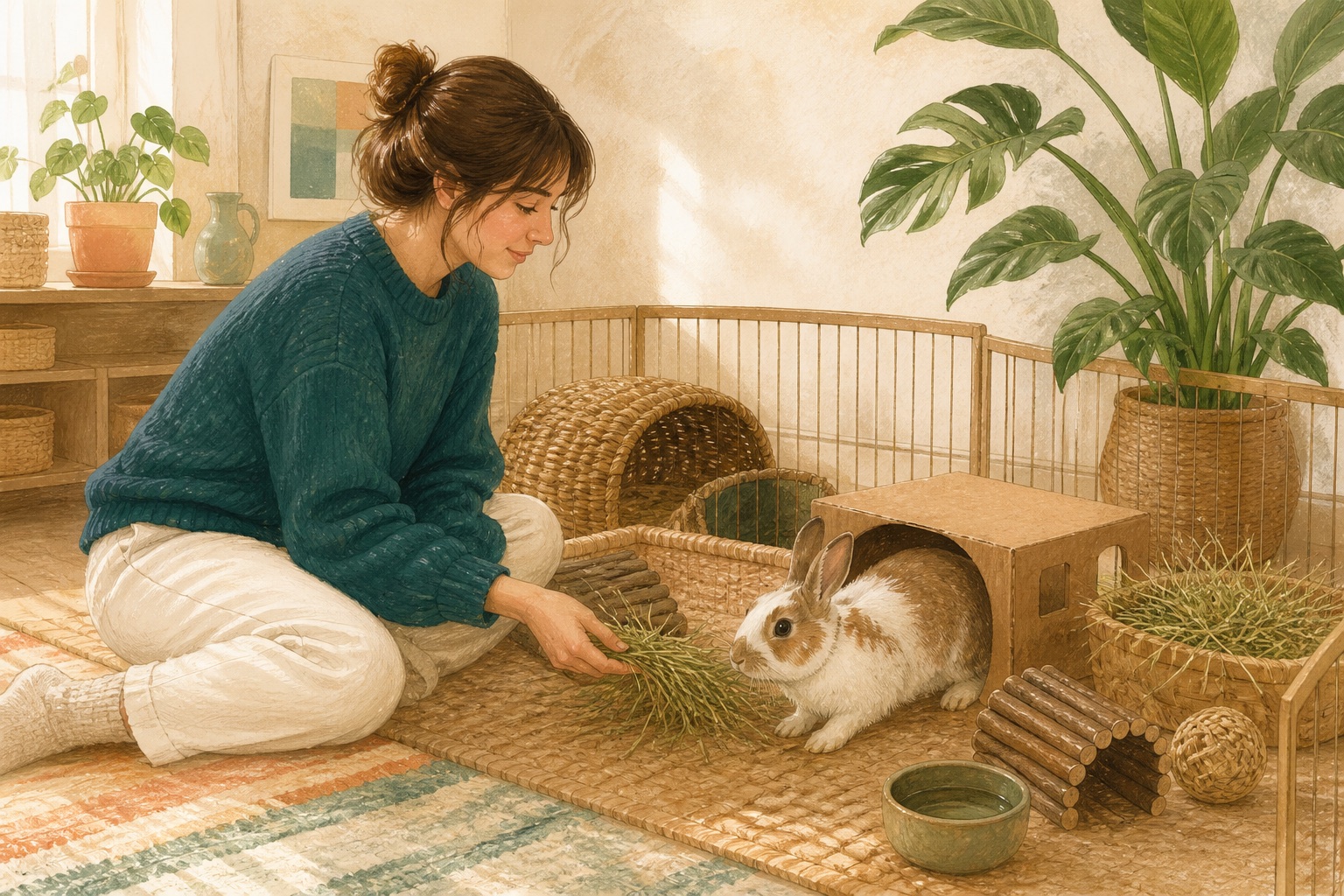
RWAF notes that wild rabbits spend much of their waking time foraging, so hay and grass-based activities are central. Spread hay between several clean locations, stuff it loosely into an appropriate tunnel or paper bag, or mix in a small amount of rabbit-safe forage recommended for the individual.
Do not reduce hay access to make a puzzle more motivating, and do not add sugary treats simply to increase interest. Diet changes can have serious consequences for rabbits; use the existing veterinary or welfare plan and introduce any food change carefully.
Provide tunnels, hiding places and a digging area
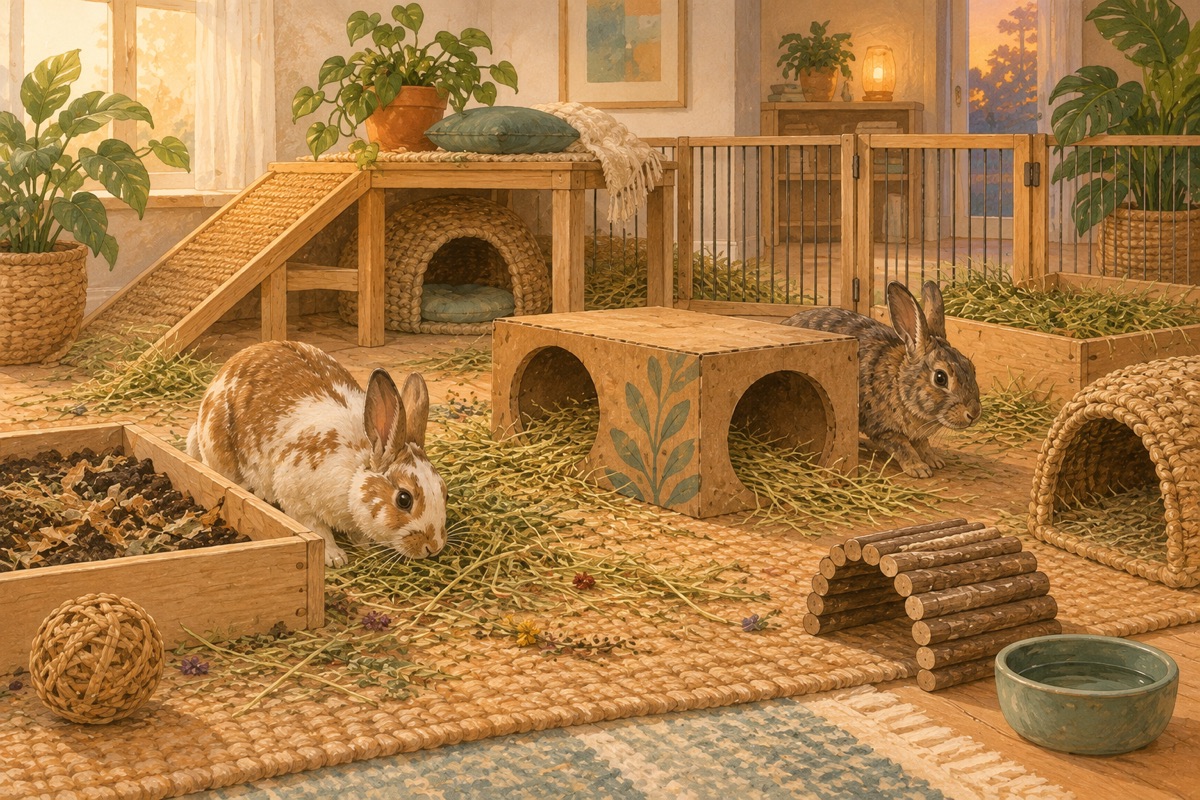
Because rabbits are prey animals, hiding is a welfare need rather than an optional decoration. Use several shelters, preferably with more than one entrance and exit, so one rabbit cannot trap another. Cardboard boxes can be useful when free of staples, tape, coatings and unsafe printed material.
A digging tray can support natural behaviour indoors. It needs to be large and stable enough for use, filled with a suitable substrate and positioned where spilled material will not create a hazard. Replace soiled or damaged materials promptly.
Plan enrichment for compatible rabbits, not isolated objects
Rabbits are social, and current welfare guidance generally recommends neutered compatible companionship. Social arrangement is not a do-it-yourself experiment: introductions, neutering, health and bonding need rabbit-specific professional guidance.
In a shared setup, duplicate hides, hay areas and routes so one rabbit cannot control every resource. Watch for blocking, persistent chasing, injury or one rabbit losing access. Separate safely and seek qualified help when welfare or safety is at risk.
Rotate safely and observe what the rabbits choose
Change one optional item at a time while keeping core resources stable. A different cardboard layout or forage location can add interest without resetting the whole environment. Check items daily for damage, sharp edges, soiling or trapped body parts.
Rabbits can hide illness, so a change in eating, droppings, posture, movement, interaction or usual activity deserves prompt attention. Do not wait for a journal pattern when a rabbit stops eating or otherwise appears unwell; contact a rabbit-competent veterinarian urgently.
Build enrichment into the rabbit’s home
- Use species-specific sources
Before changing diet, housing, companionship or enrichment, look for guidance written for that animal. A qualified exotics or species-appropriate veterinary professional is the right source for health decisions.
- Design for normal behaviour
A space should support the animal’s need to move, rest, hide, forage, explore and interact in species-appropriate ways. Start with welfare needs before decorative choices.
- Observe without forcing contact
Some companions communicate comfort through quiet, everyday behaviour rather than approaching people. Create a routine for care and observation that does not require handling or interaction every time.
- Plan for change with an expert
Diet, enclosure, social arrangement and health decisions can have species-specific consequences. Ask an appropriate professional before making a large change based on a general online article.
Observe appetite and ordinary activity closely
A rabbit that stops eating or shows a concerning change in droppings, posture, breathing, movement or responsiveness needs prompt rabbit-competent veterinary advice. Do not wait to collect a longer record before calling.
Sources and further reading
This general guidance was researched against the following veterinary and animal-care sources:
Frequently asked questions
What is the best enrichment for rabbits?
Begin with permanent safe space and opportunities for normal behaviour. Hay-based foraging, hiding, digging, movement and compatible social contact are more fundamental than novelty toys.
Can cardboard boxes be used for rabbits?
Plain boxes can provide hiding and manipulation when staples, tape, unsafe coatings and damaged sections are removed. Use two exits and replace soiled material.
How often should rabbit enrichment change?
There is no fixed interval. Keep essential resources stable, rotate one optional item at a time and observe voluntary use.
Is a small hutch enough if the rabbit gets playtime?
No. Welfare guidance calls for a permanent secure living area that permits normal movement and behaviour; occasional playtime does not replace suitable housing.
When does a rabbit need urgent veterinary attention?
A rabbit that stops eating or shows a concerning change in droppings, posture, breathing, movement or responsiveness needs prompt advice from a rabbit-competent veterinarian.
These articles offer general, everyday guidance. They do not replace advice from a qualified veterinary professional.
Support the ordinary day
Keep care anchors and useful observations together.
Nuzzleway can help you keep a simple daily rhythm visible while species-specific welfare and veterinary guidance remain the source for rabbit care decisions.