The short answer
Observation is most useful when it captures a pattern and its context, not when it turns every ordinary variation into an alarm. A short, consistent record gives you better questions and can help a veterinary professional understand what you have actually seen.
Pet behaviour changes are useful information, but they do not explain their own cause. The safest role for a home observation is to compare what happened with your animal’s usual pattern, record a short factual timeline and let a veterinarian assess sudden, severe, persistent or worsening changes.
Start with your pet’s normal baseline
A baseline is a short description of an ordinary period: appetite and drinking, toilet habits, sleep, movement, grooming, play, social contact and preferred resting places. It is personal. A quiet afternoon may be normal for one animal and unusual for another.
Record the baseline during uneventful days, not only after a concern appears. That gives you a fairer comparison and reduces the temptation to treat every variation as evidence of a problem. Age, species, weather, visitors and recent routine changes can all be relevant context, but context is not a diagnosis.
How do you write an observable behaviour change?
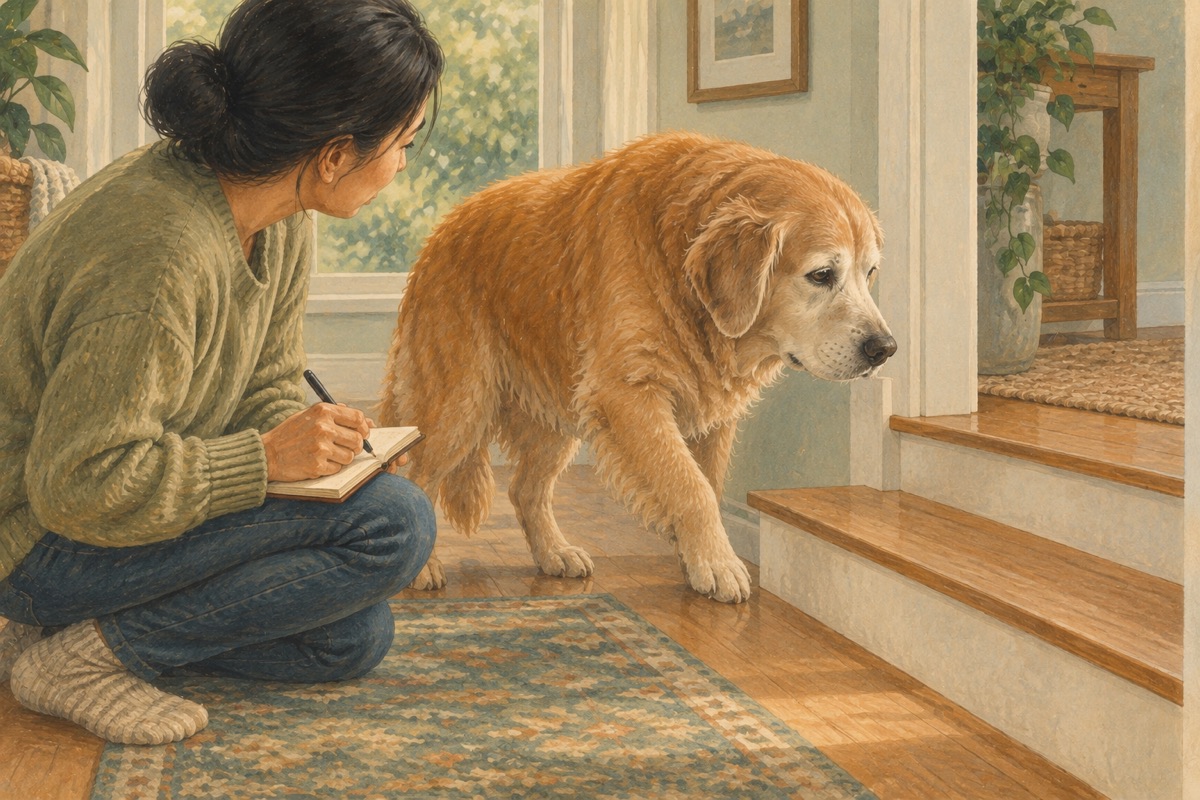
Write what a camera could have captured: “left half of breakfast”, “paused before the first stair”, “did not join the usual evening game” or “slept behind the sofa twice today”. Avoid labels such as stubborn, depressed, dominant or in pain unless a qualified professional has assessed the animal.
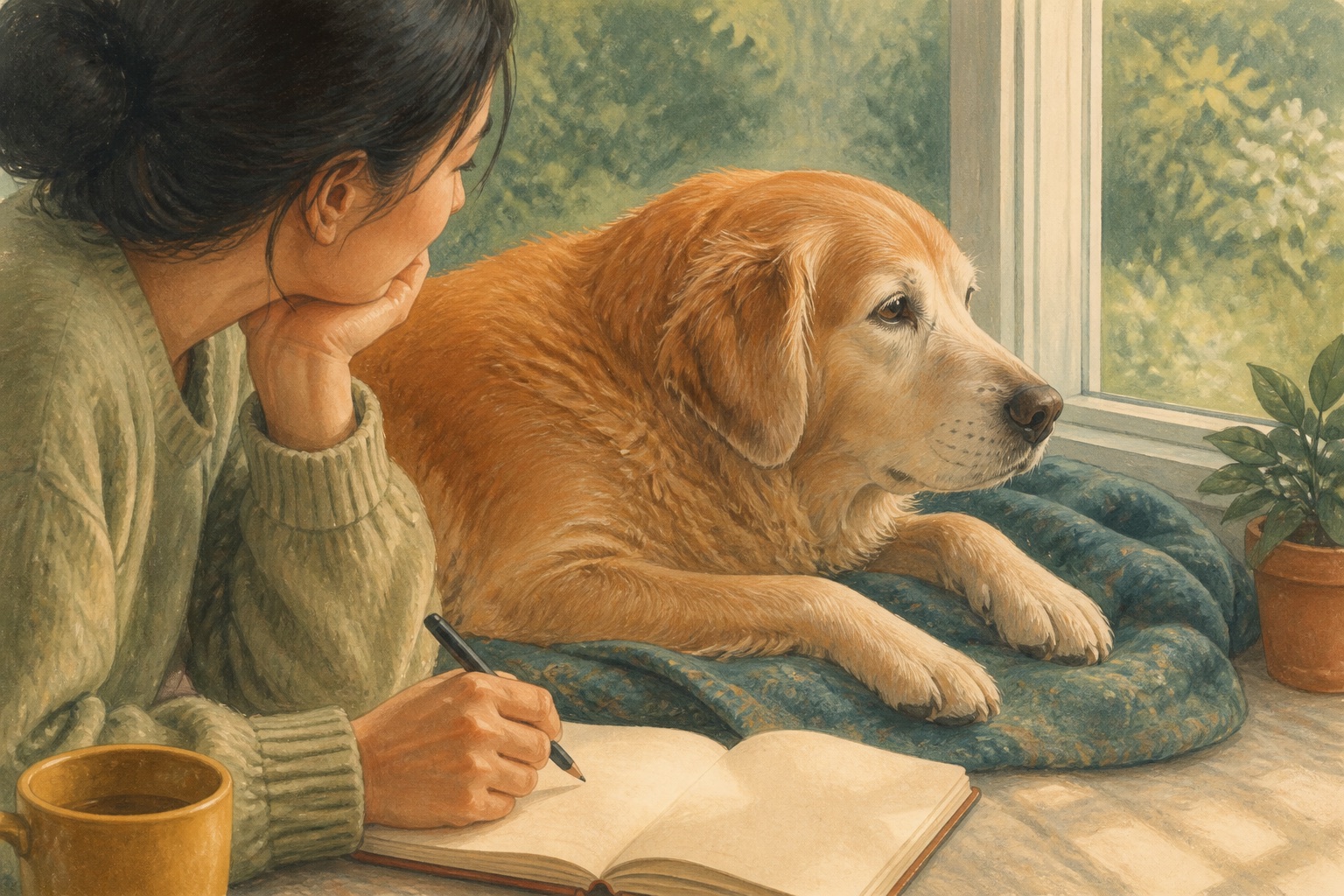
Add the date and time, what happened immediately before, duration or frequency when known, and what happened next. A natural photo or short video can be useful for movement or behaviour that is difficult to describe, but never provoke a response or delay care to collect better evidence.
Which details make the timeline useful?
The table separates observation from interpretation. Its purpose is to help you communicate clearly, not to decide whether a condition is present. Keep entries short enough that another caregiver or veterinary professional can understand them quickly.
Compare repeated entries with the same ordinary reference point. One isolated event may still matter, especially if it is severe, but a consistent format makes frequency and progression easier to see.
| Instead of | Record | Add |
|---|---|---|
| “Seems off” | The specific action or absence you observed | Date, time and what happened next |
| “Not eating” | What food was offered and approximately how much remained | Water, other meals and recent food changes |
| “Walking strangely” | Where the pause or altered movement occurred naturally | Surface, route, duration and recovery |
| “Doesn’t want company” | Where the animal rested and which interactions they left | Visitors, noise, handling and usual preference |
Do not wait for a pattern when a change is sudden, severe, worsening or otherwise concerning.
When should a behaviour change be discussed with a veterinarian?
Behaviour and personality changes can accompany pain, illness, fear or environmental stress, and only an appropriate assessment can distinguish among possible causes. AAHA advises veterinary attention for sudden personality changes and notes that unusual withdrawal, fear or aggression can signal pain or distress.
Contact a veterinarian promptly for a sudden, severe, persistent or worsening change, or whenever you are worried. Laboured breathing, collapse, significant trauma, uncontrolled bleeding or another apparent emergency should go directly to a veterinarian or emergency hospital rather than into a journal.
Use the record to ask better questions, not to self-diagnose
Before an appointment, summarise the relevant entries: when the change began, how often it occurred, whether it progressed, and which other ordinary functions changed at the same time. Bring current medicines and supplements exactly as directed, plus naturally captured media when it genuinely adds information.
Ask what the team wants you to monitor, which changes justify another call and how long to follow the plan. Then record those professional instructions separately from your own observations so the source remains clear.
A calm way to make a useful note
- Name the observable detail
Write what happened without guessing why: “left half of breakfast”, “paused on stairs” or “slept in a new spot”. This keeps the note factual and easier to share.
- Add the surrounding context
Include date, time, recent changes at home, activity, food or weather only when relevant. Context can show whether a detail is isolated or part of a repeatable pattern.
- Use photos and video carefully
A short, naturally captured clip can sometimes describe movement or behaviour more clearly than memory. Do not provoke, repeat or delay care to obtain it.
- Bring questions, not conclusions
When you need professional help, share the timeline and ask what information matters next. The role of your record is to support the conversation, not to diagnose.
When to move beyond observation
Contact a qualified veterinary professional promptly for a sudden, severe, persistent or worsening change, or whenever your instincts tell you your companion is not themselves. In an urgent situation, seek emergency veterinary help rather than waiting to collect more notes.
Sources and further reading
This general guidance was researched against the following veterinary and animal-care sources:
Frequently asked questions
Is one behaviour change always a health problem?
No. Context matters, but an observation cannot rule a health problem in or out. Sudden, severe, persistent or worsening changes need prompt veterinary advice.
What should I write down first?
Write the date and time, the specific observable event, relevant context and what happened next. Avoid guessing the cause.
Can a video help the veterinarian?
A short, naturally captured video may clarify movement or behaviour. Never provoke the response, repeat discomfort or delay care to film it.
How long should I observe before calling?
There is no universal waiting period. Call promptly for a sudden, severe, worsening or concerning change; a veterinarian can tell you what is safe to monitor.
Should I bring the whole journal to the appointment?
Bring a concise relevant timeline, current medicines and the questions you most need answered. Keep the full record available if the team asks for more detail.
These articles offer general, everyday guidance. They do not replace advice from a qualified veterinary professional.
Keep the facts together
Build a private timeline without diagnosing from it.
Nuzzleway helps you keep dated observations and relevant context together, ready to summarise when a professional conversation is needed.