The short answer
Many adult dogs spend roughly half of a 24-hour day asleep, usually in several periods rather than one continuous block. Puppies and older dogs may sleep more, but there is no single healthy total for every dog. Age, health, activity, environment and individual rhythm all affect the pattern. Compare several ordinary days, include how your dog behaves while awake, and contact a veterinarian for a sudden, persistent or concerning change.
If you feel that your dog spends the whole day asleep, remember that dogs do not usually organise rest like people who sleep in one long night block. Dogs are polyphasic sleepers: they divide sleep into several periods across day and night. So how much should a healthy dog sleep? Many adults spend roughly half of 24 hours asleep, while puppies and older dogs may sleep more. Understanding the pattern can help you recognise a meaningful change, but there is no single healthy total for every dog.
How many hours a day do dogs sleep?
A useful general reference is that an adult dog may spend around half the day asleep, with additional time resting while awake. That is an orientation, not a minimum to achieve or a maximum that proves something is wrong. Research on dogs uses different methods — owner estimates, observation, activity sensors and sleep recordings — so apparently precise numbers do not all describe the same thing.
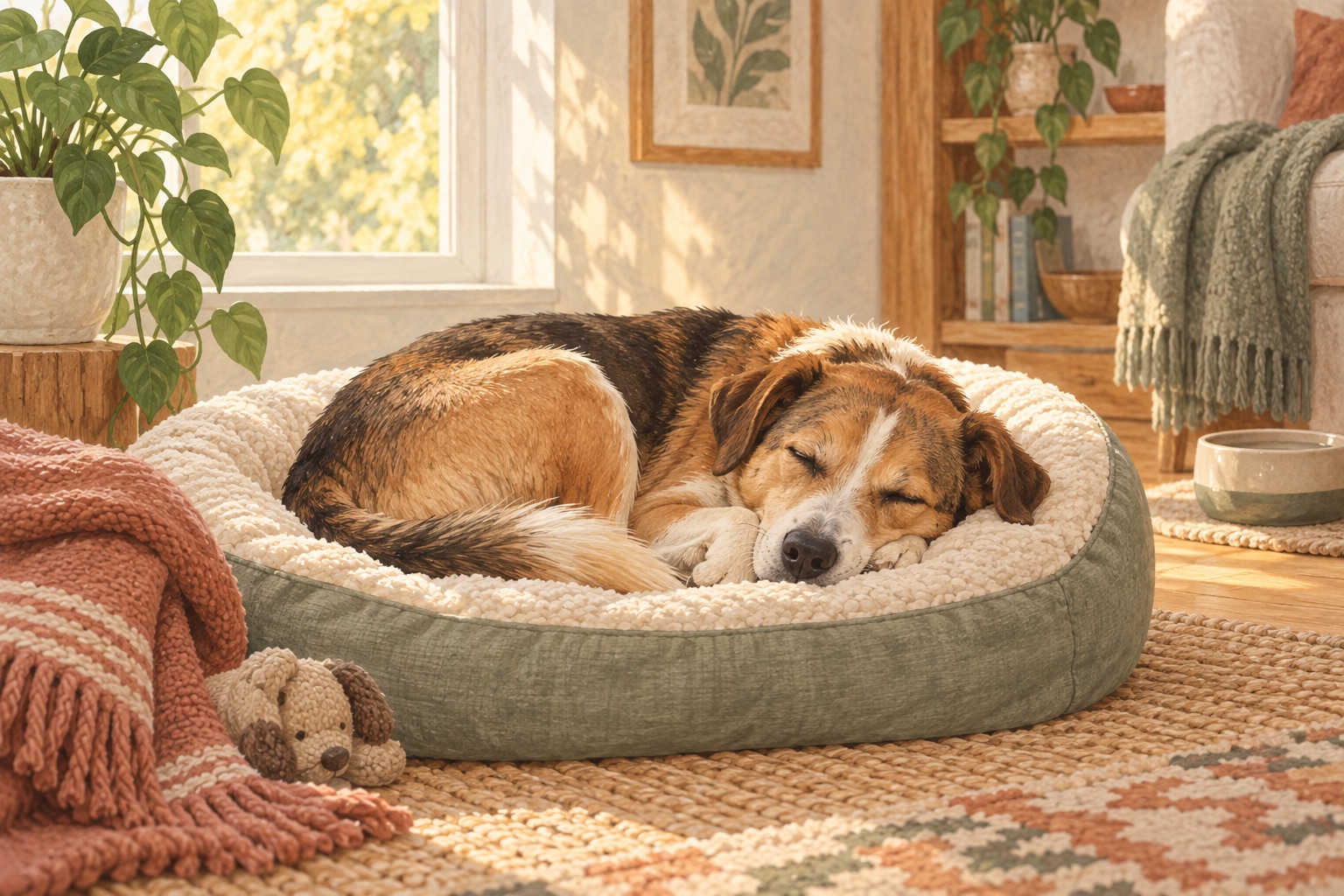
Dogs are also polyphasic sleepers: they can sleep in several bouts across day and night. A dog that naps after a walk, watches the room for a while and settles again has a different pattern from a person aiming for one continuous block. Look at the full 24 hours and at how the dog behaves when awake.
Sleep changes with age, but every dog still needs an individual baseline
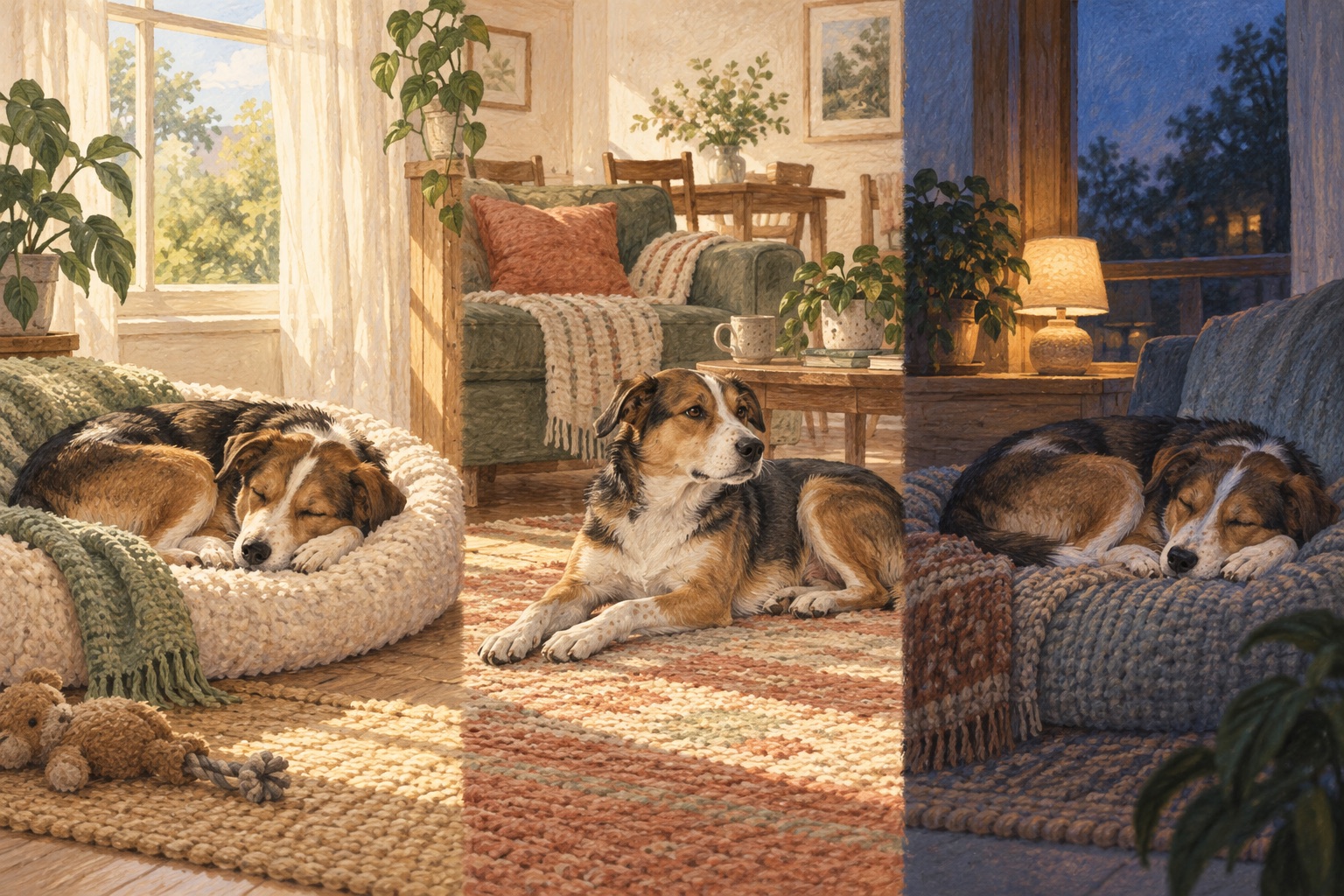
Life stage is one of the clearest influences on sleep. Puppies alternate bursts of activity with deep sleep while their bodies grow and their brains process daily learning. Adults often combine a longer night period with several naps, and their rhythm responds to household activity. Senior dogs may tire sooner on walks and need longer recovery periods.
In the Generation Pup cohort, owners reported that 16-week-old puppies slept more during the day than dogs at 12 months, while nighttime sleep was similar but not identical. The study followed a large group in their homes, but duration was estimated by owners. It supports age-related differences; it does not create a universal timetable.
Do not dismiss a new sleep change as “just age.” Comfort, mobility, medication, health and the home routine can all influence what you see.
| Life stage | Common orientation | Why rest may be higher | Useful comparison |
|---|---|---|---|
| Puppy, up to about 12 months | Often more sleep and daytime naps than adults | Growth, learning, play and short activity periods | Several ordinary days at the same life stage |
| Adult dog | Often around half of 24 hours asleep, including naps | Routine, activity, environment, health and personality | Their own established pattern |
| Senior dog | May rest more, but a new change needs context | Energy, comfort, mobility, health and cognition | Recent baseline plus veterinary context |
| Unusual day | No fixed range | Travel, visitors, more activity or a different resting place | Return to ordinary days before calling it a trend |
Published ranges vary because studies and home estimates measure sleep differently. Use the figures as context, never as proof that an individual dog is healthy or unwell. A sudden or concerning change needs professional advice.
What can make a dog sleep more or less?
Activity before sleep, time of day and sleeping location have all been associated with differences in canine sleep recordings. A day with quality walks, running or scent work may lead to deeper or longer rest; a new place, noise, heat, visitors or disrupted routines may make it harder to settle. Those influences are context, not a diagnosis.
Breed and size can be part of the individual picture. Giant dogs are often described as sleeping more than small or medium dogs, but size does not calculate a safe number of hours. Activity, physical condition, age, personality and health may matter more than a label.
Inactivity is not always restorative sleep. A dog left without suitable movement, exploration or social contact may lie down because little else is available. Instead of increasing stimulation indiscriminately, ask whether the day provides species-appropriate activity, protected rest and voluntary interaction, and whether the dog is engaged in ordinary activities when awake.
What happens during canine sleep, and do dogs dream?
Canine sleep includes lighter non-REM periods and REM sleep. Research protocols report different proportions, so the often-repeated claim that dogs spend exactly 10% of sleep in REM should be treated as an orientation rather than a universal fact. Shorter cycles and lighter sleep help explain why a dog can nap repeatedly and still wake quickly for a doorbell or food preparation.
During REM sleep, some dogs move their paws, twitch their whiskers, blink or make small sounds. These movements are commonly associated with dreaming. There is normally no need to wake a comfortable dog abruptly; give them an undisturbed resting place. If movements are violent, prolonged, new or followed by confusion or illness, record what happened safely and ask the veterinary team for advice.
Is your dog asleep, resting or simply inactive?
A dog lying down is not necessarily asleep. They may be resting with eyes partly open, following sounds, changing position or watching the room. Deep sleep, light dozing and quiet wakefulness can look similar from across a room, which is one reason exact home totals are difficult to measure.
You do not need to wake the dog to test their sleep or buy a tracker to create a diagnosis. Notice broad periods, the context around them and ordinary behaviour after waking. Technology can estimate activity, but a device result cannot tell you by itself whether an individual dog is healthy.
How to find your dog’s normal sleep pattern
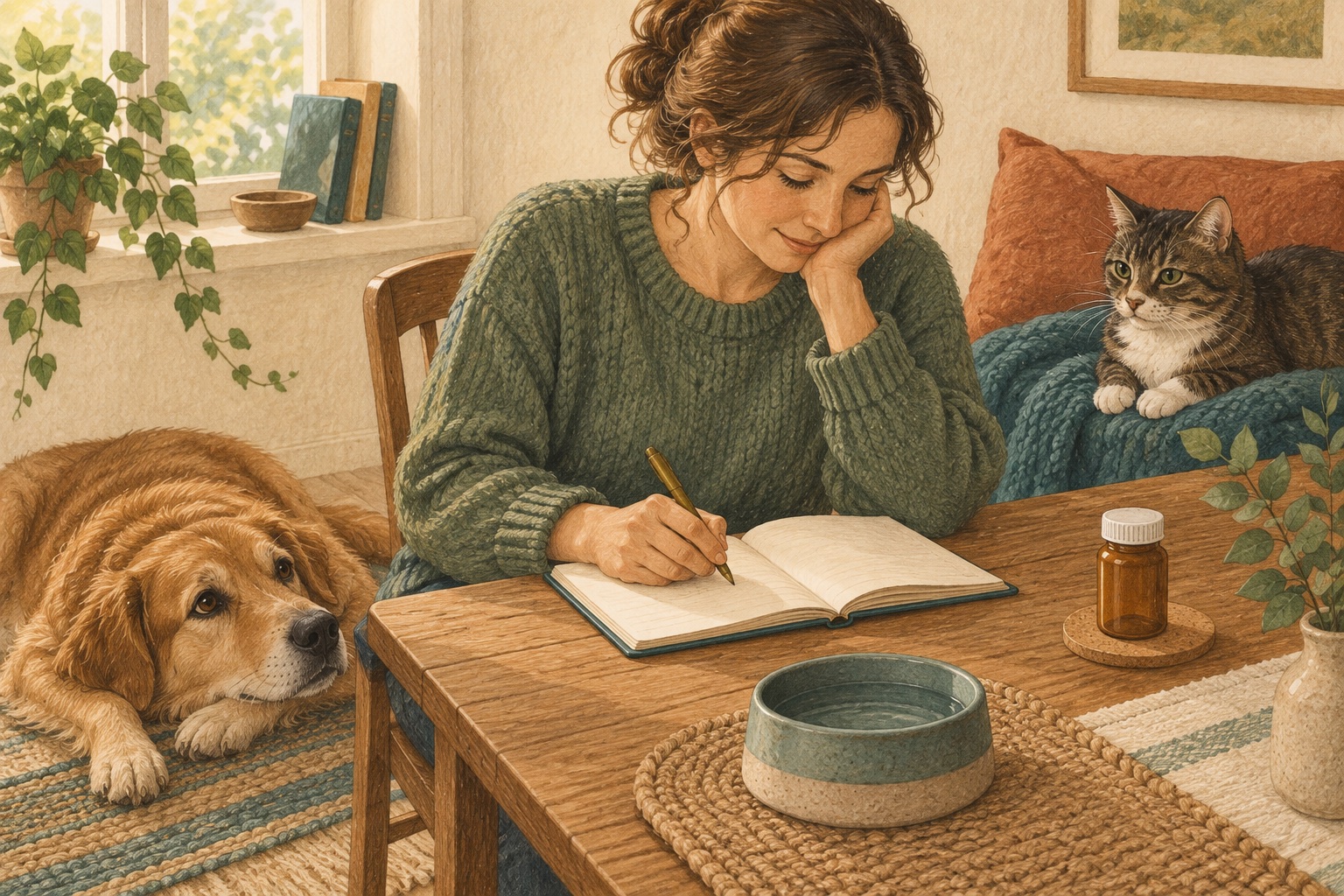
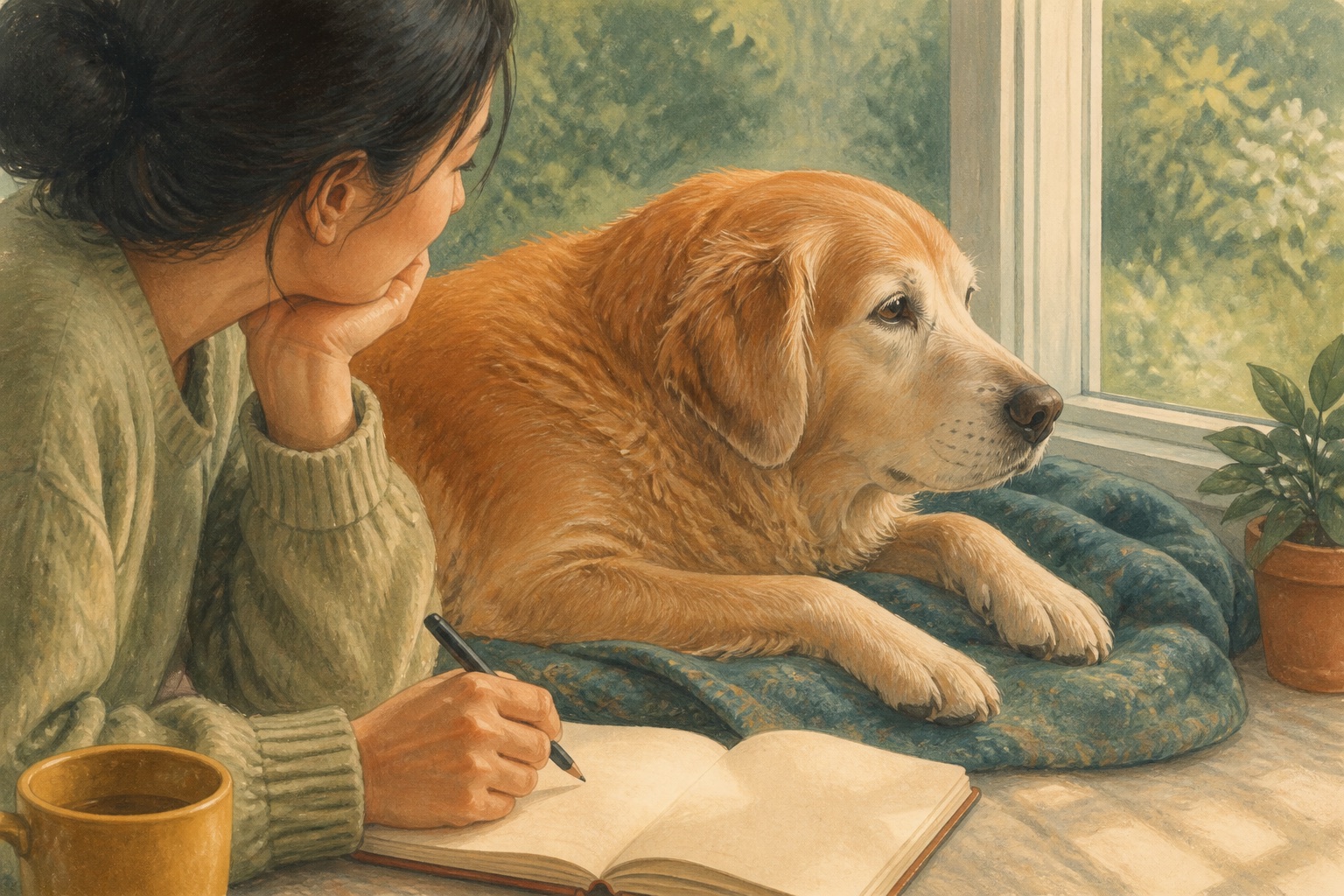
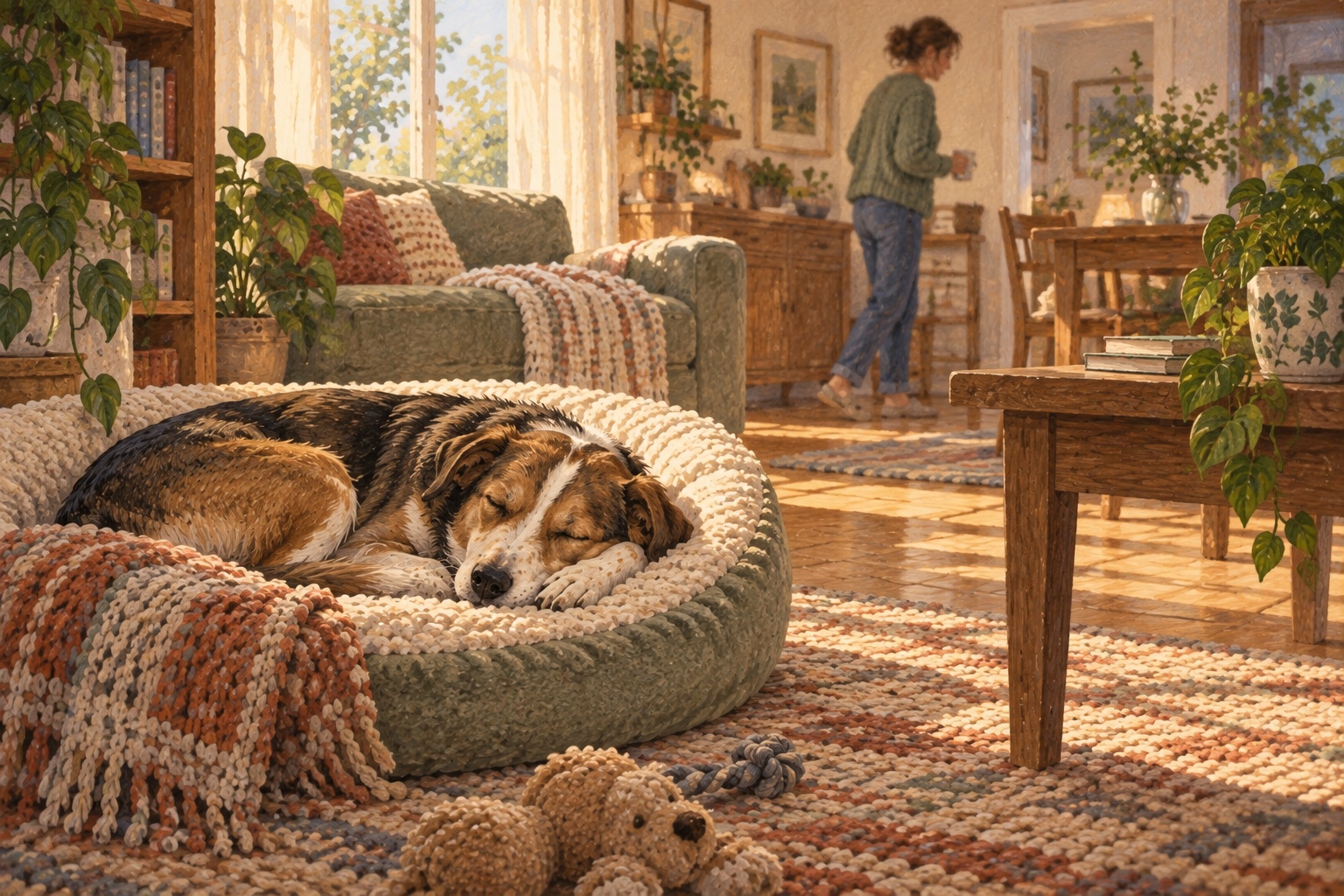
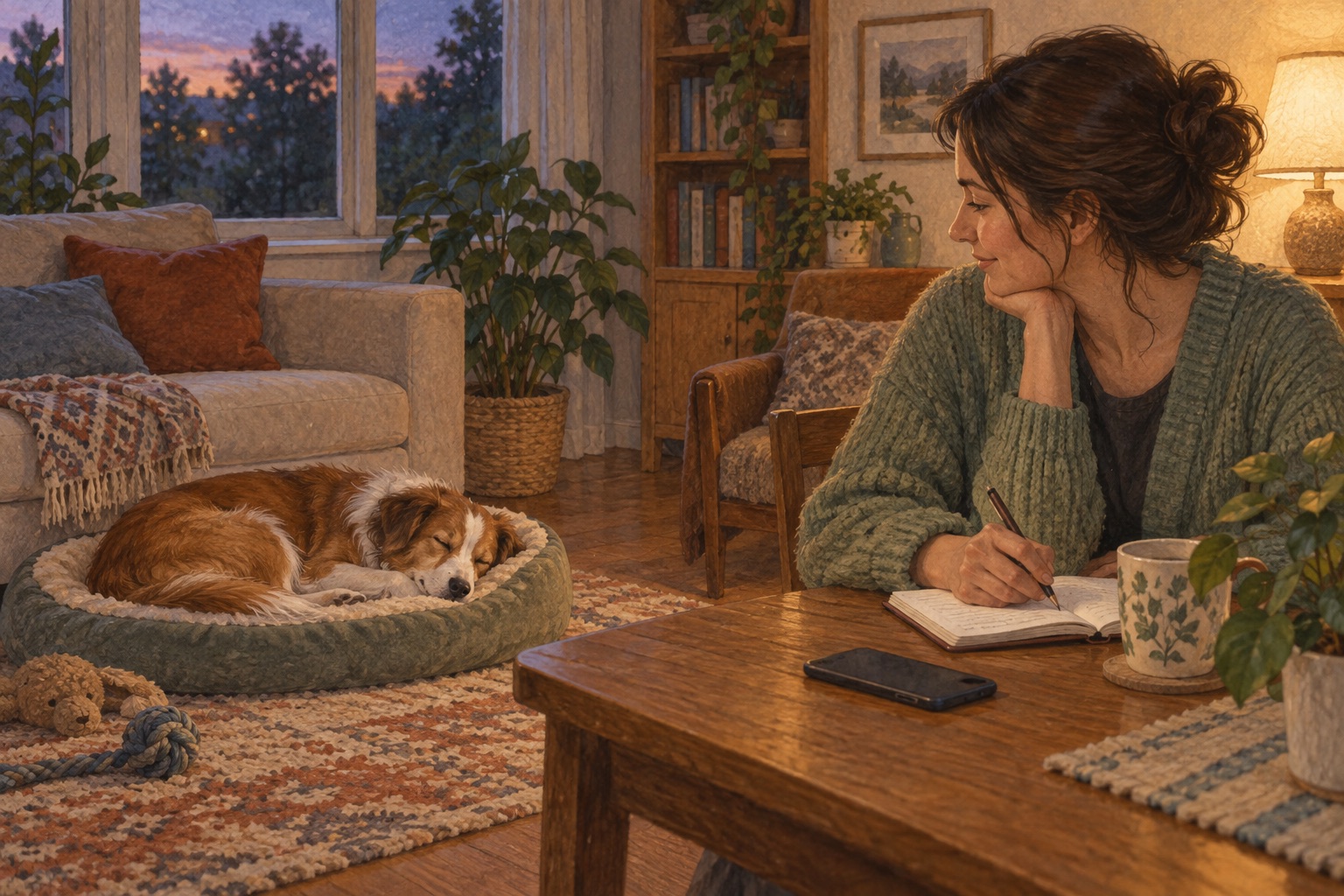
Choose three to seven ordinary days when possible. Note approximate sleep periods, quiet rest, the day’s activity, changes in the home and how the dog behaves while awake. Compare the overall pattern rather than adding every minute. The aim is a useful baseline, not surveillance.
Record an observable fact: “slept after the usual morning walk and got up for lunch” is clearer than “slept too much.” If the pattern changes, add when it began, whether it repeats and what else changed. Three to seven days is an observation format, never a waiting period when the dog seems unwell.
When does a change in sleep deserve veterinary advice?
The important detail is not only the exact number of hours but a sudden or persistent change from the dog’s usual routine. A marked increase in sleep accompanied by apathy, reduced appetite or refusal to walk can indicate that the dog feels unwell. Restlessness, repeated pacing, panting at night or difficulty finding a comfortable position can also be associated with pain, breathing problems or anxiety. An online list cannot identify the cause.
In older dogs, waking disoriented or wandering at night deserves discussion with the veterinary team rather than being dismissed as normal ageing. Bring a concise timeline: when the change began, how often it happens, current medicines and what the dog is like when awake.
If the dog has difficulty breathing, collapses, cannot be roused normally, appears in severe distress or you think the situation is urgent, contact a veterinarian or emergency veterinary hospital immediately. Do not wait to finish a sleep diary.
A calm way to understand your dog’s sleep
- Look across 24 hours
Include daytime naps, nighttime sleep and quiet wakeful rest. Dogs often sleep in several bouts, so one overnight block does not show the whole pattern.
- Use age as context, not a target
Puppies and senior dogs may sleep differently from healthy adults, but life stage cannot produce one exact number for an individual dog.
- Compare ordinary days
For three to seven ordinary days, note broad sleep periods, activity, household changes and behaviour while awake. This builds context without counting every minute.
- Write facts, not conclusions
“Slept after the morning walk and got up for lunch” is more useful than “slept too much.” Add when a change began and whether it repeats.
- Do not wait when worried
The observation window is not a delay rule. Contact a veterinarian promptly for a sudden, persistent or worsening change or concerning signs.
The most useful comparison is your dog with themselves
Notice sleep and quiet rest, the day’s activity, ease of settling, response on waking, appetite, movement and ordinary engagement. A number from an article cannot diagnose a problem. If your dog is difficult to rouse, has trouble breathing, collapses, appears in severe distress or you believe it is an emergency, seek veterinary help immediately instead of completing a log.
Sources and further reading
This general guidance was researched against the following veterinary and animal-care sources:
Frequently asked questions
How many hours a day do dogs sleep?
Many adult dogs spend roughly half of a 24-hour day asleep, often in several periods. It is a general reference, not one healthy target for every dog.
Do puppies sleep more than adult dogs?
They often do. A large owner-reported cohort found more daytime sleep at 16 weeks than at 12 months, but each puppy’s routine and health still matter.
Is it normal for a senior dog to sleep more?
Older dogs may rest more, but a new or marked change should not be dismissed as age alone. Discuss concerning or persistent changes with a veterinarian.
Why is my dog sleeping more than usual?
Activity, routine, environment, comfort, medication and health can all influence sleep. A list cannot identify the cause; contact a veterinarian for a sudden, persistent or concerning change.
Should I wake my dog during the day?
Usually there is no need to wake a comfortable dog simply to meet an online sleep target. Seek individual veterinary advice if the dog is difficult to rouse or the pattern has changed.
These articles offer general, everyday guidance. They do not replace advice from a qualified veterinary professional.
Notice the pattern, not every minute
Keep a calm record when sleep or routine changes.
Nuzzleway helps you save brief dated observations and everyday context on your device, ready when you need to describe what changed.