The short answer
Many healthy adult dogs do well with at least two measured meals per day. Puppies usually need their daily amount divided into more, smaller meals while growing; dogs with medical conditions, medication schedules, limited meal tolerance or a higher risk of gastric dilatation-volvulus may need a different plan. Frequency never replaces the total daily amount, suitable complete food and body-condition monitoring. Measure the day’s food first, divide it deliberately and ask the veterinary team to personalise the schedule. Avoid intense exercise around a large meal, but do not apply one fixed waiting time to every dog.
Most healthy adult dogs do well with at least two measured meals across the day. Puppies commonly need their daily food divided into more meals, while a dog with a medical condition, prescribed diet, small meal tolerance or medication schedule may need a different rhythm. Frequency is only one part of the plan: the total daily amount, nutritional suitability and body condition matter just as much.
Use age and life stage as a starting point, then adapt the schedule with the veterinary team. Do not change a prescribed feeding plan, insulin timing or medicine-with-food instruction from a general article.
How many meals should a dog eat at each life stage?
Puppies are growing and usually need smaller meals more often than adults. As growth progresses, the number of meals can often be reduced gradually. Many adults settle into two meals, while some benefit from a third smaller meal. A senior dog does not automatically need more or fewer meals; appetite, teeth, mobility, digestion, medicines and health conditions should guide any change.
| Dog | Common starting rhythm | What changes the plan | Confirm with |
|---|---|---|---|
| Young puppy | Several small measured meals, often three or four | Age, breed, food, growth rate, body condition and weaning history | Veterinarian and the complete-food feeding plan |
| Older puppy | Meals may reduce gradually as growth and meal capacity change | Expected adult size, skeletal maturity, neuter status and growth | Veterinary growth and body-condition checks |
| Healthy adult | At least two measured meals suits many dogs | Activity, food energy density, body condition, household and tolerance | Current food guidance plus individual veterinary advice |
| Senior dog | Often keeps the existing rhythm if it still works | Appetite, teeth, weight, muscle, medication and diagnosed conditions | Veterinary review rather than age alone |
| Dog with a medical plan | Follow the prescribed schedule exactly | Condition, treatment, diet and medicine timing | Prescribing veterinarian |
These are planning ranges, not a prescription. A dog’s total daily amount must still match the individual nutritional plan.
Separate meal frequency from the amount of food
Dividing food into more meals does not mean increasing the daily total. Start with the measured amount for the whole day, then divide it between meals, training rewards and food toys. Count treats and extras rather than adding them invisibly on top.
Package guidance can provide a starting estimate for a healthy dog, but foods differ greatly in calories per gram or serving. Body condition, weight trend, activity, neuter status and health can change actual needs. WSAVA recommends an individual nutritional assessment and treating the veterinary team as the source for the dog’s optimal plan.
Is leaving food available all day useful?
Free access can make it harder to know how much the dog ate and whether appetite changed. It may also encourage overeating in some dogs, especially in a multi-animal home where the empty bowl does not show who ate the food.
If a veterinarian considers grazing suitable, measure the entire daily portion first and record what remains. Separate animals when needed so each can access the correct food safely. Never leave perishable food out beyond its safe handling time.
Do small dogs, large dogs and fast eaters need different schedules?
Size alone does not produce a complete plan. A young toy-breed puppy may need small frequent meals, but an adult small dog is not automatically hypoglycaemic. Large and deep-chested dogs can have a higher risk of gastric dilatation-volvulus, yet risk also involves genetics, age, stress, eating speed and other factors. For dogs at higher risk, a veterinarian may recommend multiple smaller meals and discuss exercise timing or preventive gastropexy.
A slow feeder or food-dispensing toy may help some dogs eat more gradually or provide enrichment. It does not prevent every digestive problem, create satiety on a guaranteed timetable or replace a veterinary risk plan. Start with an easy design, supervise its use, keep it clean and stop if it causes frustration, chewing or unsafe ingestion.
Should a dog eat before or after a walk?
Avoid intense exercise around a large meal, particularly when the dog is at increased risk of gastric dilatation-volvulus. The source document for this article proposed fixed waits for every dog, but the evidence does not support one universal minute rule. Meal size, exercise intensity, age, temperature, health and individual risk all matter.
Build a calm sequence that fits the dog: ordinary toilet access and gentle movement are not the same as running or vigorous play. Ask the veterinarian for specific timing when the dog is deep-chested, has a relative with GDV, gulps food, has digestive disease or follows a medical feeding schedule. Repeated unproductive retching, a swollen abdomen, marked restlessness, drooling, weakness or collapse can signal an emergency and needs immediate veterinary care.
How do you build a feeding schedule that works at home?
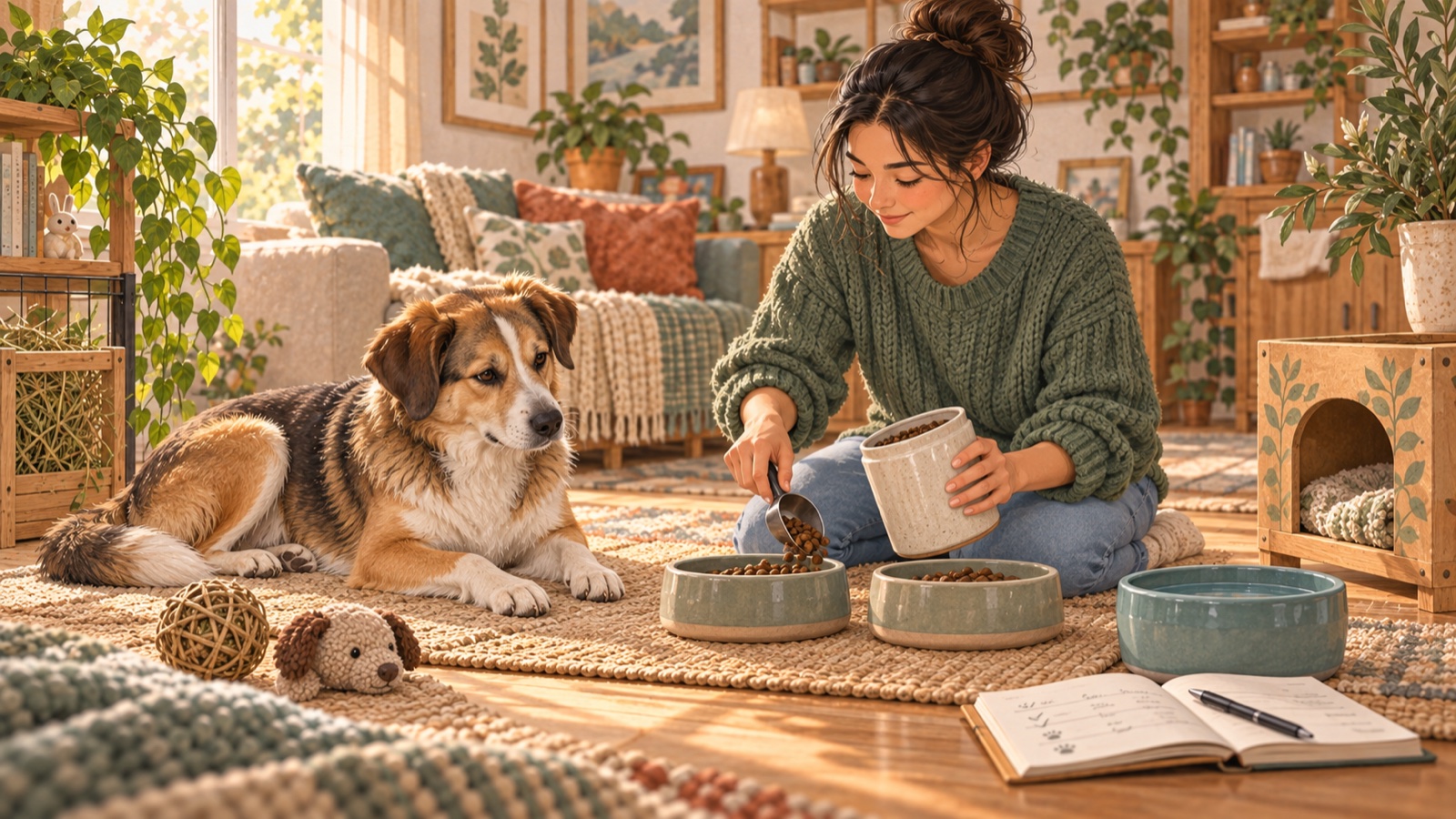
Choose meal times that can be maintained most days and assign one person or one shared record to confirm each meal. Measure the full daily amount before the first meal, especially when several people care for the dog. Keep fresh water available unless a veterinarian has given a specific instruction.
For one ordinary week, note whether the dog approaches the meal, how much is eaten, any vomiting or regurgitation, stool changes and whether another animal could reach the bowl. Do not turn every meal into a test. The purpose is to learn the ordinary pattern and notice a meaningful change.
When should a change in appetite lead to a veterinary call?
Contact a veterinarian when a dog suddenly refuses food, repeatedly leaves meals, eats much more or less than usual, loses weight, vomits, has diarrhoea, seems painful or weak, drinks or urinates differently, or has trouble chewing or swallowing. Puppies, dogs with diabetes or another diagnosed condition, and dogs taking medicine with food may need earlier individual advice.
Do not force food, double the next meal or improvise a diet change when the dog may be unwell. Record what was offered, what was eaten and any accompanying signs, then follow professional guidance.
Build a measured feeding rhythm
- Confirm the daily amount
Use the current complete-food plan and veterinary advice as the starting point. Measure accurately and include food used for rewards or enrichment.
- Divide it for the life stage
Puppies generally need smaller, more frequent meals. Many adults suit at least two meals. Keep a prescribed schedule unchanged until the clinic advises otherwise.
- Make shared care unambiguous
Assign each meal to one caregiver or one shared confirmation so two people cannot both feed or both assume the other did.
- Adapt the meal environment
Provide a calm, clean place with safe access. Separate animals when competition or different diets make intake unclear.
- Treat appetite as information
Notice a sudden refusal, repeated leftovers, gulping, vomiting, stool changes or weight trend and discuss a concerning change with the veterinarian.
The schedule should reveal change, not police the dog
Record meal completion only when another caregiver needs it or appetite has changed. If the dog repeatedly refuses food, has trouble chewing, vomits, seems painful or weak, or shows possible signs of GDV such as unproductive retching and abdominal swelling, contact a veterinarian promptly or urgently as appropriate.
Sources and further reading
This general guidance was researched against the following veterinary and animal-care sources:
Frequently asked questions
How many times a day should an adult dog eat?
Many healthy adult dogs do well with at least two measured meals per day. Some need a different frequency because of their health, food, household or veterinary plan.
How often should a puppy eat?
Puppies generally need their daily amount divided into more meals than adults because they are growing and have smaller stomachs. The exact rhythm changes with age, breed, food and growth, so confirm it with the veterinary team.
Should a senior dog eat more often?
Age alone does not create one senior feeding schedule. Some older dogs continue with two meals; others need a different food, portion or frequency because of appetite, medication or a health condition.
Is free feeding a good idea for dogs?
Leaving an unmeasured supply available can make intake and appetite changes harder to assess and may contribute to overeating in some dogs. If grazing is appropriate, measure the full daily amount and track what remains.
Should a dog eat before or after a walk?
Avoid intense exercise around a large meal, especially for dogs at higher risk of gastric dilatation-volvulus. There is no single minute rule for every dog; ask your veterinarian about meal and exercise timing for the individual.
These articles offer general, everyday guidance. They do not replace advice from a qualified veterinary professional.
Keep the agreed rhythm visible
Turn a feeding plan into a calm daily routine.
Nuzzleway helps you keep chosen meal times, shared-care notes and appetite observations together while your veterinary team remains the source for amounts and dietary decisions.