The short answer
There is no universal number of walks that suits every dog. Separate toilet opportunities from exercise and sniffing, then build a repeatable rhythm around age, health, mobility, weather and the dog’s response. Puppies may need frequent short outings, healthy adults often benefit from several opportunities to go outside, and older dogs may prefer shorter, gentler walks with more recovery. The useful measure is not distance alone: willingness to leave, comfort during the walk and recovery afterwards all matter.
Walking your dog is not only a matter of “going to the toilet”; it is an important activity for physical, mental and emotional wellbeing. A structured walking routine can also make life at home easier by giving the dog recognisable signals and a more predictable rhythm. So how often should you walk a dog? The useful answer is not one perfect schedule, but a routine that fits this dog’s age, health, energy, environment and real household rhythm.
How often should a dog go out?
There is no single number that works for every dog. A ten-year-old Chihuahua does not necessarily have the same needs as a two-year-old Border Collie, and breed labels alone are not enough to set a plan. Age, bladder capacity, physical development, joints, health, energy and the dog’s response all matter.
Puppies have small bladders and are still learning where to toilet, so they may need short, frequent outings. Follow the veterinary team’s vaccination advice before using areas visited by many dogs. A healthy adult often benefits from several opportunities to go outside and from at least one outing with room to sniff and explore. As dogs age, keep regular opportunities to toilet but reduce intensity or duration when their mobility and recovery call for it.
Frequency, exercise and toilet needs are related but not identical. A brief toilet break, a relaxed sniff walk and a longer activity walk serve different purposes. Start with the dog’s established routine and adjust one part at a time, taking veterinary guidance into account when health, mobility or continence changes.
| Life stage | Frequency and format | Main purpose | What to watch |
|---|---|---|---|
| Puppy | Frequent, short and positive outings; the original practical example used 4–6 outings of 10–15 minutes | Toilet learning, safe social exposure and exploration | Confidence, fatigue, recovery and ability to settle |
| Young or adult dog | Several daily opportunities; the original example used 3–4 outings with one longer walk | Toileting plus suitable physical activity, sniffing and exploration | Enthusiasm, comfort, behaviour afterwards and changing weather |
| Senior dog | Regular, gentler and often shorter outings; the original example used 3–4 outings of 15–20 minutes | Toileting, comfortable movement and maintaining confidence | Mobility, breathing, willingness and recovery later that day |
| Health or mobility change | Follow the individual veterinary plan instead of a generic schedule | Safe activity at the level advised for this dog | Pain, stiffness, limping, unusual breathing or refusal to continue |
The numbers are an illustrative starting point preserved from the original draft, not a prescription. The right routine depends on the individual dog and may change over time; the commonly repeated “five minutes per month of age” rule is not a substitute for veterinary or development-specific advice.
How do you build a walking routine?
For the routine to remain sustainable for both person and dog, the original draft proposes three pillars: consistency, quality and predictable cues. Using similar time windows can help the dog know what to expect, but the exact minute does not need to rule the household. Predictability may reduce uncertainty and demand-related arousal or barking, although a routine is not a treatment for anxiety or a medical or behaviour condition.
Quality matters as much as quantity. Three well-structured, relaxed outings may offer more than five hurried circuits of five minutes around the block. Predictable cues also matter: dogs learn by association, so repeating a calm sequence before leaving can make the transition easier without demanding perfect stillness.
Keep the order recognisable — prepare, go outside, allow time for toileting, explore or play, return at a quieter pace and settle at home — while adapting duration and intensity. Design the routine around the time you really have. A modest plan that remains stable is more useful than an ambitious one that disappears during the week.
How can you organise morning, daytime and evening walks?
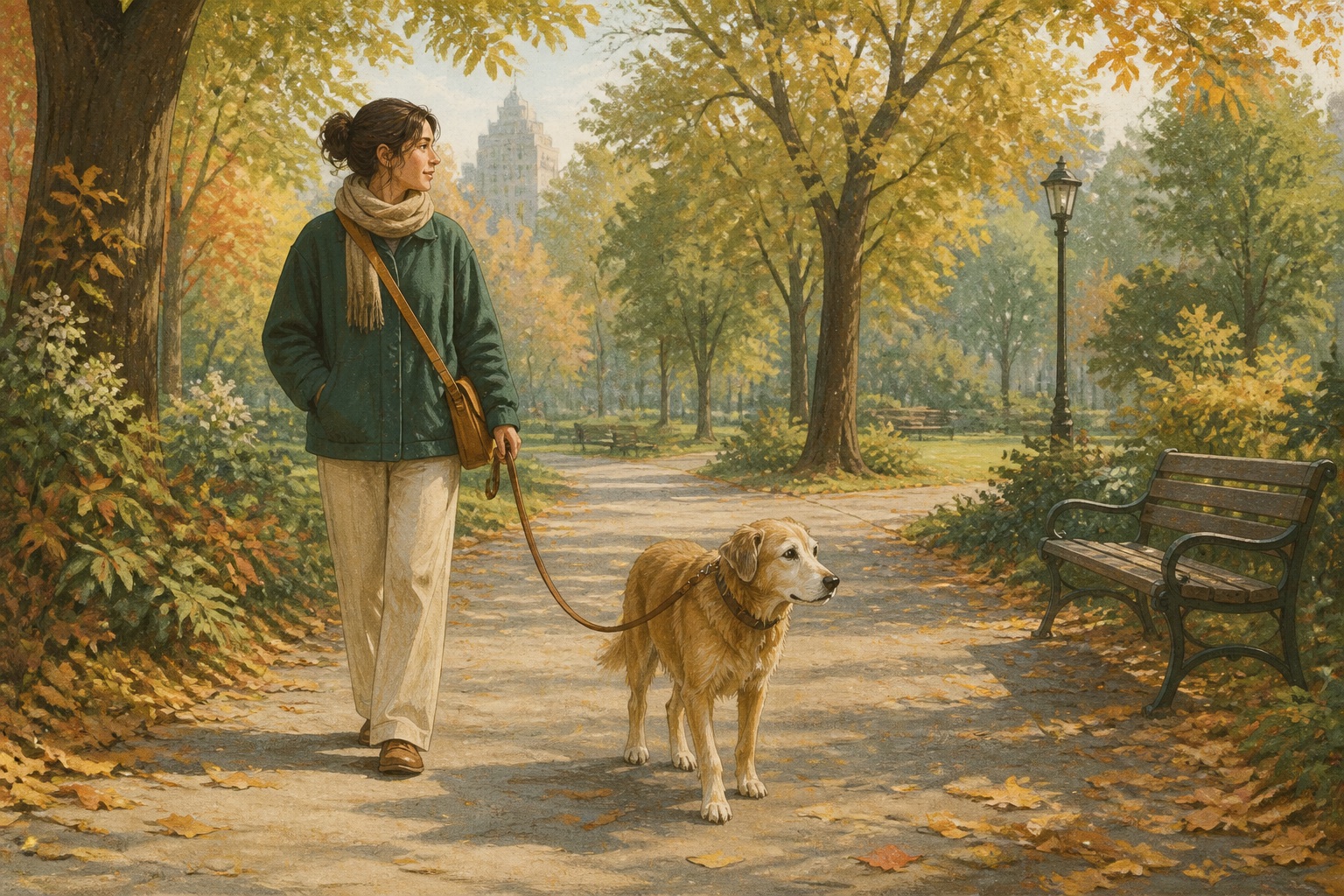
The moments below preserve the original three-walk example; they are not a timetable every household must copy. The first walk relieves needs accumulated overnight and starts the day calmly. The main outing gives more room for physical activity, sniffing, play and exploration. The final walk is shorter and more relaxed so the dog can toilet and move towards rest.
Some dogs need additional toilet opportunities, shorter gaps or a different distribution. Work schedules, climate, age, health and access to suitable outdoor space all change the plan. If a dog is repeatedly uncomfortable or unable to wait between outings, ask the veterinary team rather than stretching the schedule.
| Moment | Illustrative duration | Main purpose | Possible activity |
|---|---|---|---|
| Morning, after waking | 20–30 minutes in the original example | Toileting, decompression and a calm start | A medium or comfortable pace, toileting and some sniffing |
| Main outing | 45–60 minutes in the original example | Suitable physical activity and mental stimulation | Sniffing games, exploration and safe social opportunities |
| Before bedtime | 15–20 minutes in the original example | Toileting, calm and transition towards rest | A slower familiar route with unhurried sniffing |
The durations are the original draft’s practical example, not universal requirements. The number and timing of outings should follow the dog’s needs, weather and health.
Start the walk before you cross the door
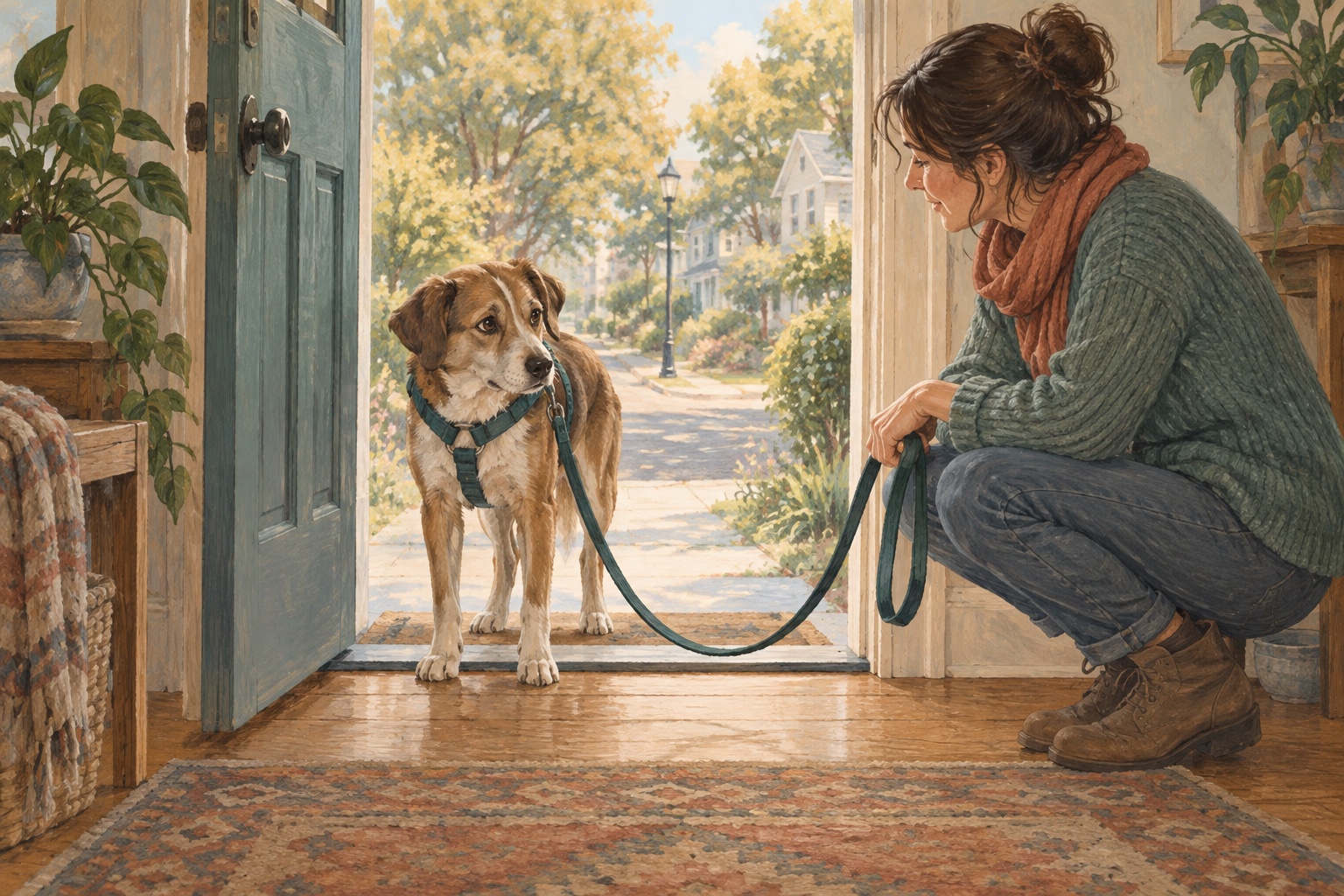
The original routine begins with a calm preparation ritual. Prepare the lead, harness and anything you need without turning the doorway into a confrontation. If the dog jumps or barks when the lead appears, pause, put it down briefly and try the next step again when arousal has fallen. The aim is a manageable transition, not forcing a long sit before every walk.
Use the first minutes outside as a decompression and toileting area. Take the dog to a suitable place, allow them to empty their bladder and orient themselves, and avoid demanding continuous attention or obedience the instant they leave home.
The middle of the walk can then focus on active sniffing, exploration and suitable movement. During the final five or ten minutes, reduce the pace when practical and avoid intense games immediately before entering the building. This creates a clearer transition back home.
A safe chew or food toy may help some dogs move from the walk towards rest after returning, provided it suits the individual, is supervised where necessary and fits veterinary or dietary guidance. A puppy, newly adopted dog or dog returning after a frightening experience may still need a shorter, familiar version of the whole sequence.
Why does sniffing belong in a good walk?
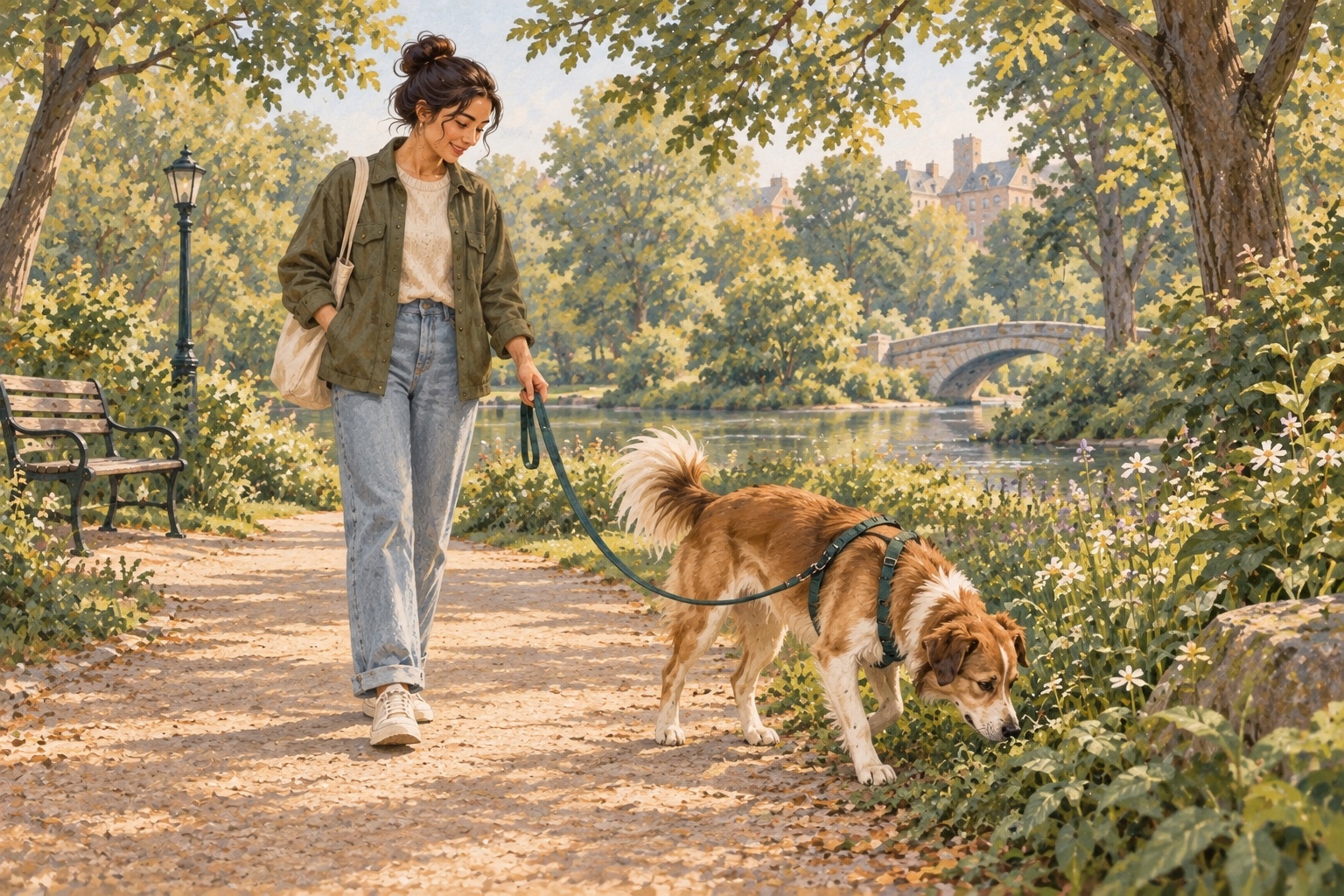
For a dog, sniffing is a primary way of reading the environment. Dogs have far more olfactory receptors than humans, but the exact figure varies between sources and individuals. The useful point is that restricting every sniff removes an important channel of investigation.
Following and analysing scent adds mental and cognitive work to the outing. It is not accurate to convert a fixed number of sniffing minutes into an exact amount of running, but an unhurried scent-led walk can be worthwhile and mentally demanding even when it covers little distance.
Sniffing can also support a slower pace and indirect social communication. Odour may carry cues about another animal’s identity, reproductive status, diet, condition and how recently they passed, although we cannot turn the dog’s interpretation into an exact human-readable list. A dog does not need direct contact with every animal to investigate the social environment.
Allowing the dog to choose what to investigate and when to move on also provides a measure of control. Let them pause where it is safe and guide them away from rubbish, traffic or hazards. Choice does not mean losing control; it means permitting reasonable exploration within a safe route, lead length and environment.
How do breed, energy and walking equipment change the plan?
Genetics and breeding history can influence the type of activity a dog enjoys, but they do not calculate a universal duration. Working, herding or hunting dogs such as Border Collies, German Shepherds, Labradors, Golden Retrievers, Huskies or Beagles may seek sustained movement, scent games or retrieving. Small or medium dogs such as Poodles, Schnauzers, Yorkshire Terriers, Chihuahuas or Bichons can still have intense activity in shorter bursts. Flat-faced dogs such as Bulldogs, Pugs or Boxers may need extra caution with breathing and heat, while giant dogs such as Great Danes, Mastiffs or Saint Bernards may benefit from moderate activity and lower-impact routes. Use those tendencies as context, then plan for the individual dog rather than the label.
In urban and shared environments, a lead is often the safest way to prevent traffic accidents, escapes after a fright, access to rubbish and unwanted approaches to dogs or people. Local rules differ, so check the law where you live and use designated off-lead areas only when they are suitable and safe.
A comfortable Y- or H-shaped harness can allow shoulder movement for many dogs when it is fitted correctly, although no shape works automatically for every body. The original draft suggests a fixed lead of roughly two to three metres for exploration; whether that length is safe depends on the environment and the handler’s ability to manage it. Retractable leads keep changing length and can be harder to control in some situations, so assess their risks rather than treating one tool as universally correct.
Adapt the route to weather, health and recovery
Choose cooler times in hot weather, check hard surfaces before setting out and shorten or replace an outing when conditions are unsafe. Flat-faced dogs, older dogs, puppies and dogs with health conditions may need additional caution. In cold or wet weather, route, surface, visibility and the dog’s individual comfort still matter.
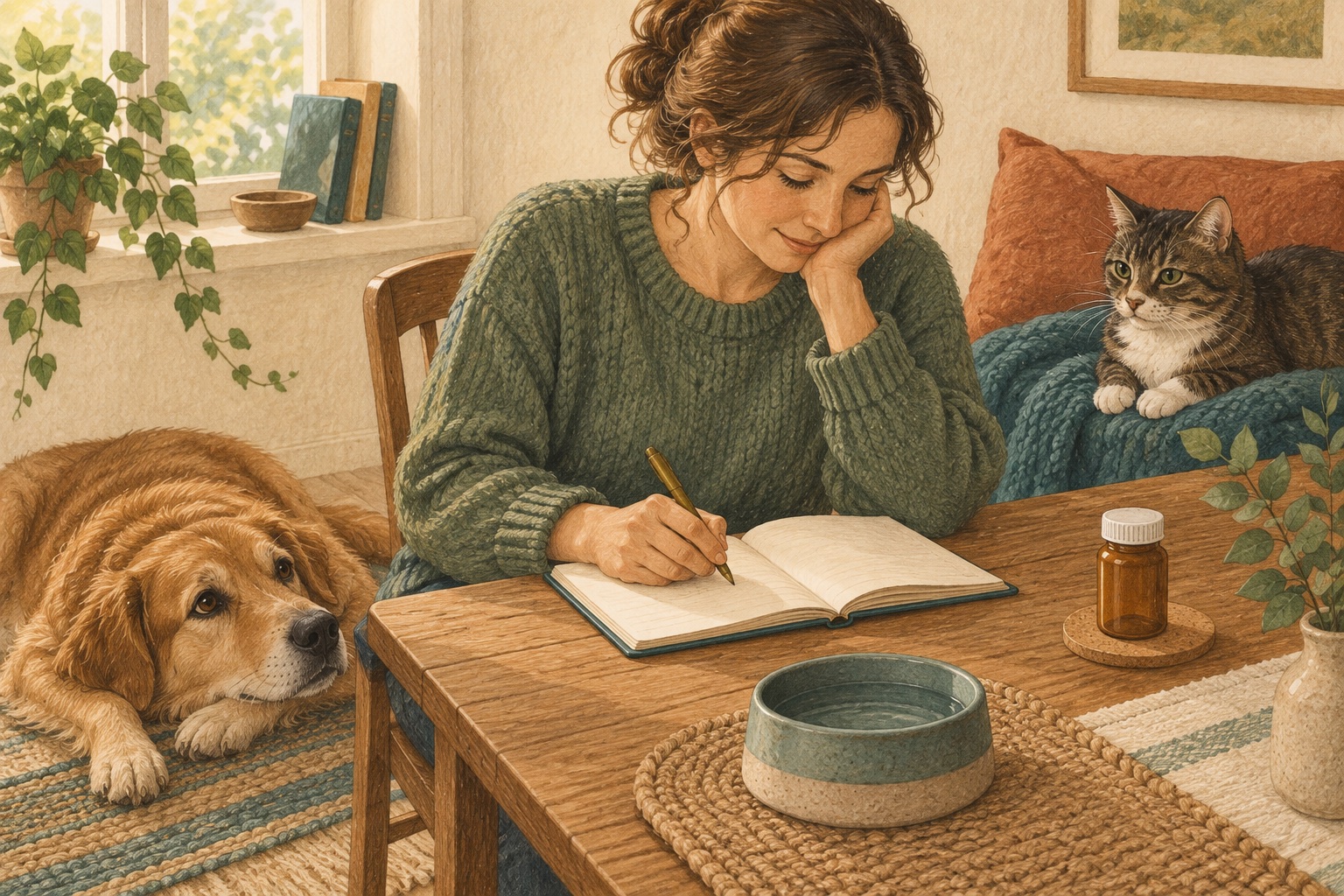
Observe the return home as well as the walk itself. Notice whether the dog settles normally, remains unusually restless, is stiff after resting or approaches the next ordinary activity differently. A brief note about route, weather, pauses and recovery can reveal more than chasing a universal number of minutes.
If the main difficulty is a consistently tight lead, follow the loose-lead training guide for short reward-based practice.
What if your dog does not want to walk?
Do not assume that stopping, sitting down or trying to return home is stubbornness. Heat, uncomfortable equipment, fear, fatigue, sore paws, pain or illness can all change willingness to walk. A sudden refusal, limping, difficulty getting up, unusual breathing or marked distress deserves prompt veterinary advice.
When immediate health concerns have been ruled out, reduce difficulty and rebuild from a distance and pace the dog can manage. Avoid dragging, punishment or forced exposure. Persistent fear or a walk that is becoming unsafe may require help from a qualified reward-based behaviour professional working with the veterinary team.
Build a walking routine that fits the dog
- Start with the current baseline
Use the frequency, route and pace the dog currently handles comfortably. Adjust one part at a time so you can see what changes their response.
- Separate the purposes of each outing
A toilet break, an unhurried sniff walk and a longer activity outing meet different needs. They do not have to be the same length or intensity.
- Make room for sniffing
Allow safe pauses to investigate scents. A slower exploratory walk can provide value even when it covers little distance.
- Keep equipment and routes comfortable
Check the fit and condition of the harness and lead, and choose footing, traffic levels and escape routes that suit the individual dog.
- Adapt to weather and life stage
Use cooler times in hot weather and make outings shorter or gentler when age, health or conditions require it. Veterinary advice takes priority over a generic schedule.
- Compare recovery as well as distance
Notice how the dog settles, moves after resting and approaches the next ordinary activity. Recovery can reveal that a walk was too demanding.
A one-week walking note
For several ordinary days, record the outing’s purpose, broad duration, route, weather, willingness to go, pauses and recovery. Look for repeated patterns rather than scoring a single walk. Do not wait to complete the week if refusal is sudden, the dog is limping, breathing unusually, struggling to rise or appears distressed; contact a veterinarian promptly.
Sources and further reading
This general guidance was researched against the following veterinary and animal-care sources:
Frequently asked questions
How many times a day should a dog go for a walk?
There is no single number for every dog. Age, health, toileting needs, energy, environment and the purpose of each outing all shape the routine.
How long should each dog walk last?
Use the dog’s comfortable baseline and consider pace, terrain, weather and recovery as well as minutes. Adjust gradually and seek veterinary guidance when health or mobility changes.
Is sniffing part of exercise?
Sniffing adds exploration and mental activity to a walk. Allow safe pauses rather than measuring the value of every outing only by speed or distance.
What is the best time to walk a dog?
Choose times that meet the dog’s toilet needs and avoid unsafe conditions. In hot weather, cooler parts of the day and safe surfaces are especially important.
What if my dog suddenly refuses to walk?
A sudden refusal can be associated with pain, illness, fear, weather or equipment. Stop forcing the walk and contact a veterinarian promptly when the change is sudden or concerning.
These articles offer general, everyday guidance. They do not replace advice from a qualified veterinary professional.
Build a rhythm that fits
Keep a flexible walking plan visible.
Nuzzleway helps you organise repeatable daily care moments and adjust them as your dog’s routine changes.