The short answer
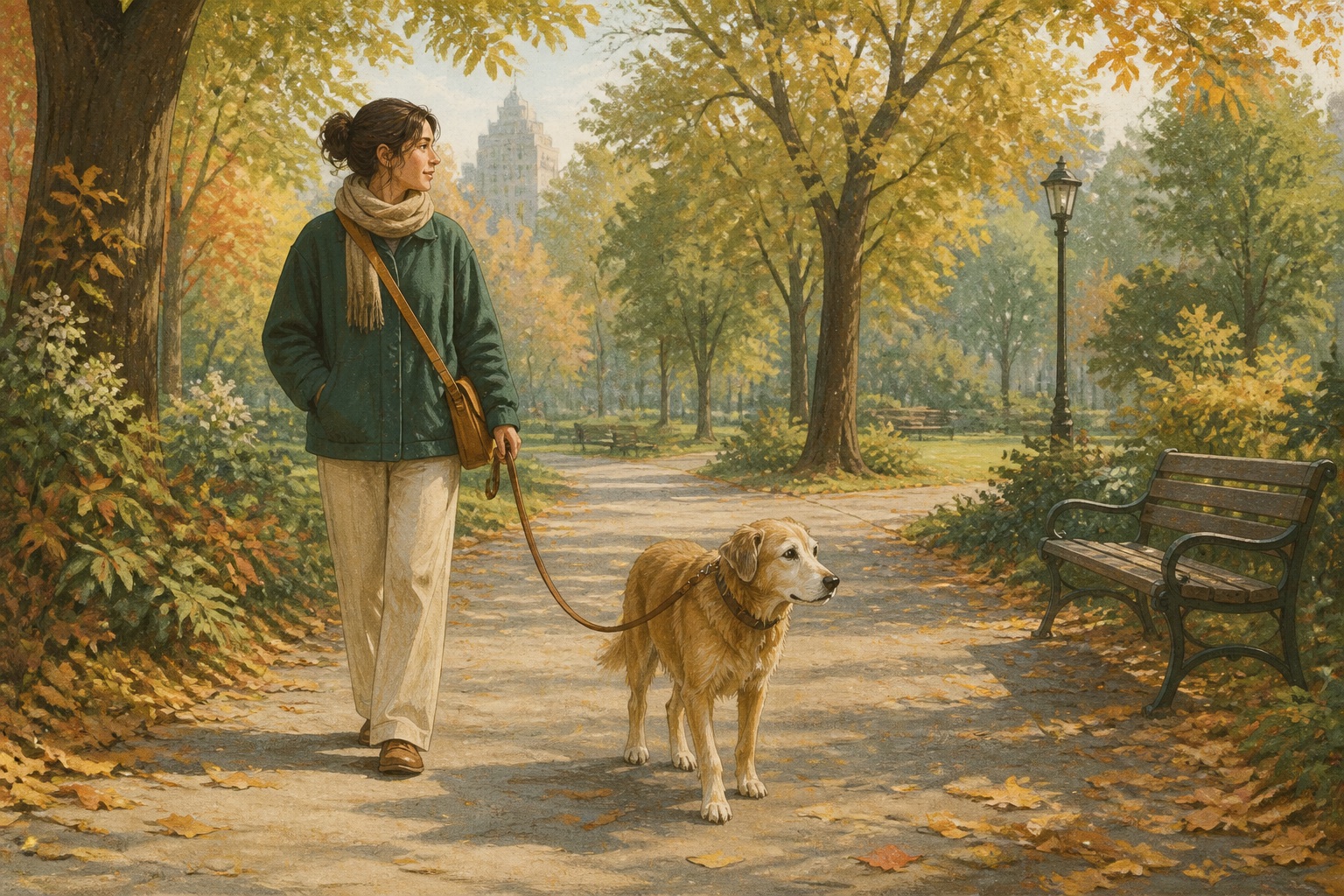
Senior dogs usually benefit from regular, gentle activity adapted to their current mobility, health and response. There is no universal duration based on size alone: shorter walks, little and often, familiar routes and planned rest are safer starting points than forcing a distance target.
There is no reliable rule that assigns every senior dog a number of walking minutes from weight or age alone. Breed, health, mobility, fitness, weather and the dog’s own response all change what is appropriate. A safer starting point is the comfortable routine your dog can manage now, adjusted gradually with veterinary guidance when health or mobility has changed.
How long should a senior dog walk?
Use the current comfortable baseline rather than a generic target. PDSA, RSPCA, Blue Cross and AAHA guidance all point in the same direction: keep activity regular and gentle, favour shorter walks little and often, and adapt exercise to the individual dog’s physical condition, mobility and health.
Duration is only one part of the walk. Ten unhurried minutes with time to sniff on a flat route may ask something very different from ten minutes of steep slopes, heat, crowds or fast movement. Change one variable at a time so you can see how your dog responds.
Use response, not size alone, to adjust the walk
A small senior dog does not automatically need less exercise, and a large dog does not automatically need more. Body size can affect equipment and physical assistance, but it does not tell you whether a particular heart, joint, neurological or respiratory condition changes the plan.
The table below is a decision aid, not a diagnosis. A new or repeated difficulty deserves a conversation with the veterinary team that knows the dog.
| What you notice | Practical adjustment | Next step |
|---|---|---|
| Comfortable pace and usual recovery | Keep the familiar baseline; add distance or time only gradually | Continue observing during and after the walk |
| Slows, stops or seeks repeated rests | Pause, shorten the route and make the return easy | Discuss a new or repeated change with the veterinarian |
| Less confident on slopes or slippery ground | Choose flatter, stable surfaces and avoid difficult footing | Ask about mobility support if access is limiting activity |
| Reduced sight or hearing | Use familiar routes, a secure lead and more distance from sudden hazards | Tell the veterinary team about the change |
| Very hot, cold or humid conditions | Move the walk to a safer time or replace part with calm indoor activity | Do not push through weather-related discomfort |
Stop and seek prompt veterinary advice for a sudden, severe or worsening problem, or whenever you are worried.
Plan a route with an easy way home
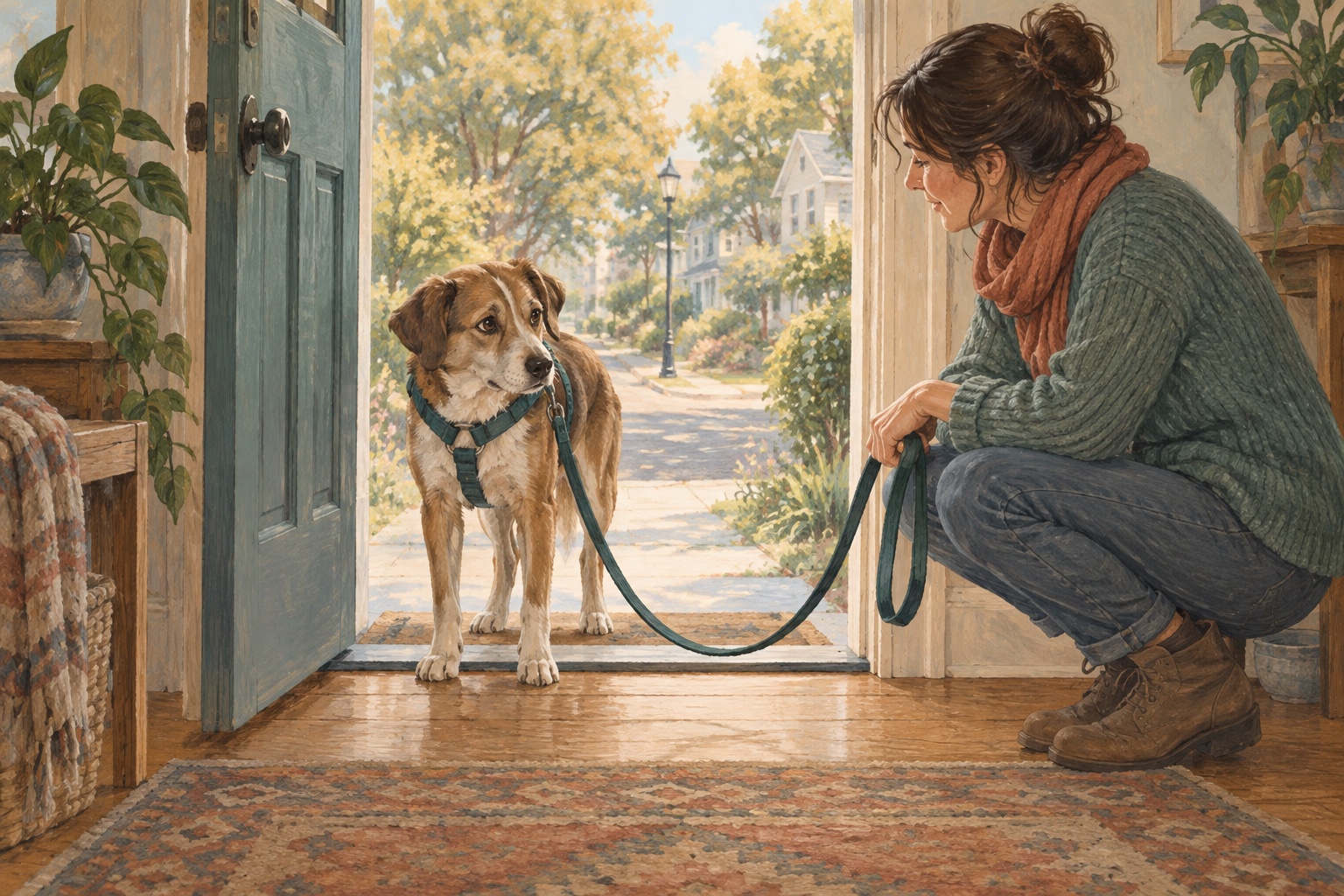
Choose a short, familiar loop or an out-and-back route that can be shortened without carrying on to reach home. Flat, stable surfaces are often easier to manage than steep or slippery ground. If you drive to a favourite place, make sure getting into and out of the vehicle is also manageable.
Check temperature, shade and surface heat before leaving. Older dogs may cope less well with very high or low temperatures. Carry water when appropriate, avoid the hottest part of the day and use suitable protection only when it fits the individual dog and professional advice.
Let the dog set the pace and make room for sniffing
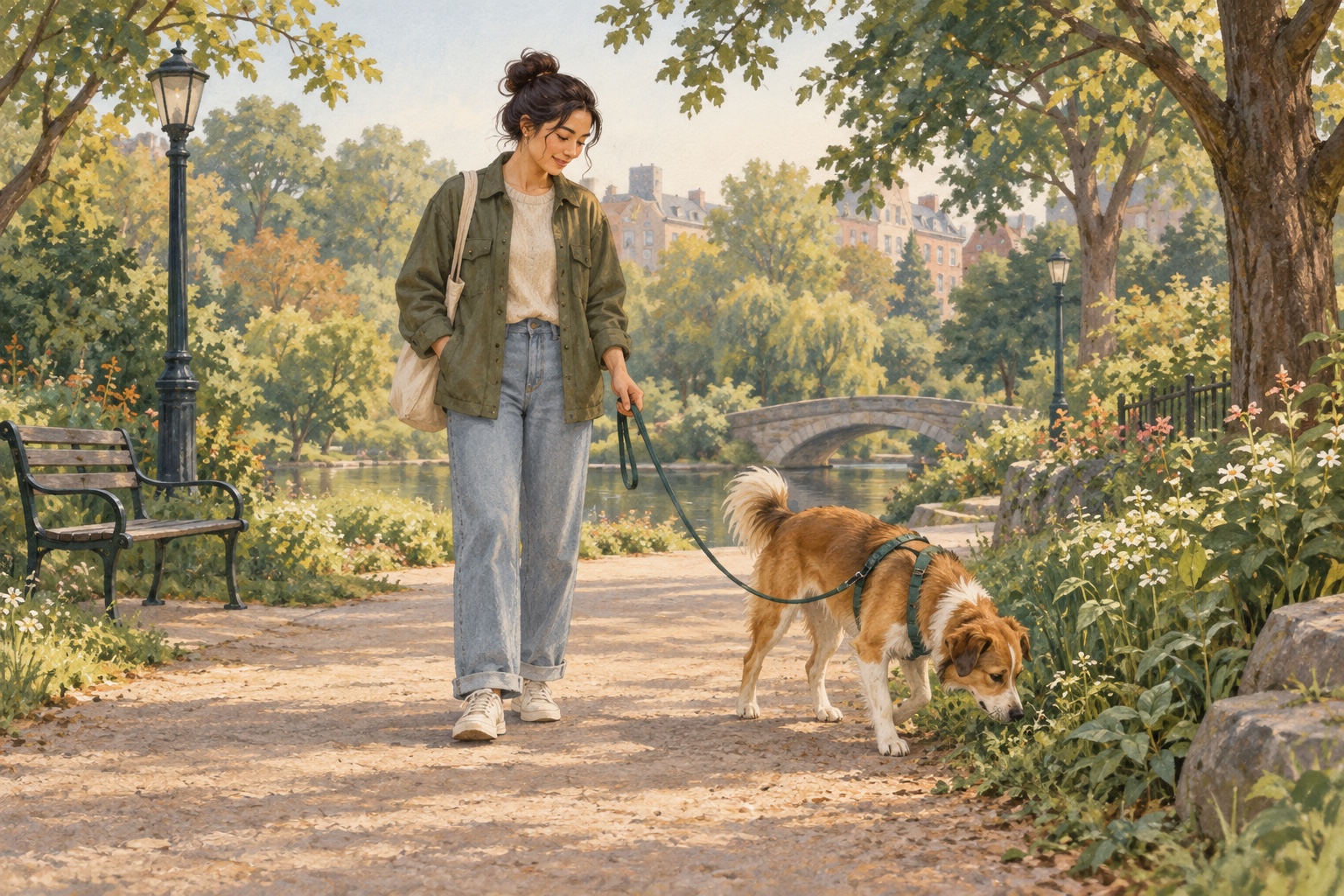
A senior walk does not need to look athletic to be worthwhile. Gentle movement, familiar social contact and time to sniff can provide physical and mental activity. Do not pull the dog onward to complete a distance target.
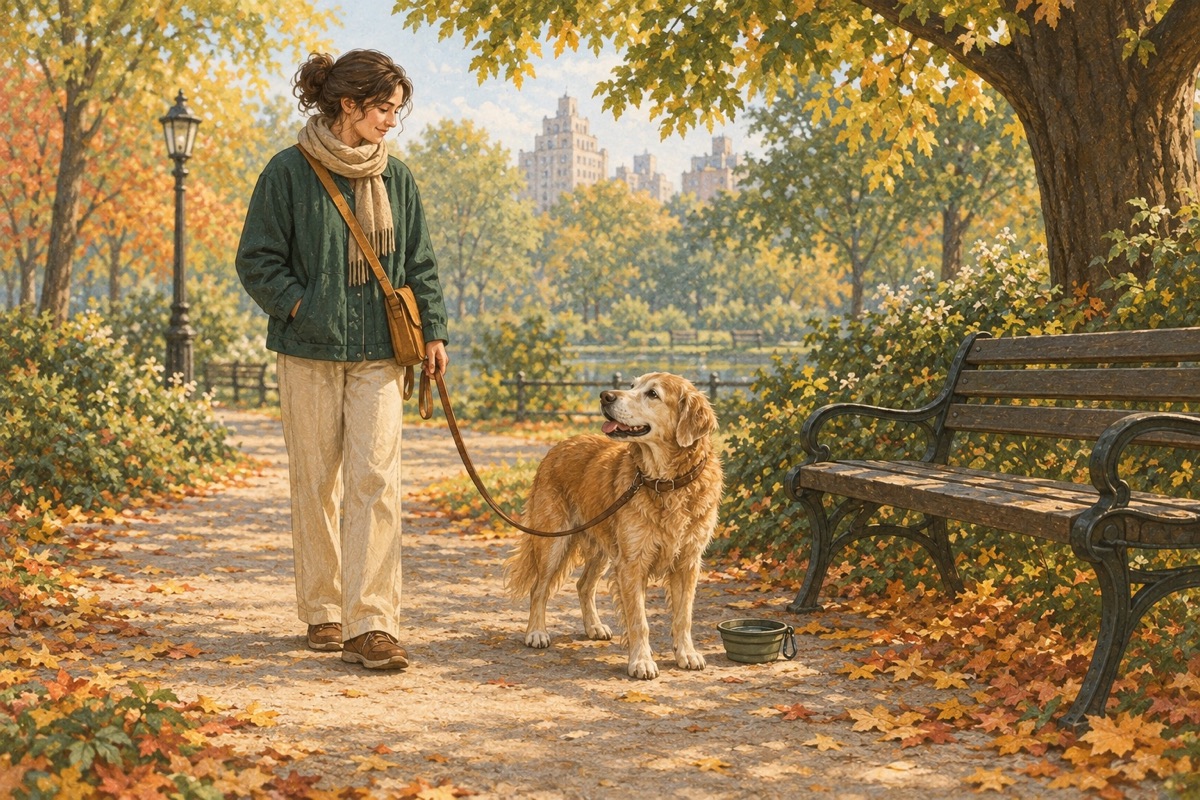
Build in pauses before the dog has to ask for them. A bench, patch of shade or quiet wide verge can make the route easier to manage. The aim is to return with enough reserve for a normal recovery, not to use up every bit of available energy.
What should you observe after the walk?
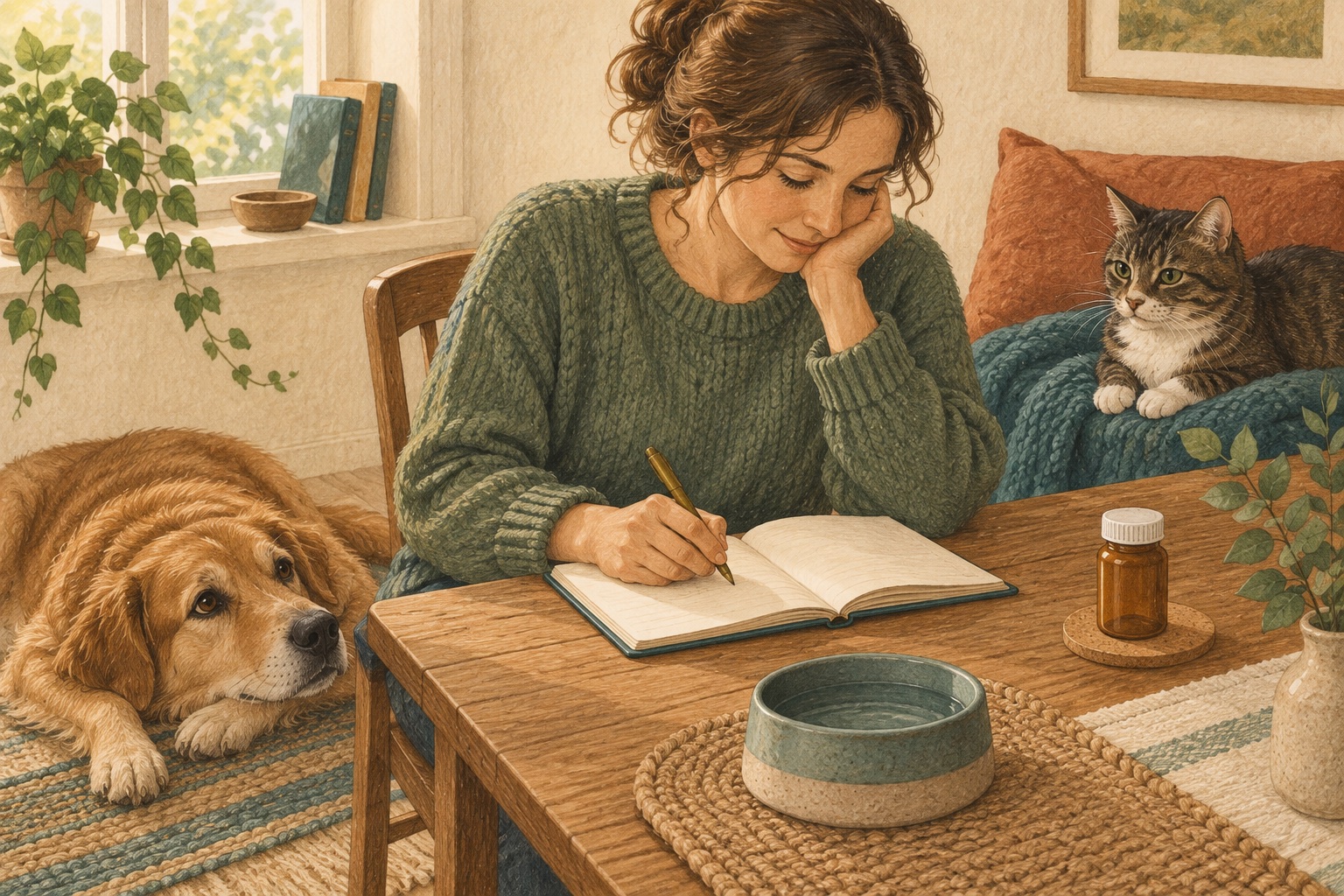
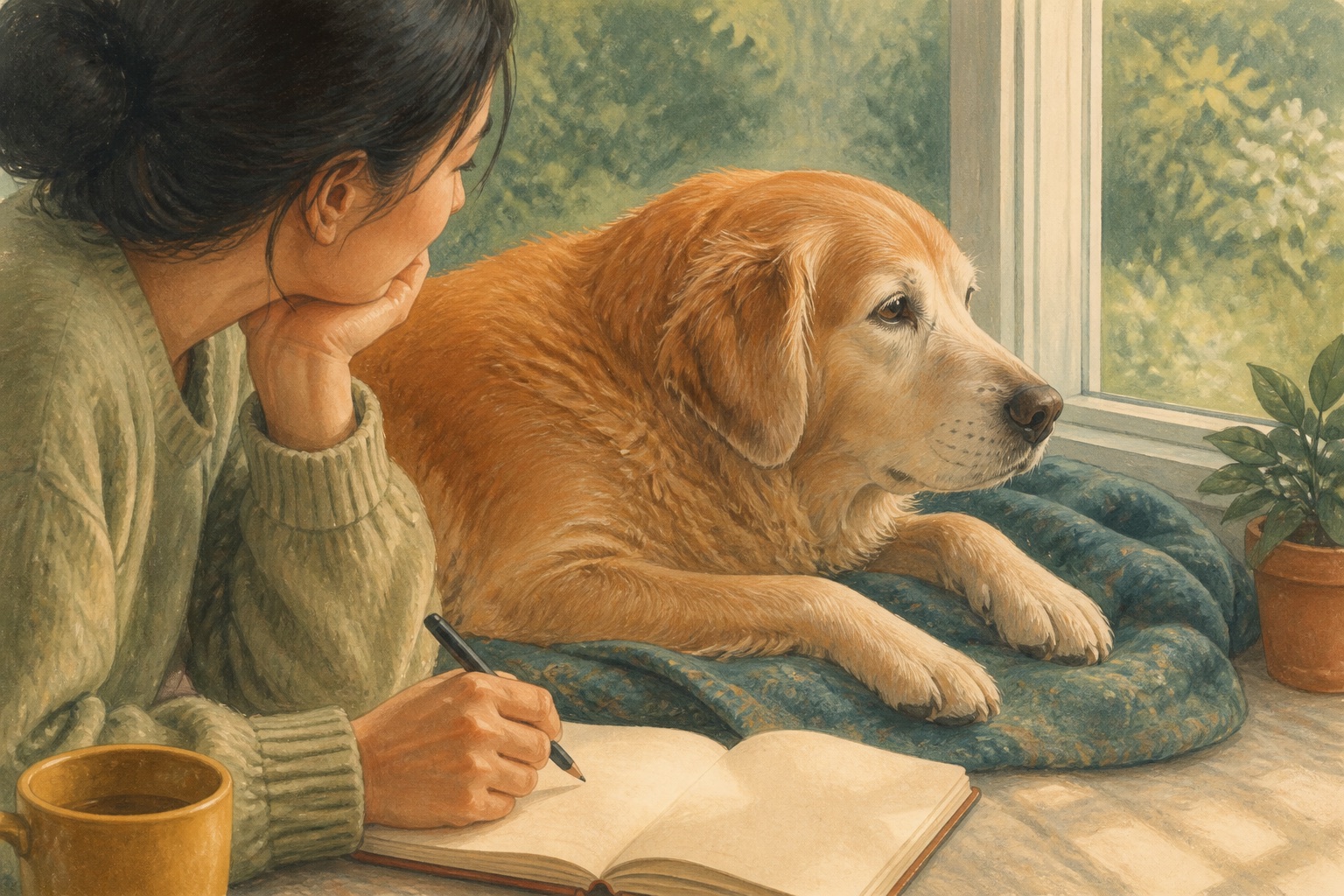
Notice how the dog moves on the return, settles at home and approaches the next usual activity. A brief dated note can help you compare the same route across several days without turning every step into a test.
Record facts such as route, approximate duration, weather, pauses and what happened afterwards. Avoid interpreting a gait or naming pain from an online checklist. Natural video of ordinary movement may help a veterinary conversation, but never ask the dog to repeat something uncomfortable for the camera.
When should the walking plan be reviewed with a veterinarian?
Ask for veterinary guidance when mobility, endurance, breathing, behaviour or willingness to walk changes, or when an existing condition or treatment may affect exercise. The veterinary team can assess the cause and discuss a plan appropriate to the individual dog.
Do not assume that stiffness, reluctance, confusion or a change in recovery is simply inevitable old age. If the situation appears urgent, stop the activity and contact a veterinarian or emergency veterinary hospital promptly.
Plan a senior walk that can adapt
- Start from the comfortable baseline
Use the route, pace and duration your dog currently manages comfortably. Change one variable at a time instead of introducing a long or difficult walk at once.
- Choose an easy route home
Prefer a short familiar loop or out-and-back route on stable ground. Make sure you can shorten it if your dog needs to turn back sooner.
- Check weather and surfaces
Move the walk away from very hot, cold or humid conditions. Check shade and footing, and avoid steep, slippery or hot surfaces that make movement harder.
- Plan pauses before they are needed
Leave time for sniffing and choose places where stopping is safe. A rest is part of the route, not a failure to complete it.
- Compare recovery, not only distance
Note how your dog moves on the way home and returns to their usual activities afterwards. A change in recovery can be more useful than a step count.
- Bring changes to the veterinary team
Discuss new or repeated difficulty, reluctance, altered breathing, confusion or recovery changes. Do not write them off as an inevitable part of age.
The walk should remain an individual plan
Weight and age labels cannot set a safe exercise prescription. A veterinarian who knows the dog’s health and treatment can help decide what type and amount of activity is appropriate when mobility or endurance changes.
Sources and further reading
This general guidance was researched against the following veterinary and animal-care sources:
Frequently asked questions
How long should a senior dog walk?
There is no universal number. Start from the dog’s comfortable current baseline and adapt pace, route, rest and duration with veterinary guidance when health or mobility changes.
Are shorter walks better for older dogs?
Many senior dogs benefit from gentle activity little and often, but the right pattern depends on the individual dog’s health, mobility and recovery.
Should a senior dog stop to sniff?
Yes, when safe. Sniffing and planned pauses can provide mental activity without forcing a distance or speed target.
What should I observe after the walk?
Notice movement on the return, ability to settle and recovery before the next ordinary activity. Compare with the dog’s own usual pattern.
When should walking changes be discussed with a veterinarian?
Discuss new or repeated difficulty, reluctance, altered breathing, confusion, mobility or recovery changes promptly.
These articles offer general, everyday guidance. They do not replace advice from a qualified veterinary professional.
Adapt the rhythm
Keep a gentler daily plan visible.
Nuzzleway helps you keep small daily actions and dated observations together as routines change across life stages.