When can puppies go outside? There is no single birthday or vaccine number that clears every puppy for every outing. Being carried outdoors, using a private garden and walking on public ground involve different exposures. Ask your veterinary team which environments your puppy can use now, what to avoid and when to review that advice.
The useful question is specific: “Can this puppy visit this place in this way?” This guide helps you prepare that conversation and record the answer. It does not set vaccination dates or replace an examination.
Being carried outside and walking on public ground are different
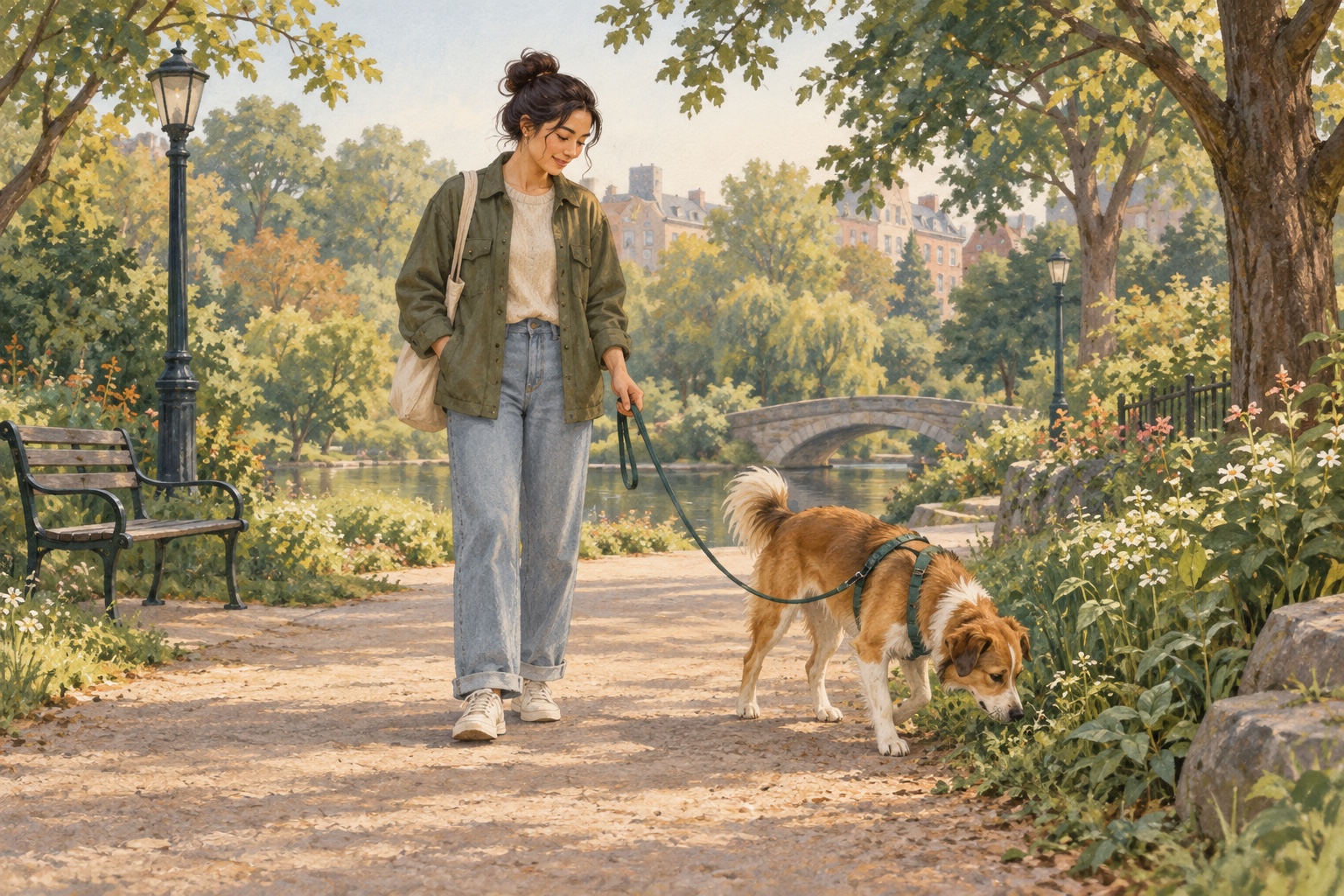
“Outside” might mean watching bicycles from your arms, toileting in a garden or meeting unfamiliar dogs in a park. Describe the actual place and contact rather than asking for one general permission.
| Environment | Contact to describe | Question for the clinic |
|---|---|---|
| Carried outdoors | Public sights and sounds without ground contact | Does this carried route fit the current plan? |
| Private garden | Ground and animals that have used the space | What history and conditions matter before using it? |
| Pavement or shared toilet area | Public ground, dirt and other dogs’ activity | When and under what conditions can this puppy use it? |
| Dog park or busy group | Many dogs, shared ground and unfamiliar health histories | Should we avoid it now, and what would change that advice? |
A quiet-looking pavement is not automatically a clean surface. PDSA explains that parvovirus can persist in the environment and travel in contaminated dirt and on objects. Avoiding nose-to-nose contact alone does not remove exposure. Being carried reduces contact with the ground; it does not create a guarantee of zero risk.
If you rent a garden or have recently moved, find out which animals used it before. A communal courtyard, a shared toilet area and a private garden with a known history are different situations. Tell the clinic when the history is unknown.
Can a puppy go out after the first or second vaccination?
“Second vaccination” is not enough information to decide. The clinic needs the documented history, the puppy’s health, the product used and the relevant local risk. Ask whether the planned outing fits the current protection and whether a waiting period or another condition applies to that particular puppy.
Do not copy a date from another puppy’s plan, count injections as proof of immunity or treat the day of an appointment as automatic permission to visit every public space. If records are missing, mark the uncertainty rather than filling the gaps from memory.
For vaccine records and appointment planning, use our dog vaccination schedule guide. Here the decision is narrower: which first outings are appropriate under the instructions your clinic gives you?
What to confirm before the first outing
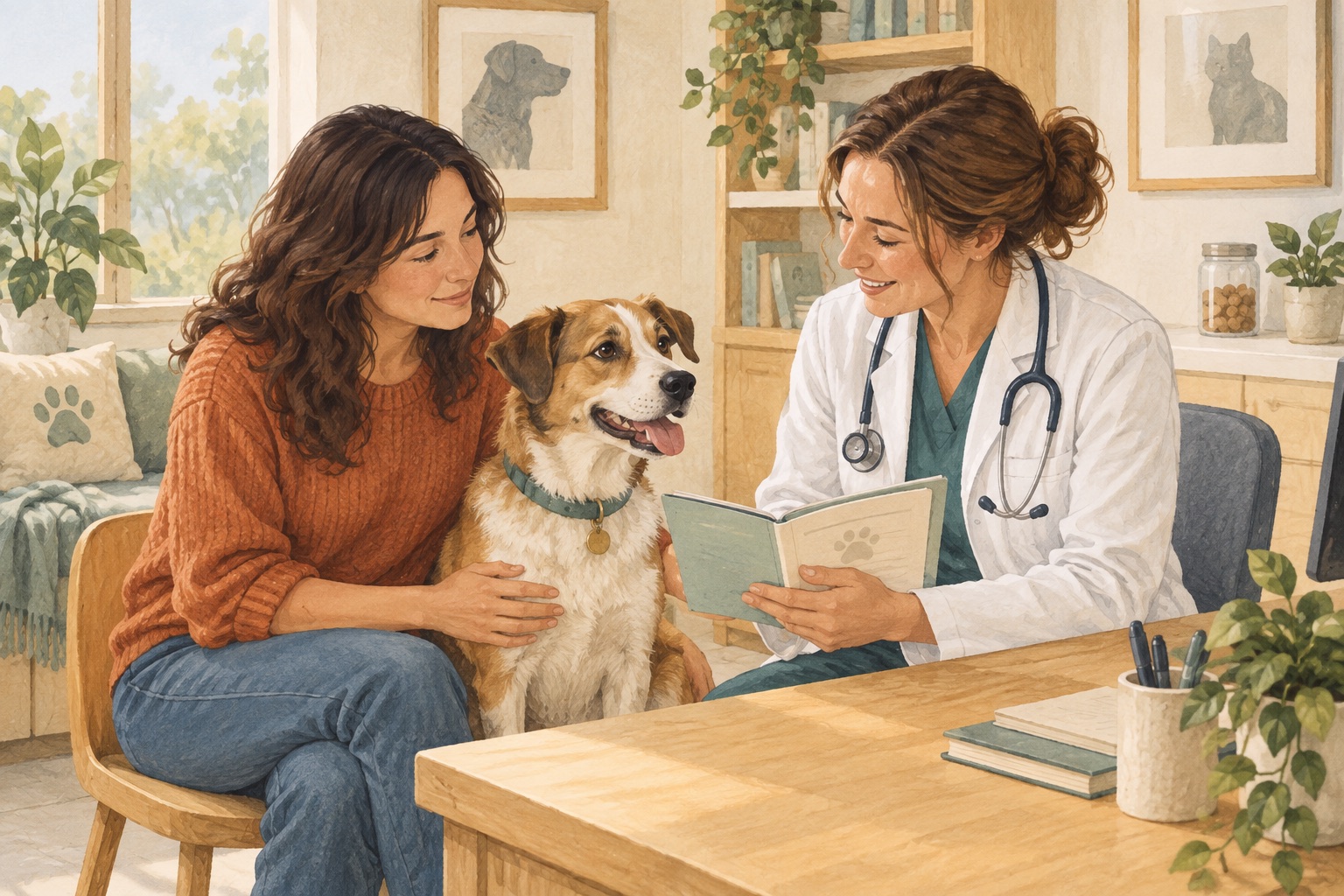
Take the vaccination record and describe the route, home and other animals. Use our veterinary visit checklist to keep the conversation focused. Ask:
- Health and history: does anything about this puppy’s current health or incomplete records change the plan?
- Local exposure: are there disease concerns in this area or particular places to avoid?
- Contact with the ground: what is the advice for our own garden, shared entrance and planned pavement?
- Other dogs: which known dogs, if any, can the puppy meet, where and under what conditions?
- Protected outings: can we carry the puppy to observe a quiet outdoor setting? What precautions apply?
- The next decision: when should we review the advice, and which change means we should contact you sooner?
Write the answer against each environment. “Can go outside” is easy for two caregivers to interpret differently. “Carried on this route; no public-ground contact until the clinic’s next review” records a clearer instruction if that is what your veterinary team actually advised.
GEMCA’s veterinary position statement on puppy socialisation, updated in February 2024, makes health, vaccination status and local disease risk part of the decision. Recommendations from a UK or US webpage are useful background, but they do not assess the street where you live.
Positive experiences while vaccination is still in progress
Ask about appropriate protected experiences rather than assuming the only choices are complete isolation or unrestricted walks. AVSAB supports early socialisation with exposure managed to avoid illness and overwhelming fear. That does not mean every puppy class, public park or dog greeting is suitable.
Start with an experience that can be made easier or ended promptly. For example, your puppy might watch a person at a distance from your arms, hear a household sound at low intensity or explore an appropriate clean surface at home. Arrange contacts and outdoor locations within the conditions agreed with the clinic.
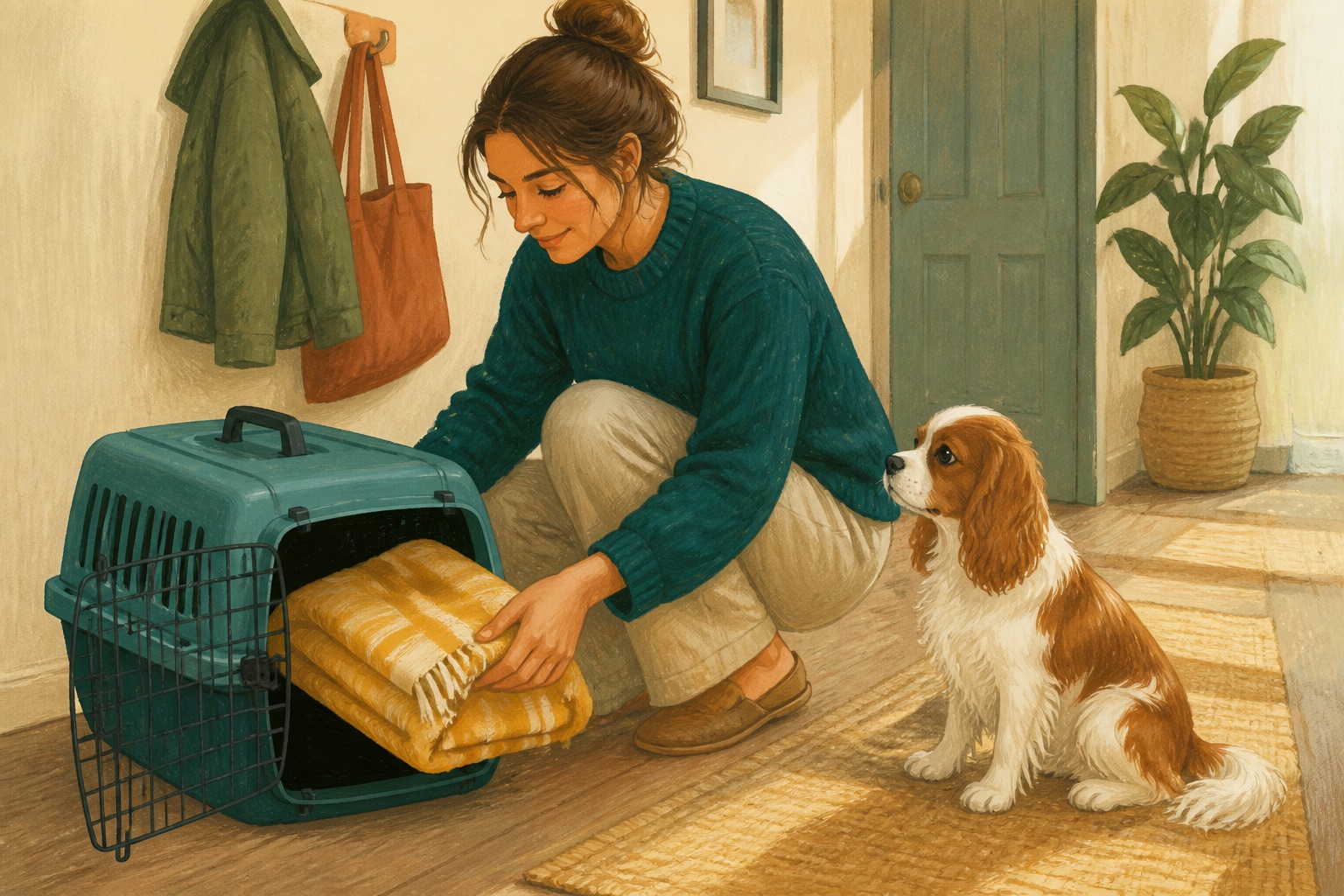
For a carried outing, use secure support or a suitable carrier the puppy is comfortable with. Plan how to return without needing to put the puppy on public ground. Avoid crowding the puppy with greetings; observing calmly is a worthwhile experience too.
PDSA’s socialisation advice emphasises small, positive experiences and adapting when a puppy is frightened. Notice what the puppy does: trying to hide, freezing or pulling away means the situation needs to become easier. Increase distance, reduce noise or leave. Do not hold the puppy in a distressing situation until it “gets used to it”.
A relaxed observation is more useful than completing a list of encounters. Leave room for rest. If fear is persistent or the puppy cannot settle, describe the pattern to the veterinary team rather than repeatedly increasing exposure.
Three situations that change the plan
These are illustrative planning examples, not clinical cases or permissions for your puppy.
A flat without a private garden
The nearest outdoor toilet area is used by many dogs. Your question has two parts: how to manage toileting now and how to offer protected observation without using that shared ground. Ask the clinic about an appropriate temporary toileting arrangement and whether a carried route fits the current plan.
Before leaving, check practical details: can you carry the puppy throughout the entrance, and what will you do if it becomes uncomfortable? Having no garden does not turn a busy shared patch into an equivalent substitute for a private space.
A private garden with a known history
You know which dogs visit, but “private” still needs context. Describe previous visitors, any known illness and whether other animals can enter. Ask what use, if any, is appropriate now. Do not invent a home disinfection protocol if there has been suspected contamination; ask the clinic for specific advice.
Permission to use this garden, if given, does not automatically extend to the pavement outside the gate. Record those as separate environments.
A neighbourhood with heavy dog traffic
There is a popular dog park and a quieter observation point reachable without public-ground contact. Show or describe both to the clinic. Ask whether the second is suitable for a protected experience while the first remains outside the agreed conditions.
If considering puppy classes, ask about admission health requirements, hygiene, cleaning of surfaces and supervision. A group called “puppy socialisation” still needs an assessment of its setting and how it handles a frightened puppy.
A worksheet for the first outings
Copy or print this worksheet and complete it with your veterinary team. Keep one row per proposed environment; leave unanswered questions visible. This is a planning aid, not a test of immunity.
| Record | Details to discuss | Your notes |
|---|---|---|
| Puppy and consultation | Name, consultation date and clinic | Write here: ____________________ |
| Documented history | Records available; missing information | Write here: ____________________ |
| Proposed environment | Exact place and method: carried or ground contact | Write here: ____________________ |
| Animals and surfaces | Known dogs, previous use and shared areas | Write here: ____________________ |
| Clinic instructions | Conditions, exclusions and any confirmed timing | Write here: ____________________ |
| Return plan | How to leave without breaking those conditions | Write here: ____________________ |
| Review trigger | Next review and changes requiring earlier contact | Write here: ____________________ |
| Observation afterwards | What happened, adaptation and next question | Write here: ____________________ |
After an outing, add one factual note: “watched a bicycle from a distance, then turned away” is more useful than “fully socialised”. Record what happened, what you changed and any question to raise next time. Share the clinic’s actual instructions with everyone caring for the puppy.
When to stop and contact the clinic
If a puppy develops vomiting, diarrhoea, marked tiredness or reduced appetite, contact a veterinarian promptly; bloody diarrhoea or severe illness needs urgent attention. These signs do not establish a diagnosis. PDSA advises immediate veterinary contact for symptoms of parvovirus. Call before arriving and follow the clinic’s instructions about avoiding contact with other dogs.
A new illness, suspected exposure or missing record is a reason to revisit the outing plan. Do not treat an earlier instruction as permanent permission after circumstances change.
Once the clinic has confirmed the conditions
The next question is how to build a sustainable walking routine. Our guide to how often to walk a dog covers frequency, duration and adjustment to the individual dog. Keep that routine separate from the decision about when and where first outings can begin.
Sources and editorial scope
Sources checked on 10 October 2026. This is an educational article prepared with AI assistance and source checking; it has not had an individual veterinary review. The worksheet and examples were created for planning, not as validated clinical tools.
- GEMCA: puppy socialisation position statement, updated February 2024 — Spanish veterinary behaviour group; individual and local assessment.
- PDSA: puppy socialisation — UK veterinary charity; positive experiences and responses to fear.
- PDSA: parvovirus in dogs and puppies — environmental exposure and when to seek care.
- AVSAB: puppy socialisation position statement (2008, PDF) — US veterinary behaviour association; managed early socialisation. Its class recommendations do not replace local veterinary advice.
Frequently asked questions
Can I carry my puppy outside before all vaccinations are complete?
Ask your vet whether a carried outing fits this puppy’s health, history and local risk. Keep the puppy securely supported and avoid public-ground contact where the clinic has advised against it. Carrying reduces one type of exposure; it is not a guarantee of zero risk.
Can a two-month-old puppy go outside?
Age alone does not decide. Describe the exact outing and bring the vaccination record. The advice may differ for being carried, a private garden and a shared pavement. Record the conditions for each instead of using a birthday as general permission.
Can puppies walk outside after their second vaccination?
The label “second vaccination” does not show which product was used, what the documented plan requires or how local risk affects the decision. Ask the clinic whether public-ground contact is appropriate now and whether a waiting period or another condition applies.
What if I do not have a private garden?
Ask about a suitable temporary toileting arrangement and protected observation, such as a carried route if the clinic considers it appropriate. Explain the shared entrance and outdoor toilet areas. A communal courtyard is not automatically equivalent to a private garden.
When can my puppy start walking on public ground?
When your veterinary team has confirmed that this specific environment and type of contact fit the puppy’s current plan. Ask about the route, surfaces, other dogs and review conditions. Then use the walking-routine guide for frequency and duration; those are separate decisions.
These articles offer general, everyday guidance. They do not replace advice from a qualified veterinary professional.
A shared plan for the next step
Keep the agreed outing plan together.
Use Nuzzleway’s daily plan to organise the next steps your clinic has confirmed. Keep the medical instructions with your care notes; the app does not assess immunity or give clearance for outings.