The short answer
A useful routine is a small set of dependable anchors, not a timetable that has to survive every real-life interruption. The aim is to make basic care easier to anticipate for both of you and flexible enough to keep using.
A daily routine for pets works when it makes care predictable without making the clock more important than the animal. Start with a few dependable anchors — food, water, movement, rest and contact — then adapt their timing and intensity to the species, age, health and household in front of you.
What should a pet’s daily routine include?
The useful foundation is not a long checklist. It is dependable access to fresh water and appropriate food, species-appropriate opportunities to move and use natural behaviour, protected rest, toilet or litter care where relevant, and a small amount of voluntary social contact or play.
The details cannot be identical for a dog, cat, rabbit or other companion. Health conditions, medicines and veterinary instructions also take priority over a generic schedule. Use the table as a planning aid, then replace each example with what is appropriate for your own animal.
| Anchor | Ordinary version | Low-energy version | What to notice |
|---|---|---|---|
| Food and water | Usual portions and fresh water in suitable places | Keep essentials unchanged and easy to reach | Appetite, drinking and access without competition |
| Movement | Species-appropriate walk, exploration or activity | Shorter safe activity at a comfortable pace | Willingness, mobility and recovery |
| Rest | Protected quiet periods and a familiar resting place | Reduce demands and preserve the quiet space | Ability to settle without interruption |
| Connection | Brief play, training or contact chosen by the animal | Sit nearby or offer one familiar activity | Approach, engagement and choice to leave |
A veterinary plan or species-specific welfare guidance should replace any generic example when the two differ.
Translate each anchor for the species in front of you
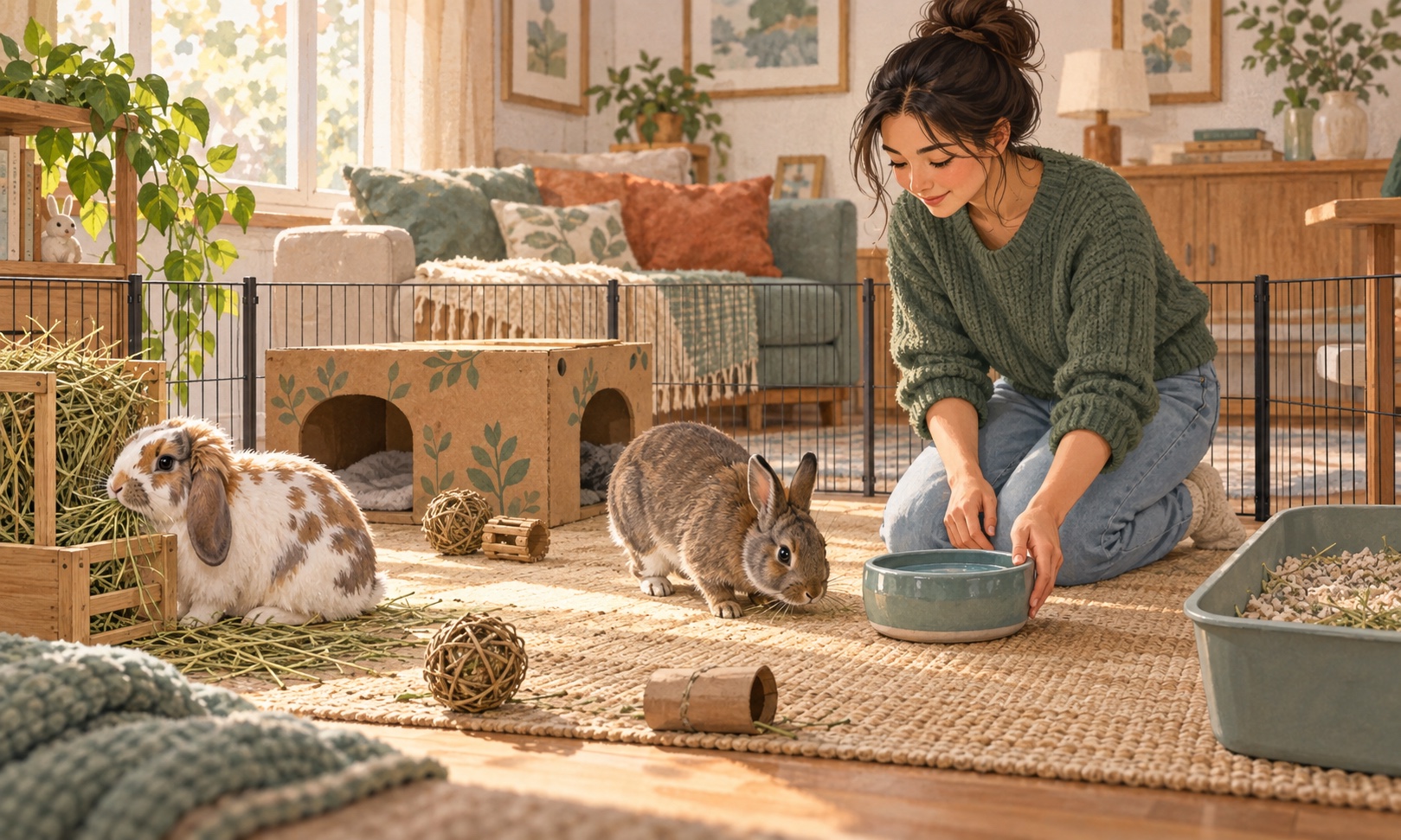
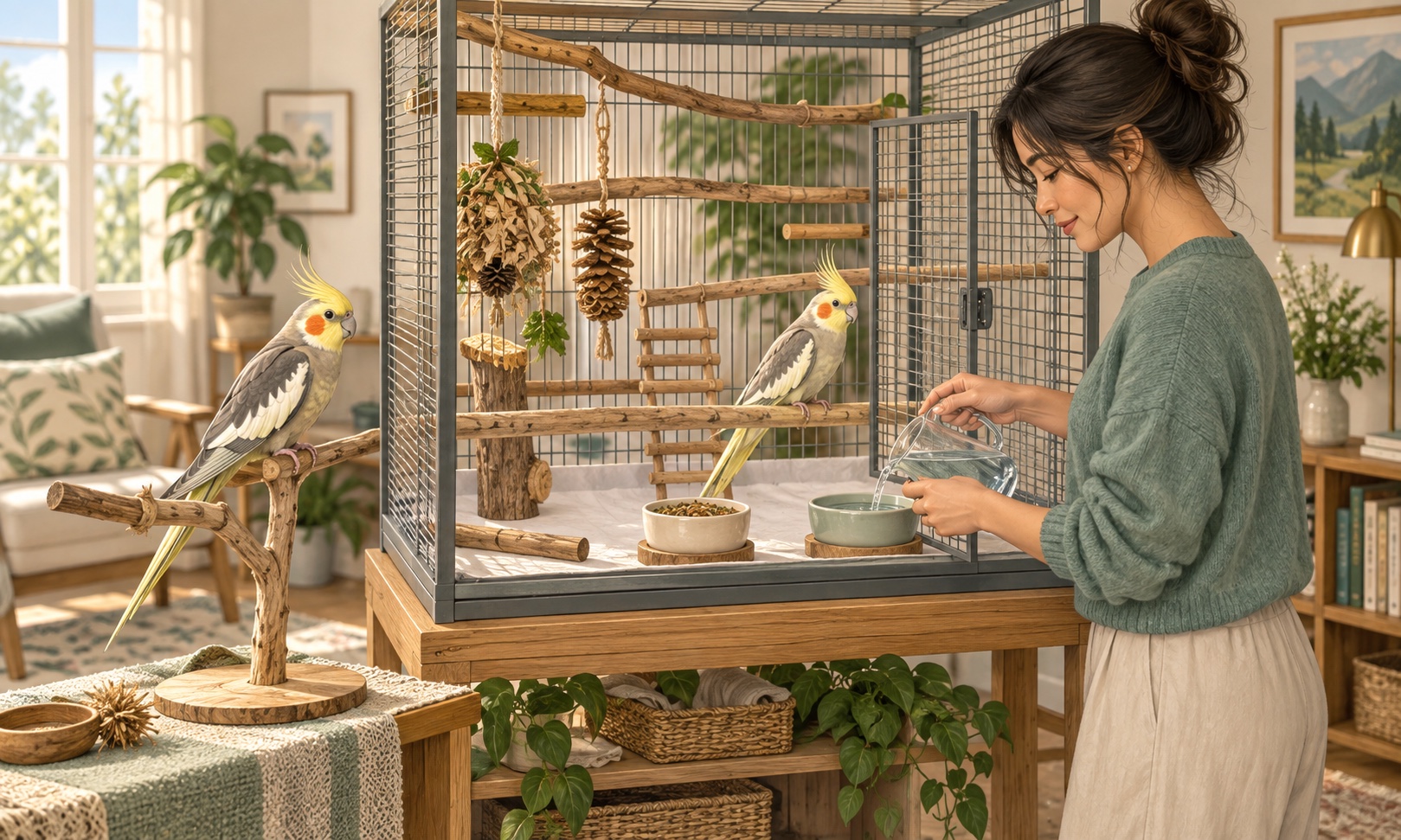
The same heading can lead to very different care. “Movement” may mean a sniff-led walk for a dog, vertical routes and short hunting-style play for a cat, permanent floor space and foraging for a rabbit, or safe opportunities to fly, climb and use varied perches for a companion bird. The shared routine is a memory aid; the action underneath must remain species-specific.
| Companion | Useful daily anchors | What should remain individual |
|---|---|---|
| Dog | Meals, water, toilet access, walks, sniffing, rest and voluntary contact | Walk length, intensity, feeding plan, mobility and recovery |
| Cat | Food and water access, litter, hiding, climbing, play, grooming and uninterrupted sleep | Social contact, indoor or outdoor access, diet, play style and preferred resting places |
| Rabbit | Hay and water, droppings, dry habitat, movement, hiding, foraging and compatible company | Diet plan, bonded group, temperature, handling and health observations |
| Companion bird | Clean air, food and water, enclosure safety, movement, enrichment, social contact and protected rest | Species, flight ability, diet, social arrangement and avian veterinary plan |
| Other companion | Food, water, safe environment, normal behaviour, rest and a brief observation | Start with guidance for that exact species; do not borrow a dog or cat routine |
If the animal has a condition, prescription or professional care plan, that instruction sets the routine.
Use daily anchors instead of a minute-by-minute schedule
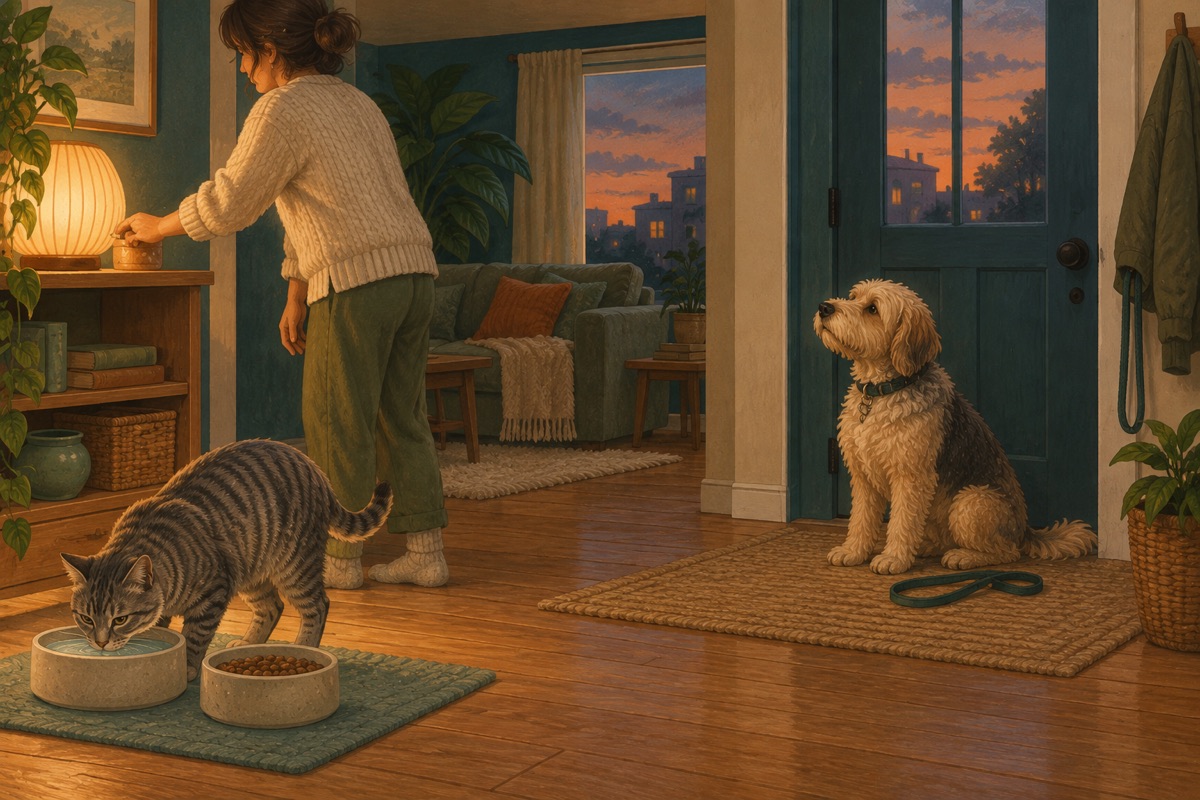
An anchor is a recognisable sequence attached to something that already happens: breakfast after the household wakes, a walk after work, quiet play before the evening settles. The order can remain familiar even when the exact time moves.
Begin with two anchors you can maintain most days. Adding six new habits at once makes it difficult to know which one helps and easy to abandon the whole plan. Predictability comes from repetition and clear cues, not from achieving the same timestamp every day.
How do you keep a pet routine flexible?
Write a minimum version before you need it. On a busy or low-energy day, protect essential care and choose one shorter activity the animal can comfortably do. The aim is not to imitate the ideal day at half speed; it is to preserve safety, access, rest and one familiar point of connection.
When a schedule must change, shift it gradually where practical and keep the surrounding cues familiar. AAHA guidance on household routine changes recommends gradual adjustment of feeding, walks, play and quiet time. A sudden permanent change or repeated difficulty settling deserves closer observation and, when needed, professional advice.
Adapt the rhythm to species, age and health
A young dog, an indoor cat and a senior rabbit do not need the same kind of activity or social contact. Start with species-specific welfare information, then adapt to the individual’s mobility, confidence, preferences and existing care plan.
Do not explain away a new change simply because the animal is older or the household is busy. A sudden, severe, persistent or worsening change in appetite, drinking, elimination, breathing, mobility, behaviour or ability to rest should be discussed promptly with a veterinarian.
Review the routine without turning it into a score
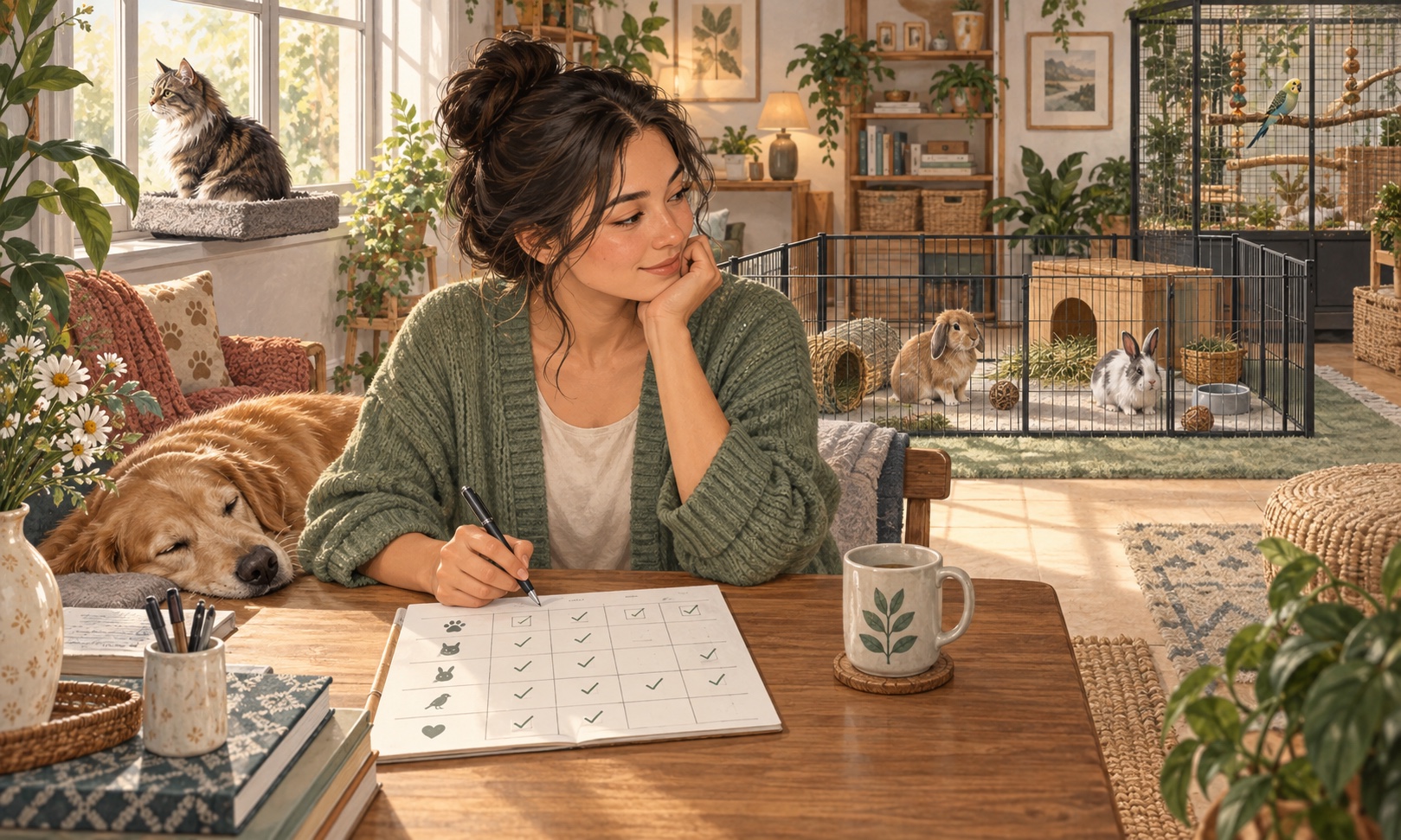
Once a week, ask three practical questions: which anchor made care easier, where did the plan create friction, and what did your companion choose when given options? Change one part at a time and compare several ordinary days rather than judging a single disrupted day.
A useful routine becomes easier to resume after an interruption. If the plan creates anxiety, hides meaningful changes or requires constant tracking to feel successful, remove steps. The routine is a support for care, not a measure of devotion.
Build a routine that can bend
- Pick two anchors first
Start with moments that already exist, such as the first meal and settling down for the evening. Adding only two reliable anchors makes it easier to notice whether they help.
- Separate essentials from extras
Food, water, a safe place to rest and necessary care come first. Play, training, a longer walk or journaling can be welcome additions, not reasons to feel behind.
- Plan the low-energy version
Decide in advance what the minimum kind version of a busy day looks like. A quieter interaction or a shorter, safe activity is often more sustainable than abandoning the rhythm entirely.
- Review the pattern, not one day
Once a week, ask what became easier and what created friction. Adjust one part at a time so the routine remains readable for you and your companion.
A routine is working when
You can describe the next ordinary step without consulting a long list, and your companion has room to rest, opt out and show their own preferences. A routine that creates anxiety or ignores a meaningful change is a signal to simplify it or seek appropriate professional advice.
Sources and further reading
This general guidance was researched against the following veterinary and animal-care sources:
Frequently asked questions
Do pets need exactly the same schedule every day?
Not usually. Predictable sequences and dependable access to essential care can matter more than an identical minute on the clock. Individual health or treatment plans may require specific timing.
How many routine anchors should I start with?
Two dependable anchors are enough to test a routine, such as the first meal and the evening wind-down. Add another only when the first two fit ordinary life.
What if I miss part of the routine?
Protect essential care, use the low-energy version and return to the next familiar anchor. One disrupted day does not erase a useful pattern.
Should a dog and cat share the same routine?
They can share household anchors, but each needs species-appropriate resources, activity, rest and choice. Do not force identical interactions or timing.
When does a routine change need veterinary advice?
Seek prompt advice for a sudden, severe, persistent or worsening change, or whenever appetite, drinking, breathing, mobility, elimination or behaviour concerns you.
These articles offer general, everyday guidance. They do not replace advice from a qualified veterinary professional.
Keep the anchors visible
Turn a flexible routine into a calm daily plan.
Nuzzleway keeps a few repeatable care moments visible without asking you to turn every day into a perfect streak.