The short answer
A companion bird’s routine begins with its species, health and flight ability. Each day, keep the air free from smoke, aerosols, kitchen fumes and overheated non-stick coatings; confirm the enclosure is secure, clean and arranged for safe movement; refresh water and follow the species-specific diet plan; protect a predictable dark and quiet rest period; and compare vocalisation, appetite, droppings, activity, balance, breathing, preening and perch use with that bird’s normal pattern. Do not wait for several signs to accumulate: birds can conceal illness. A new concerning change, breathing difficulty, weakness, loss of balance, sitting low or on the floor, vomiting, collapse or possible toxin exposure needs prompt avian veterinary advice.
Caring for a companion bird starts with the species in front of you. A budgie, canary, cockatiel and large parrot do not share one enclosure, diet or social plan. What they do share is the need for clean air, safe space to move, suitable food and water, protected rest, species-appropriate social and behavioural opportunities, and a caregiver who notices changes from their normal pattern.
What should you check in a companion bird’s daily routine?
Use the routine to verify access, safety and change. It should not become a universal care prescription: enclosure dimensions, diet, social housing, light and activity depend on species, health, flight ability and the home.
A veterinarian with avian experience can translate those variables into an individual plan. Your role between visits is to maintain that plan and recognise when the ordinary pattern changes.
| Area | Check | Compare with | Escalate when |
|---|---|---|---|
| Air and room safety | Ventilation; no smoke, aerosols, overheated non-stick cookware, open windows, fans or other active hazards | The normal safe room setup | There may have been fume exposure, breathing difficulty or an accident |
| Food and water | Clean containers, actual access and what was eaten rather than only what was offered | The species-specific veterinary plan and usual intake | Appetite or thirst changes, regurgitation or vomiting appears |
| Enclosure and movement | Secure doors, uncluttered movement space, clean liner, safe varied perches and intact enrichment | How this bird normally flies, climbs and perches | Balance, grip, flight or perch position changes |
| Rest and behaviour | A protected quiet dark period and usual voice, activity, social response and preening | This individual bird at the same part of the day | The bird sleeps more, vocalises less, withdraws or behaves unusually |
| Droppings and appearance | Changes visible on plain liner, feather position, eyes, nostrils and breathing effort | The bird’s established normal pattern | Droppings change markedly, feathers stay fluffed, tail bobs with breathing or the bird sits low |
Birds can conceal illness. A new concerning change deserves prompt advice from an avian-experienced veterinarian; do not wait for several signs to appear.
Clean air is part of the bird’s habitat
A bird’s respiratory system makes household air quality a core safety issue. Keep the living area away from kitchen fumes, smoke, aerosols, strong fragrances, pesticides and other airborne chemicals. Overheated non-stick coatings can be acutely dangerous. If an exposure may have occurred, move away from the source only if it is safe and contact an avian or emergency veterinarian promptly.
The room also needs a plan for free movement: close doors and windows, switch off ceiling fans, cover or make large panes and mirrors visible, remove open water and keep other animals out. Supervision is not a substitute for removing a known hazard.
The enclosure should support movement, not store objects
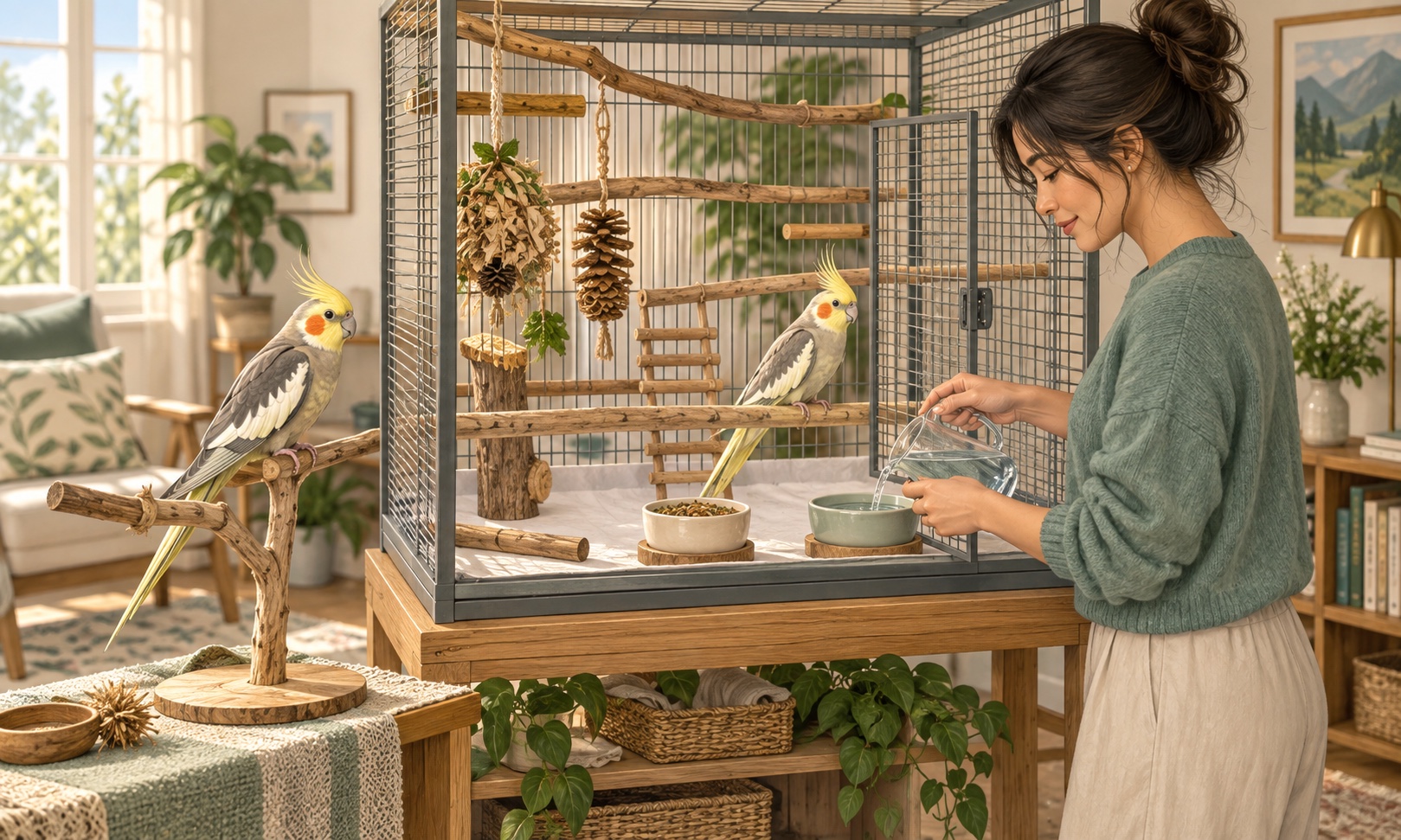
Choose an enclosure and arrangement for the bird’s species, number, flight ability and time spent outside it. The bird should be able to stretch and move without colliding with toys. Natural safe perches of varied diameter and position give the feet different work; one uniform dowel or abrasive cover should not be the only option.
A plain paper liner makes routine cleaning and droppings easier to observe. Position perches so waste cannot fall into food or water. Introduce new objects gradually outside the enclosure first when the bird is cautious, and remove damaged items before loose fibres or parts become hazards.
Food and water must follow the species, not a generic seed bowl
There is no safe universal menu for every companion bird. Species, size, health, age and previous diet affect the plan. Ask an avian-experienced veterinarian what the base diet, fresh foods, portions and transition should be for this bird; sudden unsupervised changes can reduce intake.
Refresh water and clean bowls regularly, remove perishable food before it spoils and observe what is actually consumed. In a shared enclosure, provide enough access points that one bird cannot quietly exclude another. Never add medicine to food or water unless the prescribing veterinarian has given that exact instruction and explained how intake will be confirmed.
Protect a predictable period of sleep and quiet
Many companion birds are active by day and need a reliable dark, quiet period. Late television, household light and repeated interruptions can shorten rest. Set a predictable transition and place the enclosure where the bird can sleep without fumes, noise or sudden activity.
Do not impose one internet number of hours on every species and season. Use species-specific veterinary guidance and watch the bird’s daytime alertness and normal rhythm. A new increase in sleep, closed eyes during usual active periods or reduced engagement can be a health change rather than a request for a longer bedtime.
Know the bird’s normal voice, posture and droppings
Birds may hide illness until it is advanced, so small departures from normal matter. Notice usual vocalisation, appetite, drinking, activity, balance, perch choice, preening, breathing and droppings. A plain factual note such as “did not sing at the usual morning time and stayed low on the perch” is easier to share than a guessed diagnosis.
Contact an avian-experienced veterinarian promptly for a concerning change. Difficulty breathing, pronounced tail movement with each breath, weakness, loss of balance, sitting on the enclosure floor, vomiting, collapse or possible toxin exposure can be urgent. Keep the bird calm and follow professional transport instructions rather than attempting home treatment from an article.
A species-aware daily bird-care routine
- Make the room safe before opening the enclosure
Close windows and doors, switch off fans, cover collision risks, remove open water and keep other animals out. Check the air for smoke, sprays, fragrance and cooking fumes.
- Refresh food and water from the current plan
Clean containers, remove spoiled fresh food and observe what was actually eaten. Do not make an abrupt diet change or medicate through food or water without exact veterinary instruction.
- Use cleaning to inspect the setup
Change the plain liner and check doors, bars, toys and varied perches for damage. Keep a clear movement path and place perches away from food and water contamination.
- Offer movement and choice safely
Follow the species-specific plan for flight, climbing, foraging, training and social contact. Introduce unfamiliar objects gradually and make returning to the enclosure calm and voluntary where possible.
- Protect rest from household activity
Create a predictable transition to a dark, quiet period without television, bright light or repeated disturbance. Adapt timing to the species and avian veterinary guidance.
- Record a change and call early
Write the exact change and time, then contact an avian-experienced veterinarian when it is concerning. The note supports the conversation; it does not justify watching and waiting.
Small changes can carry more weight in birds
Know the ordinary morning voice, preferred perch, typical droppings, social response and way of moving around the enclosure. A bird that becomes quieter, sleeps during an active period, stays fluffed, eats differently or changes perch position may need assessment even before a dramatic sign appears. If breathing is difficult or toxin exposure is possible, seek urgent professional help.
Sources and further reading
This general guidance was researched against the following veterinary and animal-care sources:
Frequently asked questions
What does a companion bird need every day?
Daily care includes clean air, a safe species-appropriate environment, suitable food and fresh water, protected rest, opportunities for normal movement and behaviour, and observation of the bird’s usual pattern.
Can a bird live on seeds alone?
Do not assume a seed-only diet is complete. Diets vary by species and health; ask an avian-experienced veterinarian for the appropriate base diet and a safe transition plan.
Where should a bird enclosure be placed?
Use a well-ventilated, secure area away from kitchen fumes, smoke, aerosols, temperature extremes and constant disturbance, while meeting the species’ needs for light, social contact and protected rest.
How can I tell if my bird’s routine has changed?
Compare vocalisation, appetite, drinking, droppings, activity, balance, perch use, preening, sleep and breathing with that bird’s usual pattern at the same time of day.
When should a companion bird see a veterinarian?
Contact an avian-experienced veterinarian promptly for any concerning change. Breathing difficulty, weakness, loss of balance, sitting on the floor, vomiting, collapse or possible toxin exposure may be urgent.
These articles offer general, everyday guidance. They do not replace advice from a qualified veterinary professional.
Keep the species-specific rhythm visible
Bring daily care and brief observations into one calm plan.
Nuzzleway helps you keep the routines and known care dates you choose visible, while avian professionals remain the source for diet and health decisions.