To potty train a puppy, offer chances before the need becomes urgent, go with them to a suitable spot and reward them as soon as they finish there. After an accident, clean calmly and adjust the next opportunity. Learning the place and developing physical control take time; no deadline works for every puppy.
Dogs · Puppy care
How to potty train a puppy: a routine you can adapt
Build a flexible puppy potty routine with well-timed breaks, rewards and practical examples for apartments, puppy pads and accidents after going outside.
Sources checked on October 23, 2026. Educational draft prepared with AI assistance and source checks; not individually reviewed by a veterinarian.
A workable routine matters more than a perfect timetable. This plan suits an apartment or a home with a yard, provided your veterinarian has confirmed which outdoor areas your puppy can currently use.
Set up a suitable place first
A private yard, a shared pet relief area and a public sidewalk have different exposure histories. Ask your veterinarian about your puppy’s health, protection and local risks; our first-outings guide helps prepare that conversation. A vaccine count alone does not approve every location.
If the planned outdoor spot is not suitable yet, arrange a temporary indoor option with the clinic. Do not demand that your puppy hold on because the route is impractical. Keep the leash, harness, bags and reward ready before a nap ends.
For wider everyday care, see the profiles for Labrador Retriever, Golden Retriever and Chihuahua. Use them as background: toilet training should follow each puppy’s age, health and signals, rather than a breed-based deadline.
Use daily events as well as the clock
Dogs Trust identifies waking, food or drink and play as useful opportunities. Watch between those events too: this is not a maximum number of breaks, and a reminder never overrides an earlier signal.
| Event or signal | Offer | Adaptation |
|---|---|---|
| Waking from a nap | Access to the chosen spot before play | Prepare earlier if the accident happens on the way |
| After food, water or play | A calm potty opportunity | Bring it forward if your puppy needs it sooner |
| Pausing, sniffing or circling | Attention and access to the spot | Learn their own signal; do not wait for a request at the door |
| Bedtime or waking overnight | A quiet opportunity and a plan for night care | Do not insist on waiting until morning |
| Your absence | Someone or an arrangement to cover needed breaks | A long walk before work does not replace care while away |
Age is context, not a guaranteed holding-time formula. Repeated accidents call for reviewing access, supervision and gaps. Fit breaks around a flexible daily routine, rather than stretching the puppy to fit your calendar.
Make the right action easy to reward
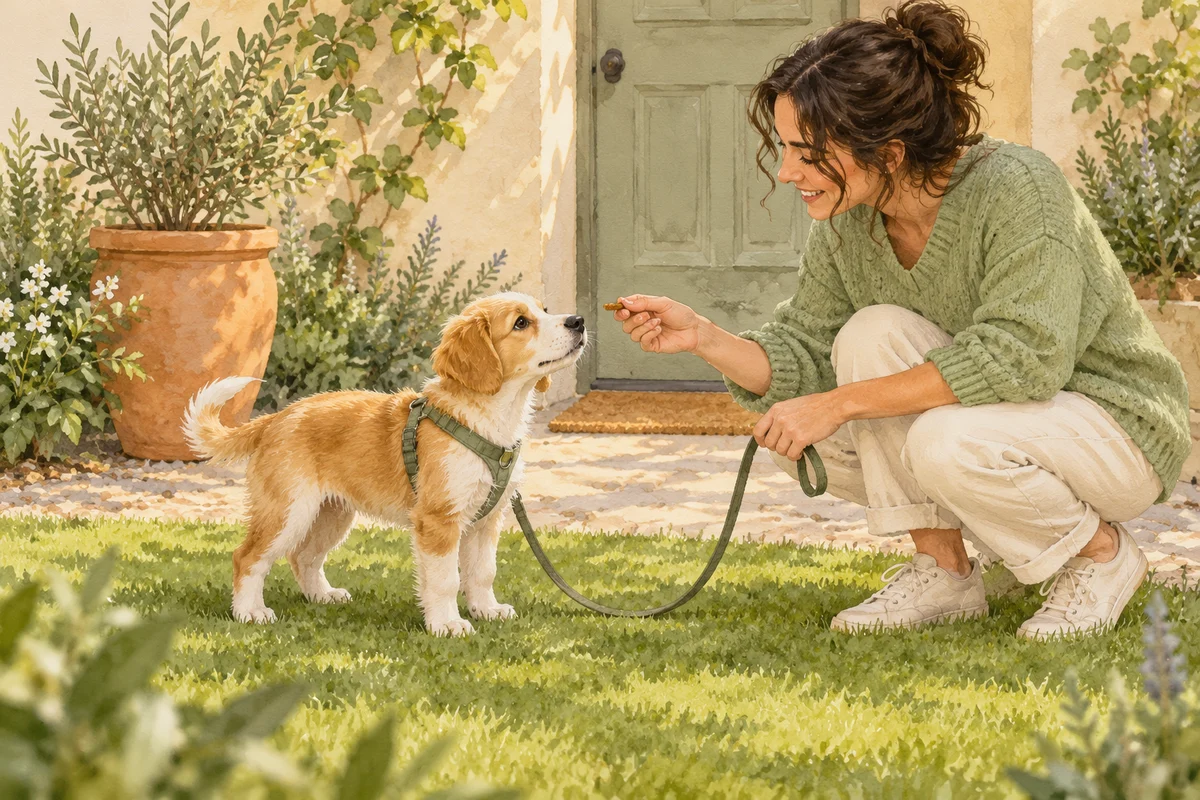
Go with your puppy to an appropriate, relatively quiet spot with safe equipment. Allow time to sniff and settle without pulling or repeating a command. If the setting is frightening, make it easier.
When they finish, offer calm praise and a suitable reward they enjoy while you are still there. Do not interrupt urination to celebrate or wait until you reach the kitchen. If safe and comfortable, allow a little relaxed exploration before returning: pottying need not always end outside time. RSPCA supports prompt rewards and supervision. A quiet verbal cue can come later when you recognize the moment; it is not required to begin.
Nothing outside, then an accident indoors?
Return calmly, keep your puppy close and supervised, and offer another chance soon, especially at their first signs. Do not use confinement as punishment or prolong an outing that scares them.
Apartment example, fictional: Nala wakes while her caregiver looks for the harness, then pees in the hallway. The next adjustment is to prepare the equipment and respond to waking sooner. Carrying a young puppy may help with a safe, comfortable journey; it does not make an unsuitable destination safe.
Distracting street example, fictional: Milo watches bikes and pees after returning. The caregiver chooses a quieter suitable spot next time and supervises the return. Fear calls for an easier setting, not waiting for the puppy to give in.
If you still use puppy pads
An indoor option can be useful temporarily; RSPCA Australia discusses pads during learning. Choose a clear area away from food and rest, without blocking water access. Once outdoor use is appropriate, provide chances there and reward that behavior.
Reduce the indoor option as access and progress make it workable, rather than suddenly removing something the puppy still needs. Seek an individual plan if progress stalls. An apartment and a fenced yard need different arrangements.
Handle accidents without punishment
If elimination has started, avoid frightening or abruptly lifting your puppy; let them finish and clean up. If you only notice an early signal, calmly guide them to the right spot. Shouting, nose-rubbing or scolding after finding a puddle can make toileting near you frightening. See Dogs Trust.
Use a pet-appropriate cleaner suitable for the surface, follow its instructions and keep the puppy away while cleaning. Never mix cleaners. Do not restrict water to prevent accidents; PDSA advises against limiting it to control drinking and urination.
Keep a short adjustment log
These fictional times show sequence, not a schedule to copy.
| Event | Observation | Next adjustment |
|---|---|---|
| 7:10 a.m., waking | Pee in the hallway while we found the leash | Prepare equipment before the next wake-up |
| 11:40 a.m., after play | Pee at the chosen spot; rewarded there | Repeat that sequence after play |
| 6:20 p.m., caregiver handover | Nobody knew the result of the last break | Record what happened, not just “went out” |
“6:10 p.m., peed, no poop; drank afterward and is awake” is more useful than “all done.” It does not establish how long the puppy can wait. Review comfort and progress across situations before extending gaps. Paper or notes work; Nuzzleway can help keep a daily plan and observations together. The app requires an account and a paid subscription and does not replace supervision.
Know when to contact a veterinarian
Ask your veterinarian about pain, blood, increased thirst or urination, leakage during rest, sudden changes or concerns about progress. If your puppy strains but cannot pass urine, seek immediate veterinary care. Do not delay to complete a log or try training tricks. PDSA identifies inability to urinate as an emergency.
If health problems are ruled out and the routine still fails, seek a qualified reward-based professional. Better support, access or timing may be needed, rather than more pressure on the puppy.
Sources and editorial scope
Sources checked on October 23, 2026. Educational draft prepared with AI assistance and source checks; not individually reviewed by a veterinarian. Examples and the adjustment log are fictional, not clinical tools. UK and Australian guidance does not assess your local outdoor risks.
Frequently asked questions
How long does puppy potty training take?
There is no guaranteed deadline. Learning and physical development vary; weeks or months and occasional setbacks are possible. Discuss poor progress or concerns with your veterinarian and seek qualified support.
How often should I take my puppy out?
Offer frequent opportunities while awake, especially on waking and after food, drink or play. Adjust to signals and results. Do not wait for the scheduled time when the need comes earlier.
Why does my puppy pee after coming back inside?
Timing, distractions or the environment may have affected the outdoor attempt. Supervise the return and offer another chance soon without punishment. Ask your veterinarian about pain, urine changes or a new problem.
Will puppy pads prevent outdoor potty training?
Not necessarily. They can provide a temporary indoor option. Adapt the transition to outdoor safety, access and progress; do not remove an option still needed or demand that the puppy hold on.
Will my puppy need a potty break overnight?
Some puppies need overnight opportunities. Plan to respond quietly and adjust care. Do not require them to wait until morning or assume every restless awakening is a request to play.
Should I take water away at night?
Do not remove water as a training method. Keep fresh water available and adapt potty opportunities. Ask your veterinarian about increased drinking or urination instead of changing water access yourself.
These articles offer general, everyday guidance. They do not replace advice from a qualified veterinary professional.
Plan the next opportunity
Keep your puppy’s care moments easy to find.
Use Nuzzleway’s daily plan to organise opportunities around rest, meals and play. Follow your puppy’s signals rather than waiting for a reminder when they need to go sooner.
An account and a paid subscription are required to use Nuzzleway.