The short answer
When a puppy bites, stop the movement, offer a suitable toy and pause the interaction briefly if teeth return to skin. Build in quiet rest and reward calm approaches. Avoid shouting, muzzle holding and physical corrections.
Puppy biting is usually part of exploration, play and teething, but that does not mean you have to wait for it to disappear. The useful response is consistent and calm: protect hands and clothing, guide the puppy towards something suitable to bite, and make play pause when teeth keep reaching skin.
| What you notice | Likely context | What to do | What to record |
|---|---|---|---|
| Biting during play | Movement and excitement are reinforcing | Freeze hands, offer a toy and resume only with softer play | Which games and movements trigger grabbing |
| Evening “shark” period | Overtiredness or accumulated stimulation | End the activity and offer a calm toileting and rest routine | Time awake and activity before the episode |
| Chewing everything | Exploration or teething | Rotate safe chews and block access to unsafe objects | Which textures hold interest safely |
| Stiffness, guarding or sudden biting | Fear, conflict, pain or another health change | Create space and seek appropriate professional advice | Exact context, body language and any health change |
The context guides the next step; it is not a diagnosis. Sudden or painful changes deserve veterinary advice.
Why does my puppy bite so much?
Puppies investigate with their mouths. They also rehearse social play, learn how hard is too hard and seek relief while adult teeth develop. A fast hand, loose trouser leg or moving shoelace can become part of the game because chasing and grabbing make the interaction continue.
Look at the pattern before labelling the puppy. Biting after several hours awake may mean they need help settling. Biting during dressing may be driven by fabric movement. Biting when touched in one place, especially if it appears suddenly, may require a health check.
What to do when puppy teeth touch skin
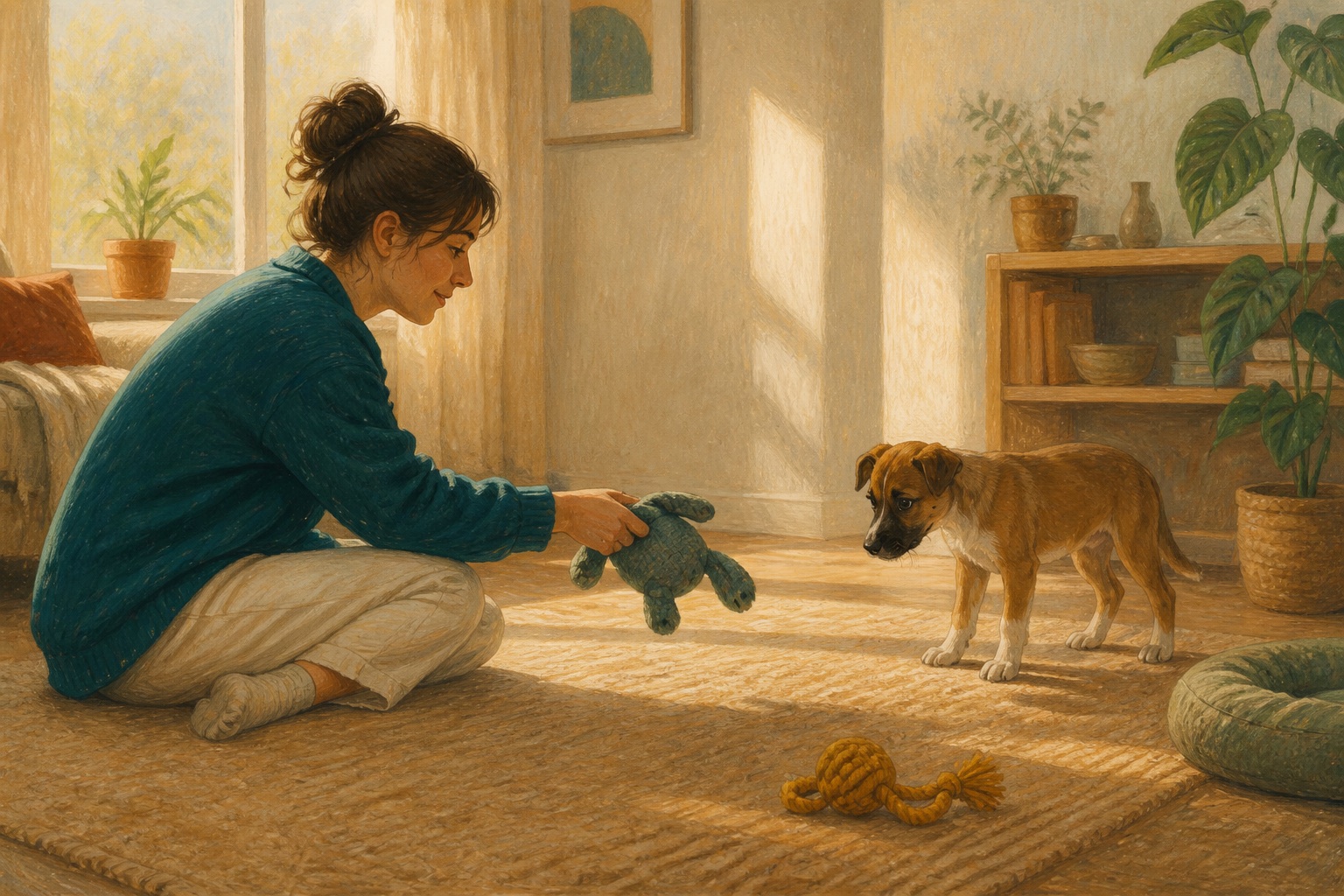
Stop the movement that made the target interesting. Keep your hands close to your body rather than pushing the puppy away, because pushing can become wrestling. Present a suitable toy at ground level and let the puppy choose it. When they engage with the toy, continue calmly.
If teeth return to skin, end access to the game for a brief moment. Step behind a gate or become still, then reset. The pause should be short and predictable, not frightening. Avoid shouting, holding the muzzle, rolling the puppy over or using physical corrections. The American Veterinary Society of Animal Behavior recommends reward-based methods and advises against aversive training.
Make the right object easy to choose
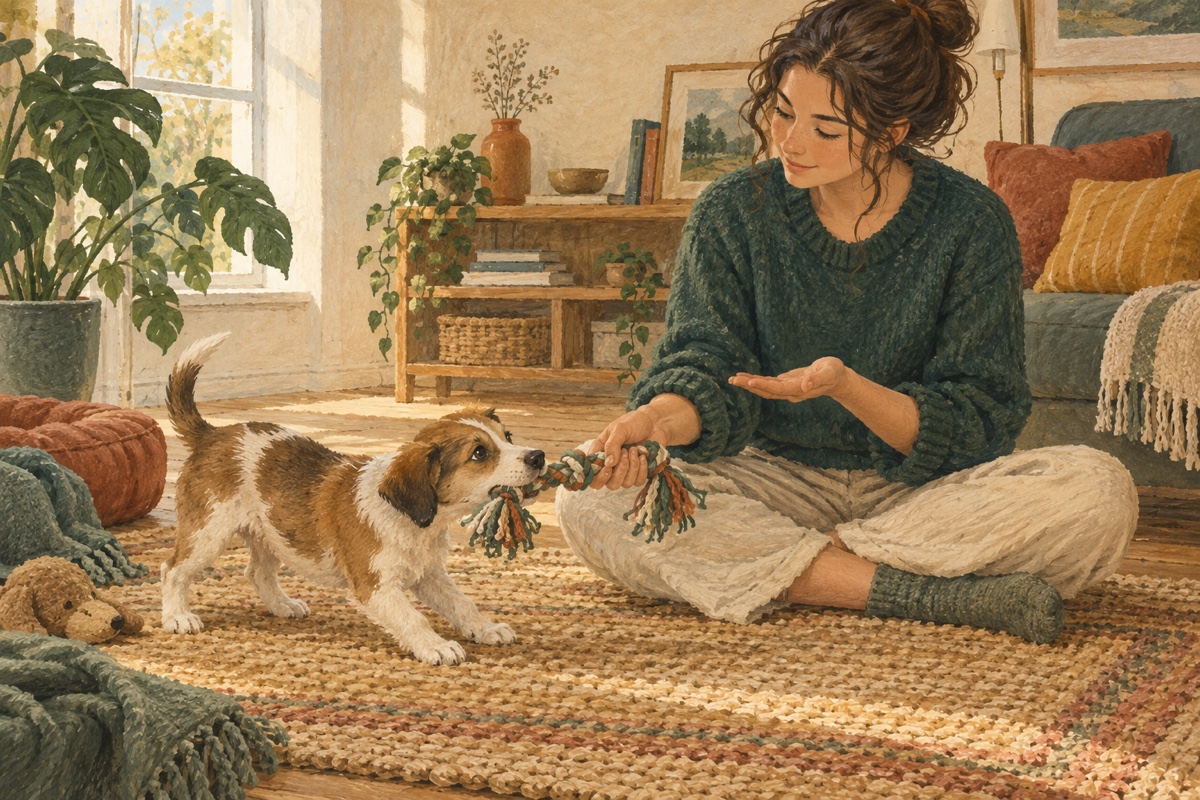
Keep a few suitable toys where biting commonly happens: beside the sofa, near the garden door and in the puppy’s play area. Use longer toys for tug so hands remain farther from teeth. Retire toys that split, shed pieces or become small enough to swallow, and match chews to the puppy’s size and chewing style.
Do not wave fingers close to the face and then expect the puppy to ignore them. Everyone in the home should use the same simple sequence: stop, offer an appropriate object, pause if needed. Consistency makes the outcome easier to understand.
Sleep, exercise and the overtired puppy
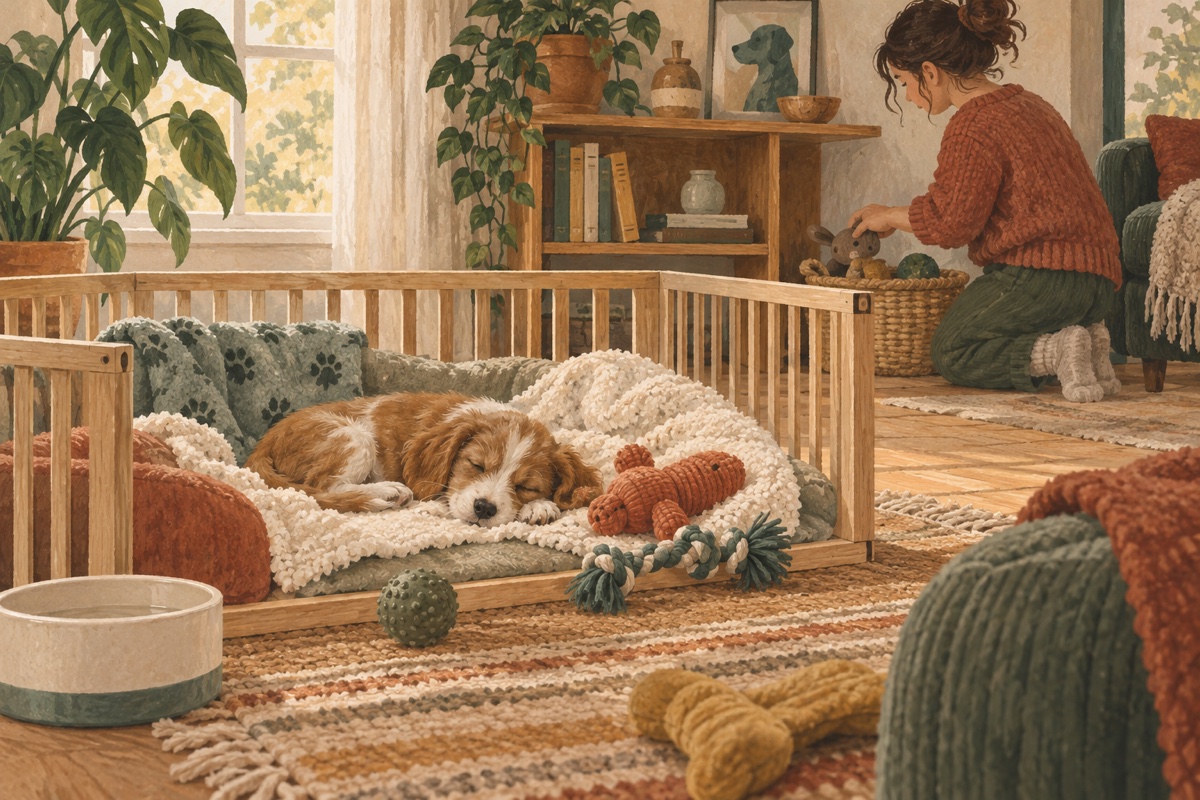
More activity is not always the answer. A puppy who has been awake through visitors, training, play and a walk may lose the ability to settle and begin grabbing harder. Provide frequent quiet periods in a comfortable area where nobody reaches in to continue the interaction.
Use age-appropriate movement, sniffing and short learning sessions. Avoid exhausting exercise as a strategy for suppressing behaviour. A simple note of waking time, meals, toileting, play and intense mouthing can reveal a repeatable point where a rest break helps.
Teach gentle contact outside the difficult moment
Practise when the puppy is calm. Reward four paws on the floor, approaching without grabbing and choosing a toy. During brief play, pause every few seconds. If the puppy comes back softly, continue; if they grab skin or clothing, make the game easier or finish it.
Children should not manage biting alone. Use gates and adult supervision so they can interact during calm moments without running, squealing or pulling objects from the puppy’s mouth. Give the puppy a protected rest area that children do not enter.
When biting needs extra help
Contact a veterinarian if biting appears suddenly, follows touch to a particular area, or comes with limping, digestive signs, poor sleep or another health change. Use distance and barriers while you investigate.
A qualified reward-based trainer or behaviour professional can help when biting is intense, repeatedly breaks skin, worsens despite consistent management, or appears with freezing, hard staring, guarding or fear. Bring a factual record: what happened immediately before, what the puppy’s body looked like and what ended the episode.
A calm response to puppy biting
- Stop the moving target
Keep hands and clothing still so grabbing no longer continues the game.
- Offer a suitable toy
Present it low and calmly, then reward the puppy for choosing it.
- Pause if biting continues
Step away briefly or use a gate, then reset without scolding.
- Check the need for rest
After toileting, offer a quiet comfortable area if mouthing rises with tiredness.
- Repeat one household rule
Ask every caregiver to use the same stop, redirect and pause sequence.
Look beyond the teeth
Note the time, activity and body language before intense mouthing. Seek veterinary advice for a sudden change or pain, and qualified reward-based help when biting is severe, worsening, hard to interrupt or linked with fear or guarding.
Sources and further reading
This general guidance was researched against the following veterinary and animal-care sources:
Frequently asked questions
Is puppy biting normal?
Mouthing is common during puppy development, especially during play and teething. You still need to manage it so the puppy practises appropriate contact and people stay safe.
Should I yelp when my puppy bites?
A yelp excites or worries some puppies. A calmer option is to stop movement, redirect to a suitable toy and take a short pause if biting continues.
Does teething make puppies bite more?
Teething can increase the urge to chew. Offer safe, size-appropriate chew items and check damaged toys regularly.
How much sleep does a puppy need?
Sleep needs vary with age and the individual, but puppies need frequent rest. If mouthing escalates after activity, reduce stimulation and offer a quiet settling opportunity.
When should I ask for help?
Seek veterinary advice for a sudden change, pain or injury. Ask a qualified reward-based professional for help if biting is intense, worsening, difficult to interrupt or linked with fear or guarding.
These articles offer general, everyday guidance. They do not replace advice from a qualified veterinary professional.
Build a calmer pattern
Keep play, rest and short practice visible in one daily rhythm.
Nuzzleway helps you note when mouthing happens and keep the next small step easy to repeat across the household.