The short answer
The first days after adoption are not a test of attachment. Their purpose is to give a new companion enough predictable space to eat, sleep, explore and recover from a major change. A calmer setup is usually more useful than trying to make every day memorable.
The first days with an adopted dog are not a test of how quickly a bond appears. They are a transition from one environment to another, with new sounds, smells, people and expectations. Your most useful job is to make the home easy to understand and give the dog time to choose how much contact feels manageable.
Prepare one safe, predictable base
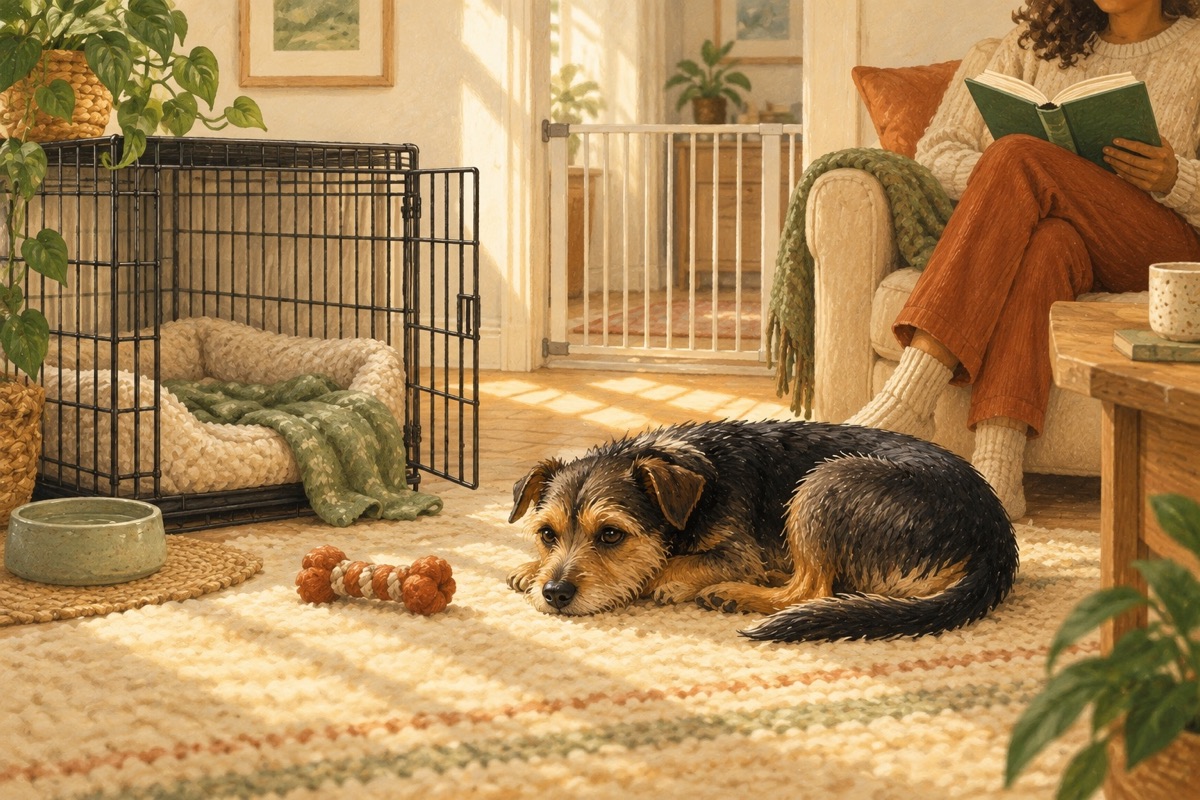
Before arrival, choose a quiet area away from the busiest route through the home. Place a comfortable bed or open crate there, with fresh water nearby and enough space for the dog to leave without being cornered. Remove accessible medicines, wires, toxic plants and anything you would not want explored.
A safe base is not somewhere to send the dog away. It is a place where nobody follows them for contact. Dogs Trust recommends planning where the dog will rest, eat and sleep, and creating a quiet den area away from busy thoroughfares.
What should the first 24 hours look like?
Keep the first day deliberately uneventful. Show the dog the water, resting area and toileting route, then reduce the number of decisions and introductions. Curiosity, hiding, pacing, sleeping or keeping distance can all be responses to a large change; one day does not define their future personality.
Use the food and routine provided by the rescue centre or previous caregiver when possible. Sudden changes to food, a house full of visitors and a long tour of the neighbourhood add several unfamiliar experiences at once.
| Moment | Main goal | Keep it simple | Observe |
|---|---|---|---|
| Arrival | Orientation | Water, rest area and toileting route | Where the dog chooses to pause or retreat |
| First 24 hours | Decompression | Few visitors, familiar food and short outings | Appetite, drinking, elimination and ability to rest |
| First week | Predictability | Repeat useful routes and daily anchors | Preferences, triggers and comfortable distances |
This is an orientation, not a deadline. Individual dogs may need more or less time.
Keep walks short and familiar at first
Early walks are for toileting, sniffing and learning the immediate area, not for covering distance. Use secure, well-fitted equipment and repeat a quiet route while you learn how the dog responds to traffic, people, other dogs and unfamiliar surfaces.
Do not use a busy dog park as an introduction exercise. If the dog freezes, pulls to leave, cannot take in the environment or repeatedly seeks distance, make the outing simpler and return home. Ask the rescue organisation or a qualified behaviour professional for support when needed.
Let contact remain a choice
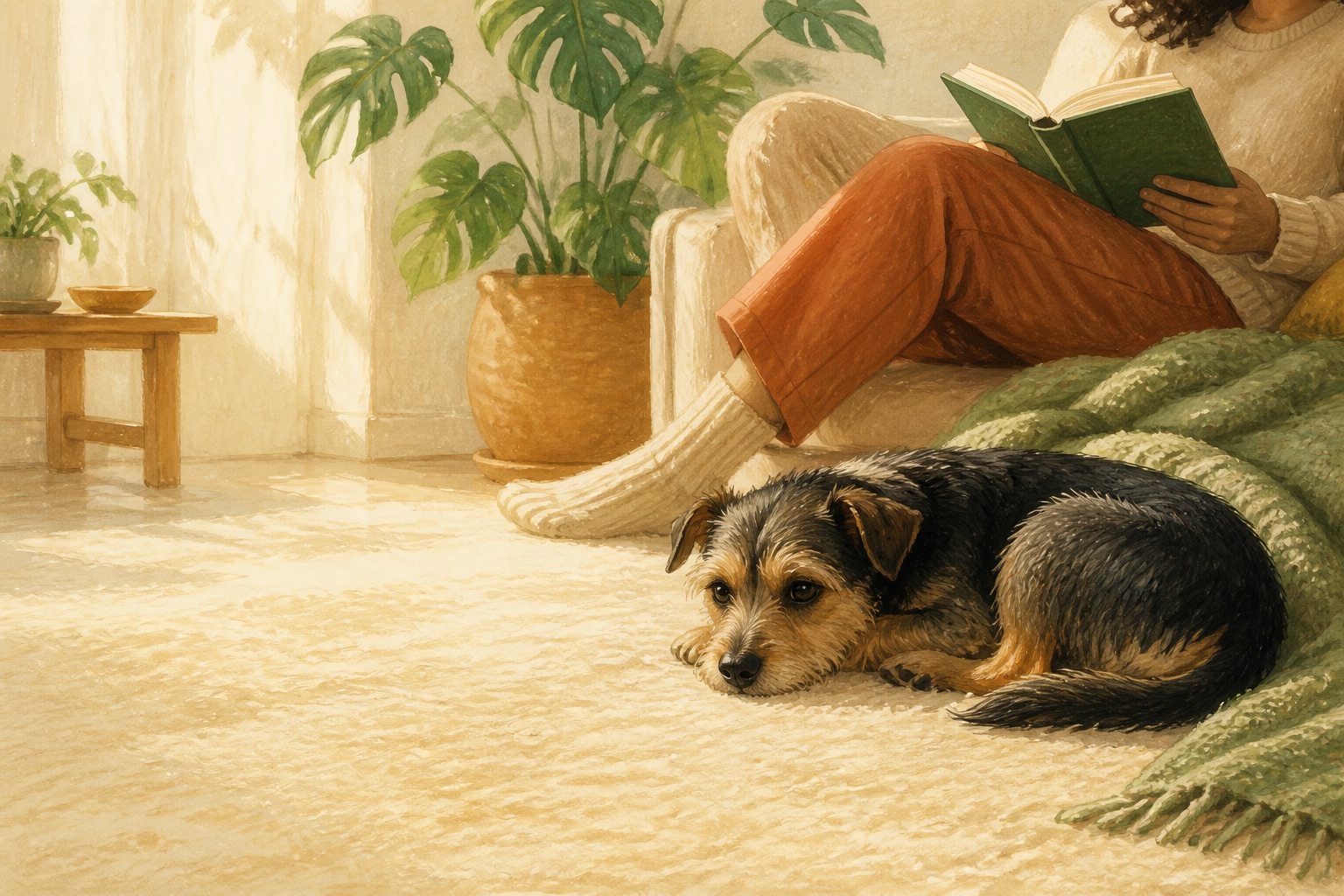
Sit nearby without leaning over the dog, staring or reaching every time they approach. Let them sniff, move away and return. A brief interaction followed by a pause makes it easier to see whether they are asking for more contact or trying to end it.
Delay large gatherings and manage introductions with children or resident animals carefully. Separate spaces, gates and short, planned encounters give everyone a way to leave before the moment becomes difficult.
Record a baseline without monitoring everything
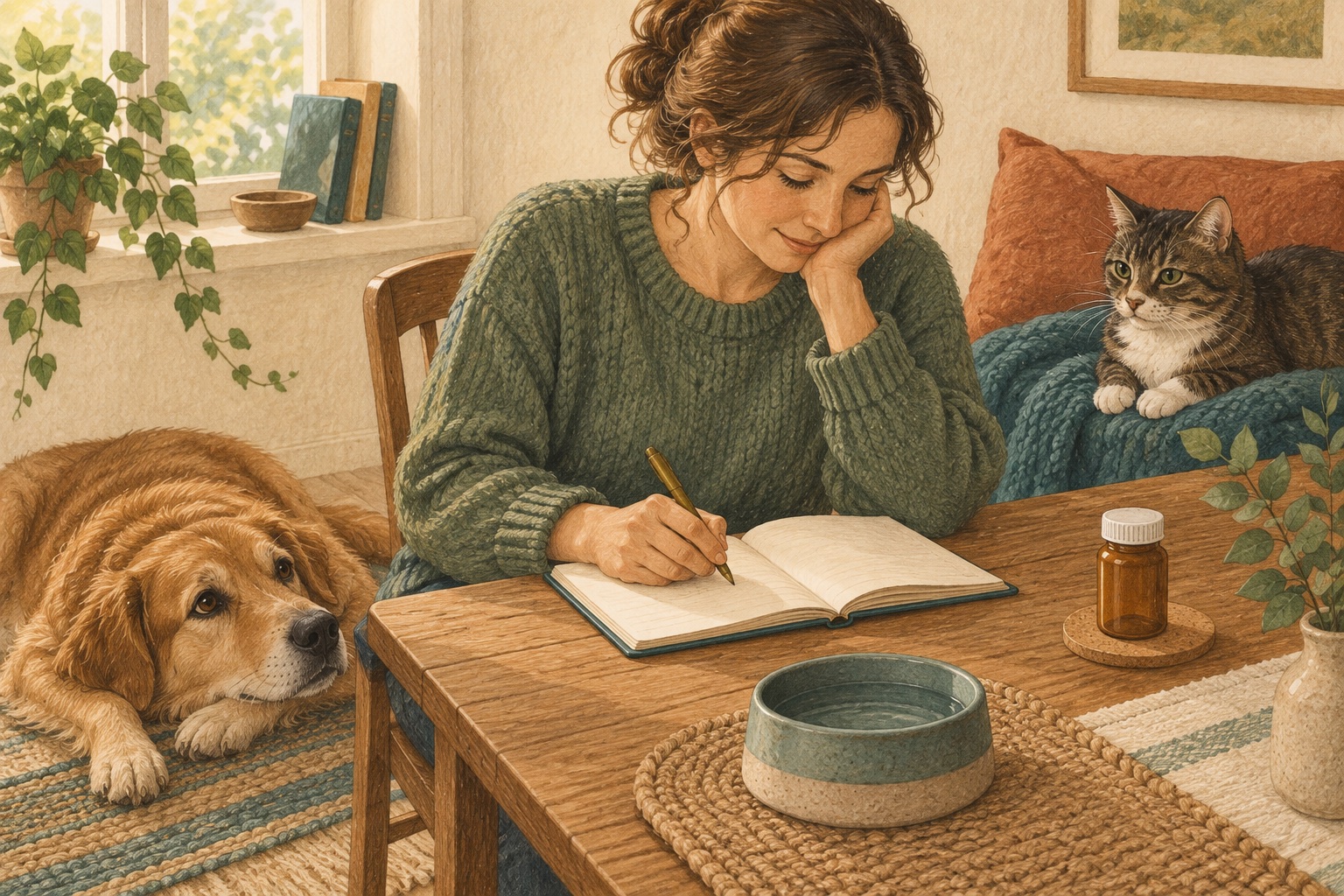
A few dated notes can help you learn what is ordinary for this dog: food and water, elimination, rest, preferred places, reactions to walks and the situations that help them settle. Record observable facts rather than labels such as “stubborn” or “dominant”.
Contact a veterinarian promptly for a sudden, severe, persistent or worsening health change, or whenever you are worried. For behaviour that creates a safety concern, use distance and barriers first, then seek appropriately qualified support.
A practical plan for the first week
- Create one reliable base
Choose a quiet sleeping and resting area before arrival. Keep water, food, bedding and a route away from household traffic easy to find; move them only when there is a clear reason.
- Make the day boring on purpose
Limit visitors, new outings and introductions at first. A short, familiar rhythm gives you a clearer view of what they choose when there is not too much happening.
- Offer, then step back
Sit nearby, speak softly and let the animal decide whether to approach. Reaching, lifting or following can turn a well-meant welcome into pressure.
- Write down the baseline
Note practical facts such as meals offered, sleep spots, toileting routine and moments of curiosity. These are observations, not grades, and can be useful context later.
What progress can look like
Progress is often quiet: choosing a resting spot, taking food in your presence, stretching out, investigating a room, or returning to you after a little distance. If something feels sudden, marked or persistent — or you are worried about health — contact a qualified veterinary professional rather than trying to solve it from a checklist.
Sources and further reading
This general guidance was researched against the following veterinary and animal-care sources:
Frequently asked questions
How quiet should the first day with an adopted dog be?
Keep it deliberately uneventful: show water, the safe base and the toileting route, then limit visitors, long outings and forced contact.
Should I let the dog explore the whole house immediately?
Offer a smaller predictable area first and expand access gradually. Too many rooms, people and decisions at once can be difficult to process.
How long should early walks be?
Use short, familiar outings for toileting, sniffing and learning the immediate area. Let the dog’s response and rescue or veterinary guidance shape the plan.
When should visitors meet the new dog?
Delay large gatherings. Use brief planned introductions only when the dog has a safe retreat and can choose distance.
When should I contact a veterinarian?
Contact one promptly for a sudden, severe, persistent or worsening health change, or whenever you are worried.
These articles offer general, everyday guidance. They do not replace advice from a qualified veterinary professional.
Start with one calm step
Build a small, repeatable rhythm for the first days.
Nuzzleway offers a gentle daily plan and private notes so you can keep useful anchors visible without turning the transition into a test.