The short answer
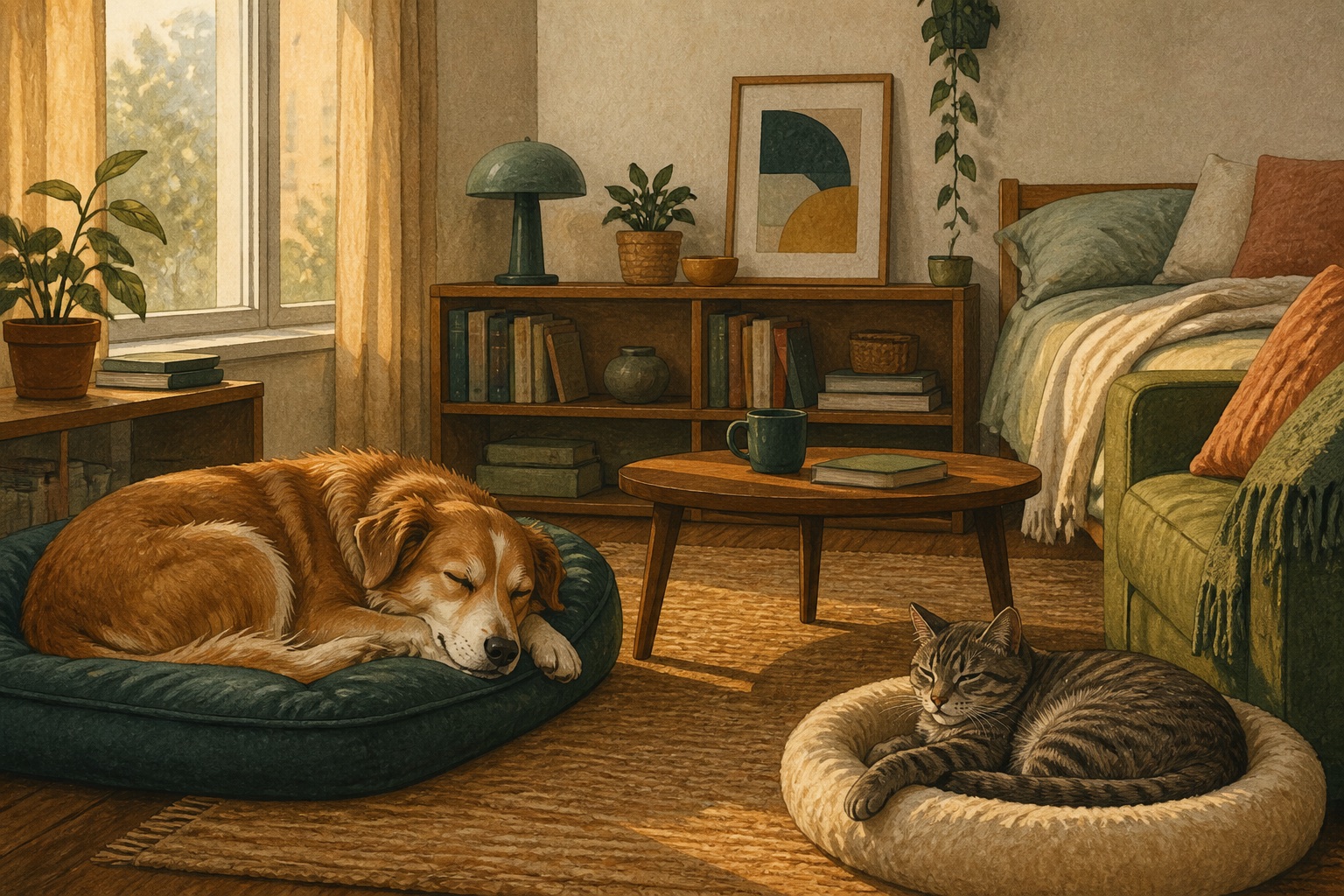
A shared home works best when each animal has genuine choices about distance, resources and rest. Peaceful coexistence is a valid goal; close friendship is not something people can require on a deadline.
To introduce a dog and cat safely, begin with separation rather than a face-to-face meeting. Give the cat a dog-free base with all essential resources, prevent chasing, exchange scent and move to controlled visual contact only when both animals can remain settled at the previous step.
Prepare separate safe areas before either animal arrives
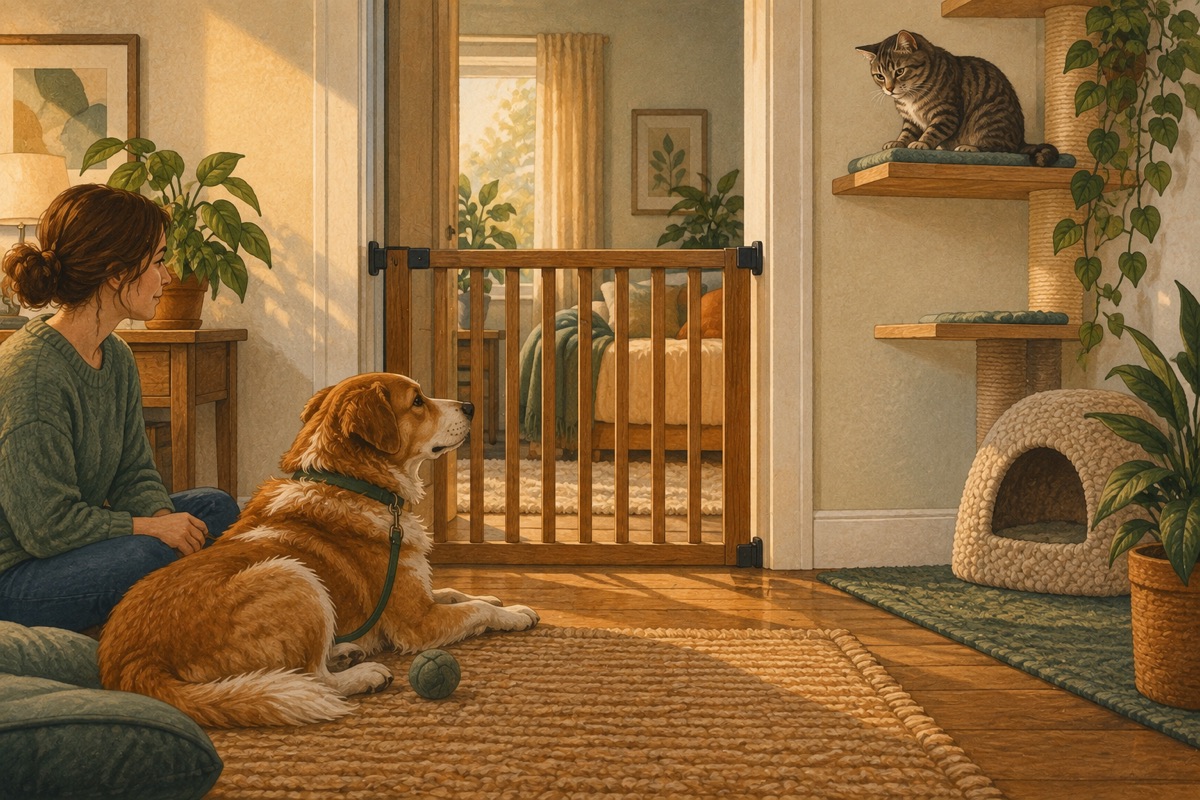
The cat needs a room or protected area the dog cannot enter, with food, water, litter, scratching, resting and hiding options. Add stable high places and more than one escape route where practical. Keep the dog’s resting, feeding and activity areas separate so neither animal must negotiate basic care.
Install gates or barriers before the first meeting and check every gap. A barrier that a kitten can slip through or a dog can push over is not a controlled setup. Plan doors, windows and lead handling so a startled cat cannot bolt outside and a dog cannot begin a chase.
| Stage | Setup | Move on when | Go back when |
|---|---|---|---|
| Separate spaces | Each animal has complete resources and no forced contact | Both can eat, rest and follow ordinary routines | Either cannot settle or access resources |
| Scent exchange | Cloths or bedding offered at a neutral distance | The scent can be investigated or ignored calmly | Avoidance or arousal keeps increasing |
| Visual contact | Secure barrier, cat escape route, dog on a loose lead | Both can look away, take food and disengage | Staring, lunging, chasing attempts or hiding persist |
| Shared room | Short supervised time with exits and height available | Calm coexistence continues across repeated sessions | Either animal loses access, safety or ability to rest |
There is no deadline. Some pairs need weeks, and some should not share unsupervised space.
Start by exchanging scent, not animals
Cats Protection recommends using separate clean cloths to collect scent from each animal, then placing the cloth in the other animal’s area where it can be approached or ignored. Bedding exchange can serve the same purpose when it does not remove an animal’s only familiar resting item.
Repeat short exposures. Do not hold the cloth under an animal’s nose or trap either animal near it. If one avoids the scent, increase distance and allow more time. The goal is familiarity without forcing contact, not a visible reaction on a schedule.
Use a barrier for the first visual introduction
Choose a time when the home is quiet. The dog should be on a secure, loose lead with a caregiver who can reward calm disengagement. The cat must remain free to retreat or move to height; do not put the cat in a carrier for the meeting or carry them toward the dog.
Keep the first view brief. Reward the dog for looking back at the caregiver and both animals for calm behaviour at a comfortable distance. End before either animal becomes overwhelmed, then return to full separation. Repeated easy sessions are more useful than one long encounter.
Prevent chasing and protect every escape route
Do not allow “just one chase” to see what happens. Chasing can be frightening and can make future introductions harder even when the dog appears playful. Use the lead, barriers and distance to prevent rehearsal, and teach the dog calm attention away from the cat with reward-based support.
Watch the whole room. A cat may be physically able to reach food or litter yet avoid it because the dog rests in the doorway. Provide alternative routes and dog-free high places. Cat food and litter should remain inaccessible to the dog so the cat can eat and toilet without pressure.
Let calm coexistence be the success criterion
Friendship, shared beds and play are not required. A successful home may involve each animal choosing a different part of the room and being able to rest. Increase shared time gradually only after repeated sessions in which both can disengage and access resources.
Repeated chasing, fixed staring, lunging, hiding, blocking access, fighting or a sudden behaviour change needs timely professional guidance. Separate the animals safely and contact a veterinarian or appropriately qualified behaviour professional.
Set the home up for choice
- Duplicate key resources
Provide separate places to rest, eat, drink and use the toilet where relevant. More than one route through a room can also prevent one companion from feeling blocked.
- Use short, planned contact
Keep early interactions brief and give both animals an easy exit. Ending while everyone is settled is more useful than waiting for a difficult moment.
- Protect quiet routines
Feed, rest and greet each animal in a way that does not create a competition for your attention. The home should not force them to negotiate every ordinary need.
- Change the environment before blaming either animal
If a route, bed or food area repeatedly creates tension, adjust it. Barriers, distance and extra resources can be practical support, not a failure of training.
Know when extra help is useful
Repeated chasing, blocking access, fear, fighting or a sudden change in behaviour deserve timely professional guidance. For immediate safety concerns, separate the animals safely and contact an appropriately qualified veterinarian or behaviour professional.
Sources and further reading
This general guidance was researched against the following veterinary and animal-care sources:
Frequently asked questions
How long does it take to introduce a dog and cat?
There is no fixed timeline. Move forward only after repeated calm sessions at the current stage; some pairs need weeks or professional support.
Should the cat be in a carrier for the first meeting?
Generally, the cat should have freedom to retreat or move to height behind a secure barrier. A carrier can remove that choice and increase stress.
Can I let the dog chase the cat once?
No. Prevent chasing with a lead, barriers and distance. Even a playful chase can frighten the cat and make later sessions more difficult.
What if the cat hides?
Keep the dog out of the cat’s safe area, preserve resources and allow the cat to emerge voluntarily. Persistent fear or inability to eat, drink, toilet or rest needs professional advice.
When can a dog and cat be left alone together?
Do not rush unsupervised access. Some pairs should never be left together without management; seek individual professional guidance when risk or uncertainty remains.
These articles offer general, everyday guidance. They do not replace advice from a qualified veterinary professional.
Go one stage at a time
Keep a calm introduction plan visible for everyone at home.
Nuzzleway helps a household keep short daily steps and observations together without rushing the next meeting.