The short answer
Enrichment is not a pile of products. It is a home that makes room for species-appropriate behaviour: resting, hiding, climbing, sniffing, exploring and interacting at a pace the individual can manage.
Indoor cat enrichment begins with a usable environment, not a pile of toys. A cat needs safe places, separated key resources, options to climb and scratch, opportunities to hunt through play or foraging, and enough control to approach or ignore each option.
What does an enriched indoor cat environment include?
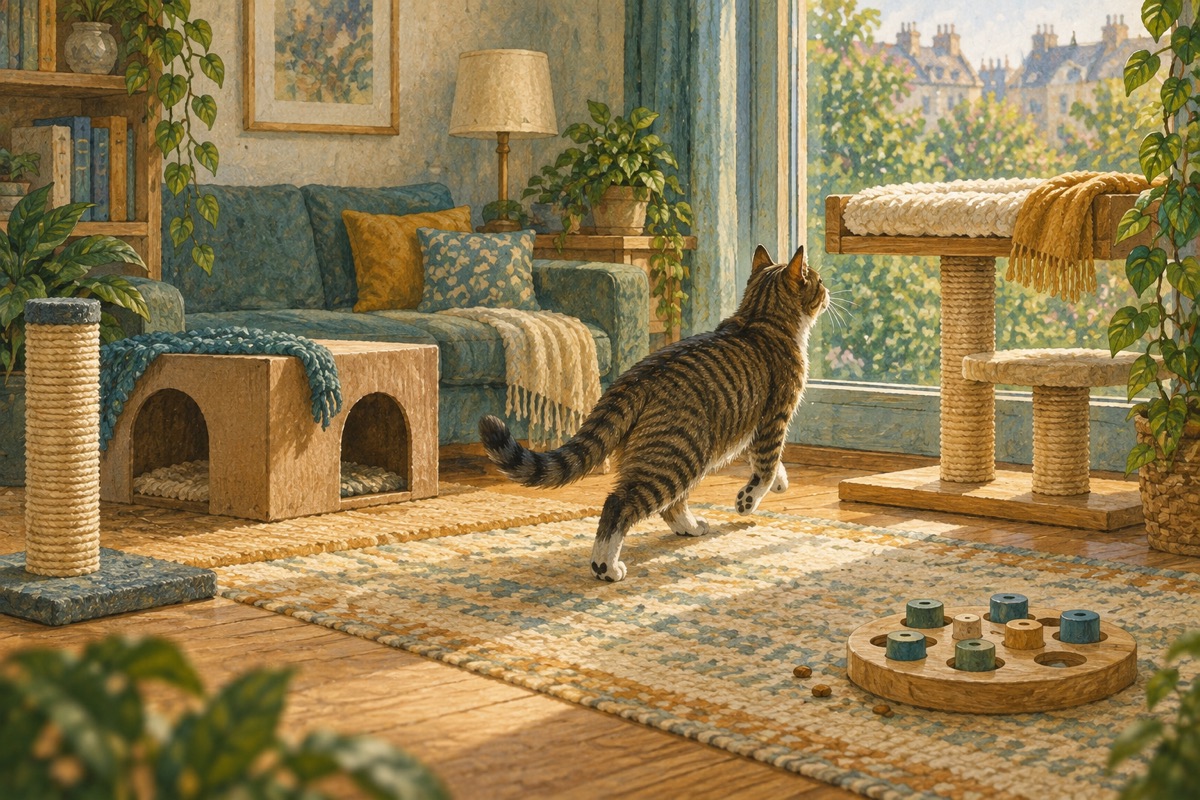
Current feline environmental guidance groups the essentials around a safe place, multiple and separated resources, opportunities for play and predatory behaviour, positive and predictable human interaction, and respect for the cat’s sense of smell. These are connected: a toy cannot compensate for an inaccessible litter tray or a resting place that never feels safe.
Start by mapping what the cat already uses. Mark food, water, litter, scratching, play and sleep areas, then look for bottlenecks or places where another animal, noise or foot traffic could make access difficult. Enrichment should make normal behaviour easier, not make the room busier.
| Zone | Provide | Check |
|---|---|---|
| Safe retreat | Covered or raised place with an easy exit | The cat can enter, leave and rest undisturbed |
| Food and water | Suitable stations separated from litter and each other | Access is not blocked by people or other animals |
| Climbing and watching | Stable perch, shelf or cat tree with a safe route | Jumps and landings suit the individual cat |
| Scratching | Stable vertical or horizontal surface near useful routes | Material and orientation match the cat’s preference |
| Play and foraging | Interactive toy and simple food puzzle when appropriate | The activity remains voluntary, safe and diet-appropriate |
In multi-cat homes, provide enough separated resources that one cat cannot control every route to them.
Create safe places and vertical routes
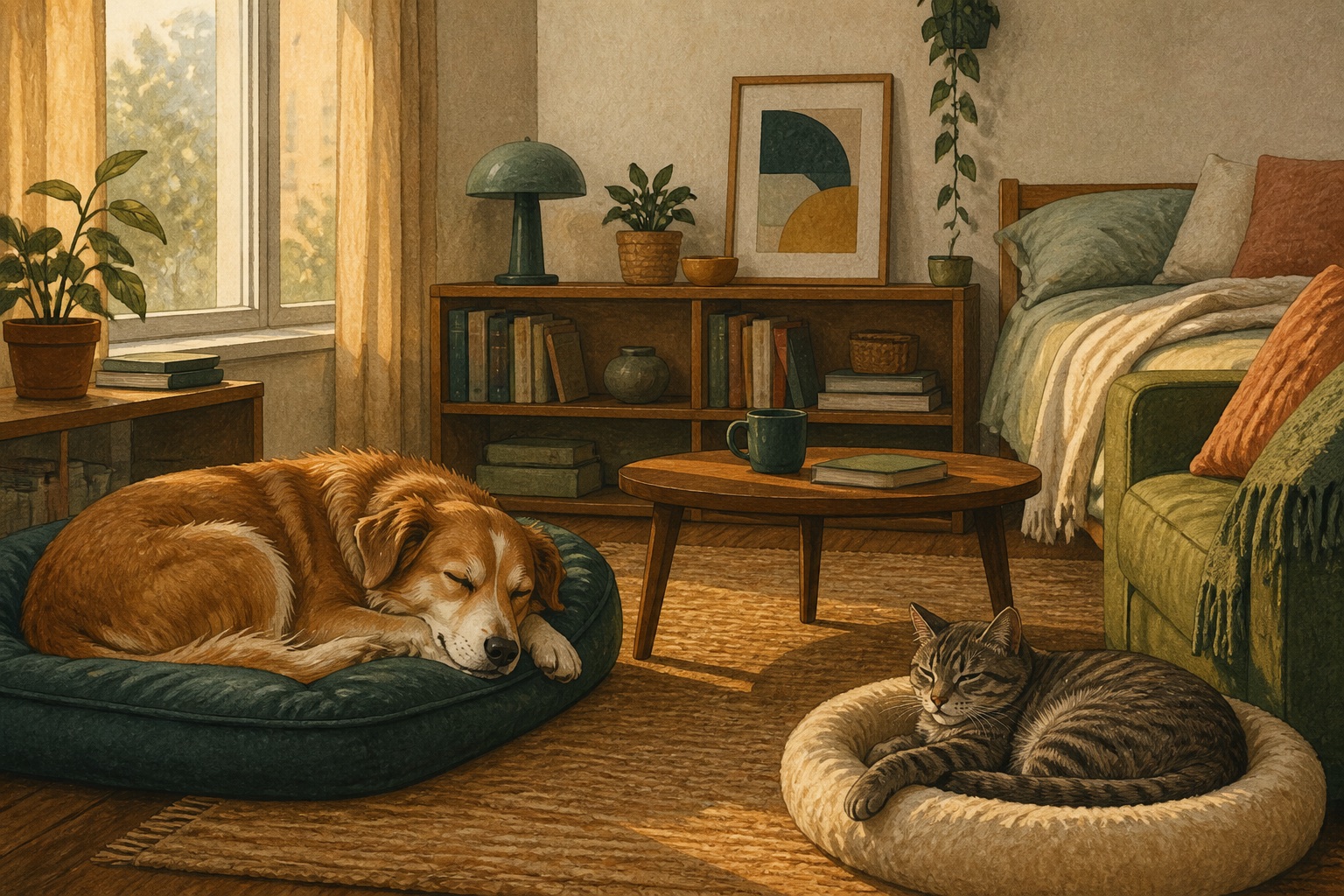
A safe place can be a cardboard box, open carrier, covered bed or raised perch. Many cats prefer a retreat with sides around it and more than one way to leave when they feel threatened. Place several options apart from one another so choosing solitude does not require crossing the busiest part of the home.
Vertical space adds territory only when it is stable and reachable. Use non-slip access and intermediate levels for kittens, senior cats or cats with reduced mobility. A beautiful shelf that requires a difficult jump is decoration, not useful enrichment.
Separate food, water, litter, scratching and rest
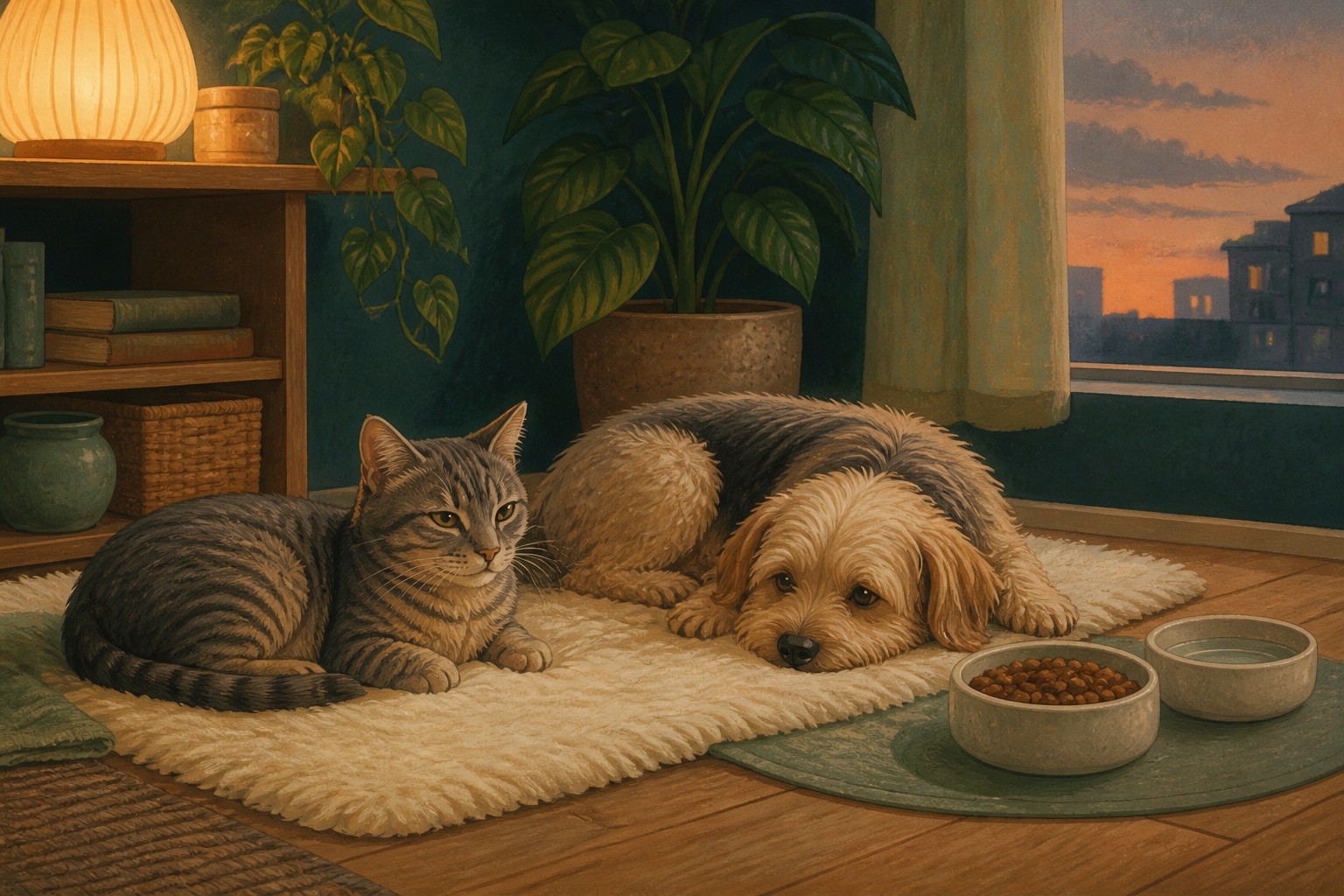
Key resources should not be grouped into one convenient human corner. Food beside litter, water squeezed between bowls, or the only bed next to a noisy appliance can reduce how usable each resource feels. Separation gives the cat a choice and reduces competition in shared homes.
For more than one cat, duplicate resources in different locations rather than lining identical bowls or trays side by side. Watch routes as well as objects: a resource is not truly available if another animal can block the doorway, hallway or landing that leads to it.
Use play and foraging without creating frustration
Interactive play can imitate parts of a hunting sequence: watch, stalk, chase, pounce and capture. Move a wand toy away from the cat rather than into the face, keep hands out of the game and allow regular captures. End with a small appropriate food reward when that fits the cat’s diet and veterinary plan.
Introduce food puzzles at an easy level using part of the normal daily allowance. If the cat cannot access the food, walks away repeatedly or becomes distressed, simplify it. Enrichment is not valuable because it is difficult; it is valuable when the cat can choose and succeed.
Rotate one element and observe voluntary use
Keep the resources the cat relies on and change one optional element at a time: move a box, rotate a toy or offer a different simple search. Give the cat time to approach or ignore it. Removing every familiar item in the name of novelty can make the home less predictable.
Track voluntary use: approaches, returns, rests, scratches, plays or ignores. Remove anything unstable, damaged or frightening. A sudden change in interaction, appetite, litter use, movement or ability to rest needs veterinary advice rather than a more elaborate enrichment plan.
Four changes with a lot of everyday value
- Protect rest and hiding places
Offer a quiet, dry place away from traffic and do not turn every resting space into an interaction point. Choice of retreat is part of feeling secure.
- Use the vertical space when appropriate
Cats often benefit from safe high resting places and routes. Check stability and access first; height should add choice, not create a difficult or unsafe jump.
- Rotate, do not overwhelm
Put away part of a toy selection and reintroduce it later, or change one safe element of a familiar activity. Smaller changes are easier to evaluate than a complete reset.
- Keep essential resources separate
For cats, keep resting, eating, drinking and toileting areas comfortably distinct. This is not decoration; it helps the home stay usable when they need different things.
What to notice after a change
Look for voluntary use: does your companion approach, return, rest, explore or ignore the new option? Ignoring it is useful information too. Remove or adapt anything that appears to create fear, conflict or a safety risk.
Sources and further reading
This general guidance was researched against the following veterinary and animal-care sources:
Frequently asked questions
Does indoor cat enrichment require buying toys?
No. Safe boxes, stable perches, separated resources, simple searches and interactive play can be useful. Suitability and choice matter more than price.
How often should I rotate cat toys?
There is no fixed interval. Rotate one optional item when interest falls, while keeping essential resources and favourite safe places predictable.
Where should I put a cat’s water?
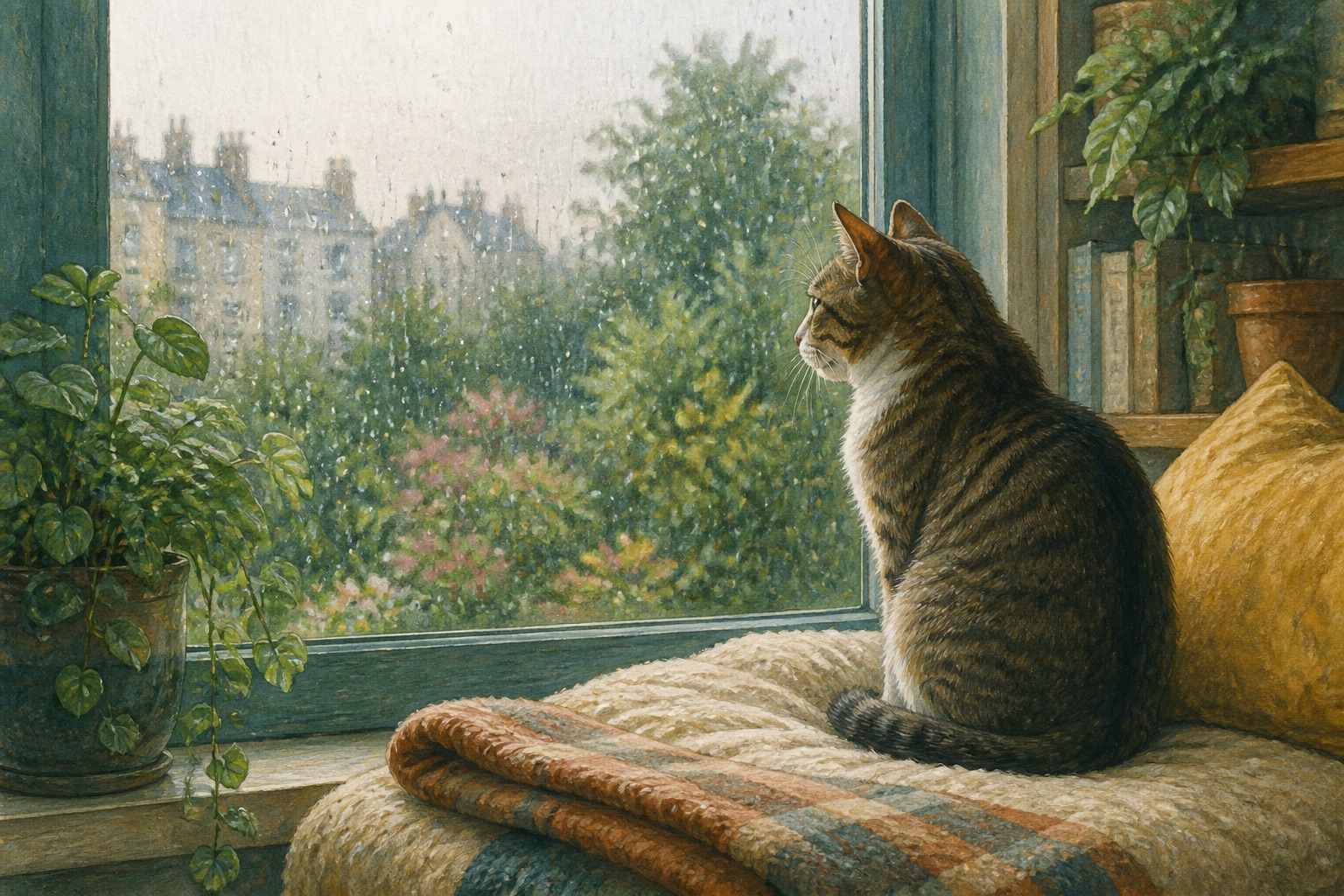
Use an accessible quiet location separated from litter and, where the cat prefers, from food. Multi-cat homes benefit from multiple stations in different places.
Is a window perch good enrichment?
It can be when the perch is stable, the window is secure and access suits the individual cat’s mobility. The cat should also have quiet retreat options.
How do I know whether enrichment is working?
Look for voluntary use and easy disengagement. The cat may approach, return, rest, scratch, forage or ignore an option; forcing interaction defeats the purpose.
These articles offer general, everyday guidance. They do not replace advice from a qualified veterinary professional.
Keep enrichment gentle
Make one useful cat activity part of the day.
Nuzzleway helps you keep small repeatable care moments visible while you observe what your cat actually chooses.