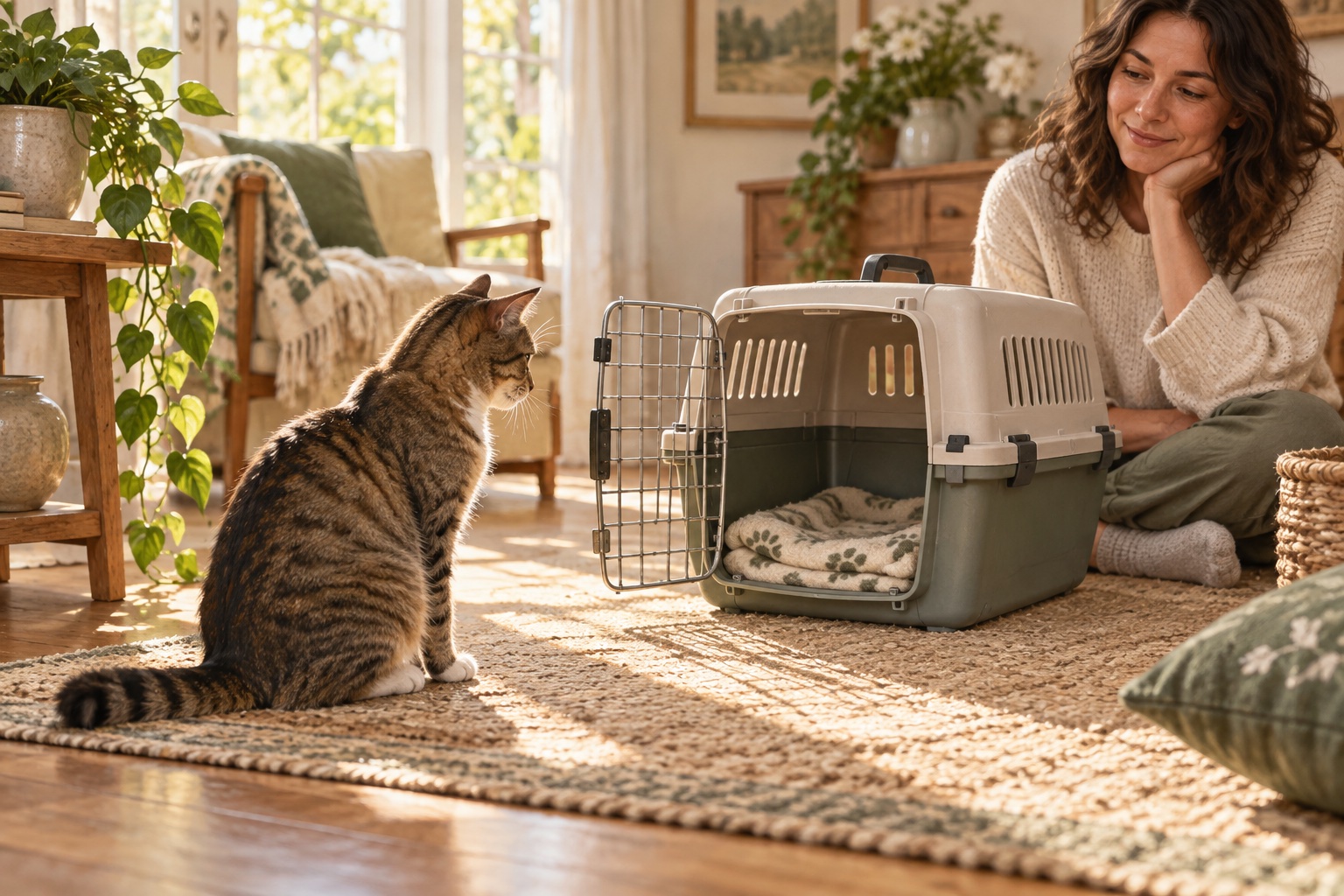
To introduce two cats, begin with separate complete living spaces. Let the newcomer settle, then move through scent exchange, visual contact across a secure barrier and short supervised time together. Advance only when both cats can eat, rest and move away normally. There is no fixed number of days that makes a meeting safe.
This guide addresses cat-to-cat introductions. If the other animal is a dog, use the separate dog-and-cat introduction guide, which covers chasing and dog management.
Set up two safe spaces before contact
Give the new cat a quiet room with its own food, water, litter box, hiding place, scratching option and resting area. The resident cat must keep reliable access to its usual essentials elsewhere. Arrange a veterinary discussion about health, parasite control and vaccination history before close contact, especially when the new cat’s history is unknown. Do not let one cat’s “friendly” behaviour replace that check.
The 2024 FelineVMA intercat tension guidelines explain that tension can be subtle: one cat may block a doorway, stare, stalk or displace another from resources without an obvious fight. Choose locations with more than one route where possible. Our litter-box setup guide explains why separate useful locations matter more than a row of boxes together.
| Stage | Try | Pause when |
|---|---|---|
| Separate rooms | Let each cat use its own resources and settle behind a closed door. | Either stops eating normally, hides persistently or cannot rest. |
| Scent exchange | Swap a soft item or allow each to explore the other's room while the other is safely elsewhere. | Either shows sustained distress around the scent; use more distance and time. |
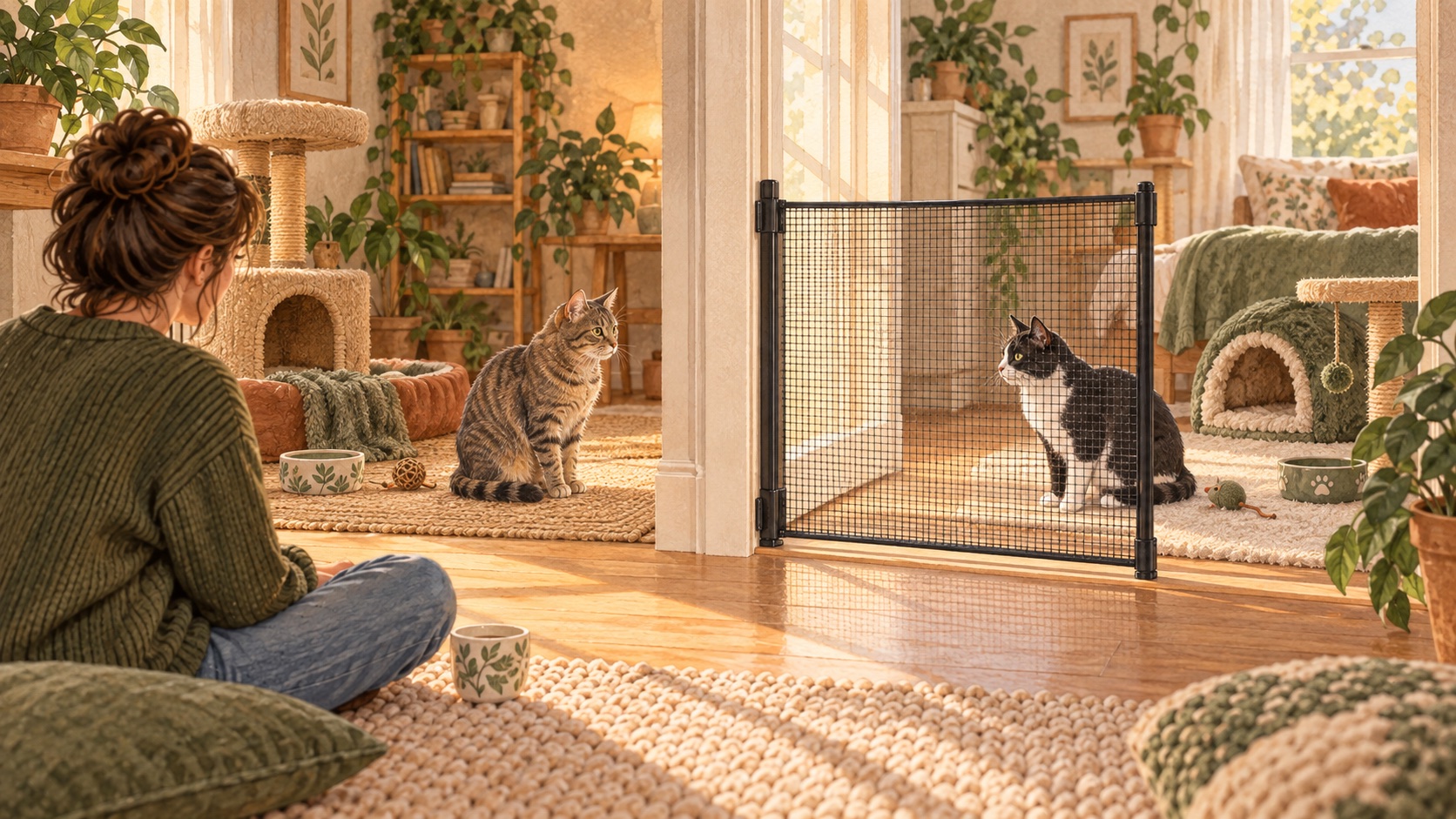
| Barrier contact | Allow brief views through a secure mesh or gate, with enough space to retreat. | Staring, charging, stalking or attempts to force contact continue. |
| Supervised shared time | Keep meetings short and optional, with open routes and separate resources. | One cat blocks, chases, corners or fights the other. |
Go back to the last comfortable stage when tension appears. Veterinary care comes first for injury, pain or a change in eating or toileting.
Exchange scent before a face-to-face meeting
Cats use scent to learn about their environment. Cats Protection’s introduction guide recommends gradual scent exchange before visual or direct contact. Offer an item that smells of the other cat at a distance where your cat can choose to investigate; do not push it toward the cat’s nose. You can also let each explore the other’s room separately while doors keep them apart.
If either cat remains unsettled, keep the stage easy for longer. A relaxed response to one scent exchange does not guarantee they are ready for a meeting. Continue to watch appetite, litter use, rest and willingness to move through the home.
Use a barrier and preserve the choice to leave
When both seem comfortable with the other’s scent, arrange brief visual contact across a secure barrier. Check that neither can slip through or reach a paw to trap the other. Put the barrier far enough from essentials that neither cat must approach it to eat, drink or use the litter box. End while both remain calm; never hold a cat in place for a “proper look.”
Only then consider short supervised access to the same room. Provide escape routes and several resting places, and avoid using food to force them together. Calm coexistence at a distance counts as progress. Hissing is communication: give more space rather than punishing either cat. Chasing, blocking, cornering, repeated stalking or fighting mean separate them safely and reassess.
What if the introduction stalls?
Return to separate spaces that meet both cats’ needs. A veterinarian should assess injury, pain, appetite or toileting changes. A qualified feline behaviour professional can help when tension continues despite a slower setup. The FelineVMA caregiver guide offers a staged process; it does not promise that every pair will become close companions.
Once they share space, keep resources distributed and observe whether each cat can use them freely. The indoor-cat enrichment guide can help you add retreat and vertical routes without overcrowding the home. Neither cat should have to compete for a safe daily routine.
Sources
Frequently asked questions
Can I put two unfamiliar cats together immediately?
Prepare separate complete spaces first. Veterinary health checks, scent exchange and gradual visual and supervised contact give you a safer way to assess both cats' comfort.
How long does it take to introduce two cats?
There is no dependable fixed timetable. Some cats need much longer than others, and introductions should move forward only when both are comfortable at the current stage.
What if the cats hiss at each other?
A hiss signals discomfort or a wish for more distance. Do not punish it. Increase separation, slow the process and seek qualified advice if tension persists or escalates.
How many litter boxes do two cats need?
A common starting point is one per cat plus one extra, in different useful locations. More importantly, each cat needs reliable access without the other blocking a route.
When can I leave the cats alone together?
Only after a sustained pattern of calm shared access to food, water, litter and resting places, and when you can safely judge the individual situation. Ask a feline behaviour professional if tension remains.
These articles offer general, everyday guidance. They do not replace advice from a qualified veterinary professional.
Go at their pace
Keep each cat's normal routine easy to follow.
Nuzzleway can help you note each cat's usual care and a few factual observations while the household changes. The cats' comfort and professional advice guide when to advance.