The short answer
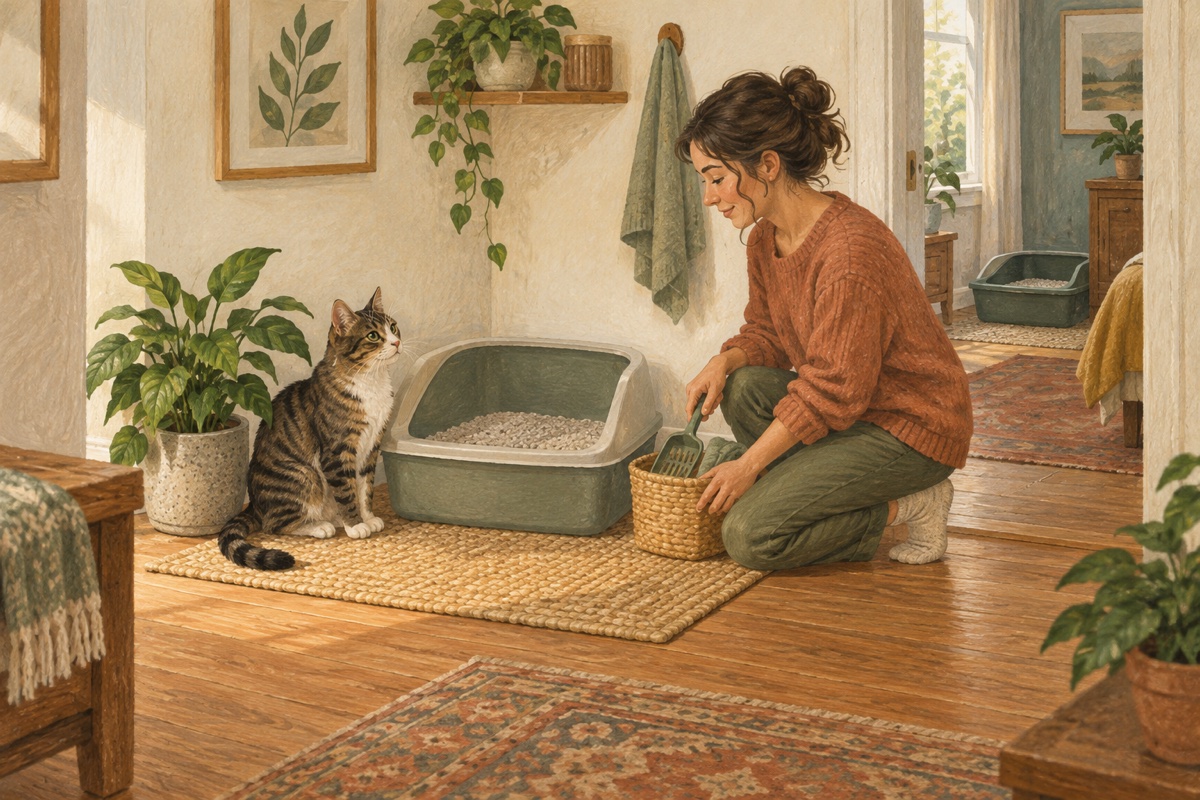
Start with one litter box per cat plus one extra, placed in separate quiet, accessible locations. Use boxes large enough to turn and dig in, scoop at least daily and keep an open familiar option while testing changes.
A useful cat litter box setup offers choice. Start with one box per cat plus one extra, distribute them across separate accessible locations, and make each box large enough for the cat to enter, turn and dig comfortably. Then adjust from the cat’s actual use rather than from what fits most neatly into the room.
| Question | Good starting point | Watch for | Adjustment |
|---|---|---|---|
| How many? | One per cat, plus one extra | One box is avoided or guarded | Separate boxes into different useful locations |
| How large? | Room to enter, turn and dig | Perching on the rim or missing the box edge | Try a longer, wider box with suitable entry height |
| Covered or open? | Offer a spacious open option | Hesitation, trapped odour or ambush risk | Compare options without removing the familiar box suddenly |
| Where? | Quiet, reachable and with an easy exit | Noise, blocked routes or conflict | Move gradually or add a better option first |
The “one per cat plus one” guideline is a starting point. Mobility, relationships and the layout of the home determine what works.
How many litter boxes per cat?
For one cat, begin with two boxes. For two cats, begin with three. The extra option matters only when the boxes are genuinely available: three trays lined up in one small room can all become inaccessible if a noisy appliance starts or another cat controls the doorway.
Place boxes on more than one floor in a multi-storey home. For an older cat or a cat with reduced mobility, keep an option close to the main living area and use an entry height they can cross comfortably. Do not make a cat negotiate stairs whenever they need to eliminate.
Choose a box the cat can use comfortably
Many commercial trays are too small for a large adult cat. The cat should be able to step in, turn around, dig and adopt a comfortable posture without pressing against the sides. A high-sided box can contain scatter, but it still needs an accessible entrance.
Covered boxes give privacy to some cats, but they can retain odour and reduce sightlines or escape routes. If you want to compare a covered design, offer it alongside a familiar open box and observe the cat’s choice. Avoid abrupt replacement of every existing tray.
Where should a litter box go?
Choose a quiet location that remains accessible day and night. Keep it away from food and water, noisy washing machines, busy doorways and places where another animal can block the route. The cat should be able to see or reach an exit rather than feel cornered.
Privacy does not mean isolation. A box hidden in a cold basement, behind a door that closes or beside an unpredictable appliance may be technically present but practically difficult to use. Review the route from the cat’s height and at the busiest time of day.

Litter depth, scent and changes
Many cats prefer a soft, unscented litter that allows digging. Start with the familiar substrate when a cat first arrives and avoid changing box, litter and location on the same day. If you need to try something new, place a second option nearby enough to compare while keeping the trusted box available.
Strong fragrances may suit people more than cats. Avoid deodorising products or harsh cleaners that leave an intense smell. If the cat begins toileting beside the box after a litter change, restore a familiar option and also consider whether pain, urgency, conflict or access has changed.
A simple cleaning routine
Scoop urine and faeces at least daily and more often when needed. Top up litter to maintain a usable depth without masking waste beneath fresh material. Wash the box regularly with a mild approach appropriate to the product and rinse and dry it well before refilling.
Keep a scoop and disposal supplies nearby, but store them safely. Replace damaged boxes when scratches retain odour or the surface becomes difficult to clean. Avoid scolding after an accident; clean the area thoroughly and investigate the setup and the cat’s health.
What litter box changes can mean
Toileting outside the box is information, not spite. A dirty or inaccessible box, a new animal, household noise, pain and urinary or digestive disease can all change use. Record where and when it happens, the amount, posture, vocalisation and any change in drinking, appetite or activity.
Straining, repeated trips with little or no urine, blood, pain or sudden vocalising need prompt veterinary advice. Inability to pass urine is an emergency, especially in male cats. Do not wait for a new litter or cleaning routine to solve a possible medical problem.
Set up a usable litter box
- Count useful locations
Provide one box per cat plus one extra without clustering every box together.
- Check size and entry
The cat should be able to enter, turn and dig without pressing against the sides.
- Protect the route
Avoid noise, blocked doors, food areas and places another animal can guard.
- Scoop every day
Remove urine and faeces at least daily and wash the box with a mild approach.
- Change one variable
Compare a new litter or box while keeping a familiar option available.
Treat a toileting change as information
Record location, frequency, amount, posture and accompanying changes without punishing the cat. Straining, pain, blood, repeated unproductive trips or inability to pass urine need prompt veterinary attention; inability to urinate is an emergency.
Sources and further reading
This general guidance was researched against the following veterinary and animal-care sources:
Frequently asked questions
How many litter boxes should I have?
A common starting point is one box per cat plus one extra, placed in separate useful locations. Individual cats and homes may need adjustment.
Can two litter boxes sit next to each other?
Side-by-side boxes may function like one location from a cat's perspective. Separate them when possible so one cat, noise or blocked route cannot make every option unavailable.
Where is the best place for a litter box?
Choose a quiet, accessible place with an easy exit, away from food and water and from appliances that start suddenly. Avoid forcing the cat through another animal's resting area.
How often should I scoop the litter box?
Remove urine and faeces at least daily and more often if needed. Wash the box on a routine suited to the litter, using a mild cat-safe approach and avoiding strongly scented products.
When should litter box changes go to a veterinarian?
Contact a veterinarian promptly for straining, repeated unproductive trips, blood, pain, vocalising, very small frequent urinations or a sudden change in toileting. Inability to pass urine is an emergency.
These articles offer general, everyday guidance. They do not replace advice from a qualified veterinary professional.
Keep the routine visible
Notice litter box changes before they become a mystery.
Use Nuzzleway to keep a light cleaning rhythm and record changes in urine, stool or location preference for useful context.