The short answer
Many cats sleep for around 16 hours across a day, usually in multiple naps, but there is no single healthy number for every cat. Kittens and older cats may rest more than healthy adults, and weather, activity, household routine and safe resting places can shift the pattern. Use the cat’s own ordinary rhythm as the reference: where they sleep, whether they wake for familiar meals or play, and how they move afterwards. Contact a veterinarian promptly when sleep changes suddenly, markedly or persistently, especially alongside reduced appetite, pain, weakness, breathing changes, altered litter use or unusual withdrawal.
Many cats sleep for around 16 hours across a day, often in a series of naps rather than one continuous block. That figure is a useful orientation, not a target. A kitten, a settled adult and a senior cat can have different rhythms, and two healthy adult cats may not sleep for the same amount of time.
The better question is not only “how many hours?” but “is this cat sleeping, waking, eating, moving and interacting in their usual way?” Learn the ordinary pattern first, then pay attention to a meaningful change.
How does a cat’s sleep pattern change with age?
Age influences sleep, but it does not provide a diagnosis. Kittens need substantial rest while growing and may move quickly between energetic play and sleep. Adults often divide the day into light naps and shorter periods of deeper sleep. Senior cats may rest more, although pain, illness, reduced mobility or changes in the home can also alter where and how they sleep.
| Life stage | Common pattern | Useful context | What deserves attention |
|---|---|---|---|
| Kitten | Frequent rest between short, active periods | Growth, meals, play, warmth and safe sleeping places | Weakness, difficulty waking, missed meals or a sudden change from the kitten’s pattern |
| Adult | Several naps across the day with activity around household routines | Indoor activity, outdoor access, weather, play and social contact | A marked change in sleep together with appetite, litter, movement or behaviour changes |
| Senior | May rest more and choose easier-to-reach places | Mobility, pain, temperature, hearing, vision and access to resources | New restlessness, withdrawal, trouble settling, weakness or reduced ability to reach familiar places |
Use the table to organise observations, not to decide that a new change is “normal for the age”.
Sleeping, dozing and resting are not always the same
A cat curled with relaxed muscles and closed eyes may be in deeper sleep. During a light nap, the ears may continue to respond and the cat may change position quickly. A cat can also remain still while watching the room, hiding from activity or avoiding movement because something is uncomfortable.
That distinction matters when you record a change. “Stayed under the bed for most of the afternoon and did not come for the usual meal” is more informative than “slept all day”. Include what happened before and after, whether the cat could be roused normally and whether other routines changed.
Create resting places that give the cat a choice
Offer more than one safe place: a warm enclosed bed, an elevated option, a quiet open surface and an easy-to-reach resting area for a cat with reduced mobility. Locate beds away from noisy appliances, repeated handling and competition with other animals. The cat should be able to leave without being blocked.
Do not keep moving a sleeping cat simply because the chosen place is inconvenient. Adjust the environment when the location is unsafe, too hot or too cold, but preserve the ability to choose distance, height, warmth and visibility.
What can change how long a cat sleeps?
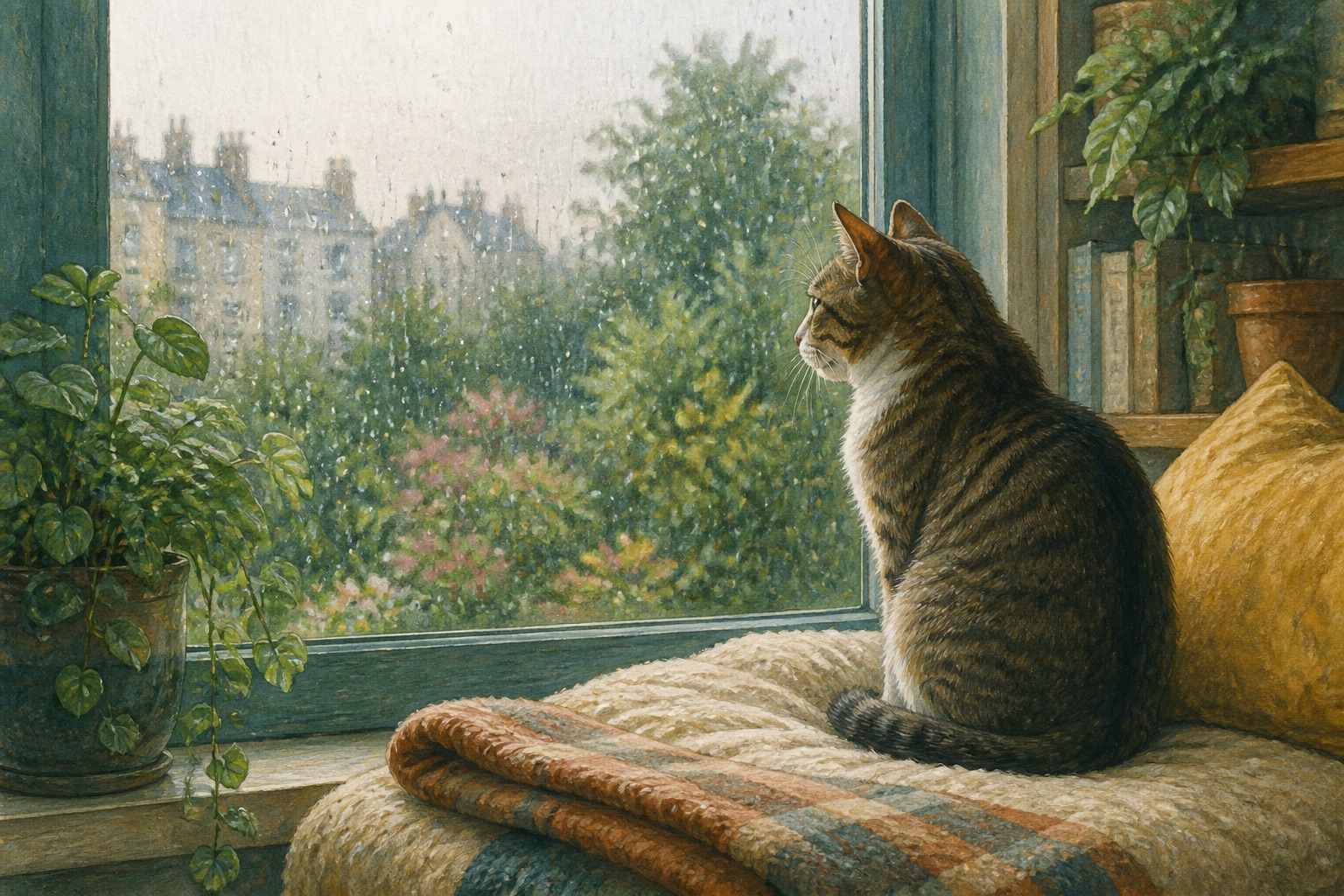
Household activity, access outdoors, weather, temperature, play, feeding rhythm and social tension can all shift the pattern. A quiet rainy day may look different from a morning with visitors or construction noise. These factors provide context; they should not be used to explain away a concerning change.
Look at the whole sequence. Did the cat play and eat normally before settling? Do they wake for familiar routines? Can they stretch, jump and walk as usual? Are grooming and litter use unchanged? A sleep note becomes useful when it connects rest with the rest of the animal’s day.
How should you track a sleep change without monitoring constantly?
Choose two or three anchors for several ordinary days: where the cat sleeps, whether they wake for a familiar meal or activity, and how they move after resting. If something changes, record the date, the observable difference, relevant context and what happened next.
Do not wake the cat repeatedly, film a worrying sign instead of seeking help or try to force the old routine back into place. The purpose of a record is to describe a timeline, not to prove that the cat slept a certain number of hours.
When should sleeping more or less lead to a veterinary call?
Contact a veterinarian promptly when a sleep change is sudden, marked, persistent or worsening, or when the cat is difficult to rouse, weak, painful, breathing differently, eating less, vomiting, using the litter tray differently, grooming less or withdrawing from ordinary contact. Seek urgent help for breathing difficulty, collapse, suspected poisoning, severe pain or another apparent emergency.
Do not wait for an online hour threshold if the cat looks unwell. Age and weather may influence rest, but they do not make a new worrying combination of signs safe to watch without advice.
Read a cat’s sleep pattern in five calm steps
- Choose two daily anchors
Notice whether the cat wakes for one familiar meal and one ordinary activity. These anchors are easier to compare than counting every nap.
- Protect several resting options
Offer quiet, warm, elevated, enclosed and easy-to-reach choices where appropriate. Keep routes open and prevent another animal from blocking the exit.
- Watch the transition after rest
A cat’s willingness to stretch, walk, eat, groom or play after waking adds more context than hours alone.
- Record only a meaningful change
Write the date, what differed, the surrounding context and what happened next. Avoid repeatedly waking or testing the cat.
- Call when the pattern and the cat change
Seek veterinary advice when altered sleep appears with appetite, breathing, mobility, litter, grooming or behaviour concerns, or when you are worried.
Count context, not minutes
For several ordinary days, note the main sleeping places, one wake-up anchor and the cat’s movement afterwards. Stop if tracking disturbs rest. A record should make a change easier to describe, not create a target the cat has to meet.
Sources and further reading
This general guidance was researched against the following veterinary and animal-care sources:
Frequently asked questions
How many hours a day do cats sleep?
Many cats sleep for about 16 hours across a day, usually in several naps, but individuals vary. Age, health, activity, weather and the home environment can all influence the pattern.
Do kittens sleep more than adult cats?
Kittens often sleep more while growing and may alternate intense activity with deep rest. Their feeding, play and sleep needs also change quickly, so use age-appropriate veterinary guidance.
Do senior cats sleep more?
Some senior cats rest more, but a new increase in sleep should not automatically be attributed to age. Compare it with appetite, movement, grooming, litter use and social behaviour.
Is it normal for a cat to sleep during the day?
Yes. Cats commonly divide sleep into multiple periods and may be most active around dawn and dusk. Indoor routines and household activity can shift that rhythm.
When should a change in sleep concern me?
Contact a veterinarian promptly when the change is sudden, marked, persistent or worsening, or appears with reduced appetite, breathing changes, weakness, pain, altered litter use or unusual behaviour.
These articles offer general, everyday guidance. They do not replace advice from a qualified veterinary professional.
Notice the pattern, not every nap
Keep a calm record of meaningful sleep changes.
Nuzzleway gives you a private place to note when a sleep pattern changed and what happened around it, without asking you to count every minute.