The short answer
Good dog play leaves choices about whether to join, how close to get and when to stop. Match the activity to the individual, use safe toys, pause for voluntary re-engagement and finish before movement or excitement becomes difficult to manage.
Learning how to play with your dog is less about creating excitement and more about offering an activity both of you can enter and leave safely. Choose a suitable game, keep the first round short, pause to see whether the dog re-engages and make opting out an ordinary part of play.
Which games are suitable for your dog?
Match the activity to the individual dog’s age, mobility, health, confidence and interests. Searching for food, gentle tug, retrieving, sniffing games and short reward-based training can all be play, but no single option suits every dog.
Use your dog’s existing veterinary guidance when movement, breathing, vision, recovery or treatment changes what is safe. Puppies, senior dogs and dogs recovering from injury may need different surfaces, duration and intensity.
| Game | Useful setup | Pause when |
|---|---|---|
| Searching and sniffing | Scatter part of an appropriate meal or hide it safely | The dog stops searching, guards the area or becomes frustrated |
| Gentle tug | Use a sturdy, suitable toy and teach an easy exchange | Grip becomes unsafe, the toy is damaged or arousal keeps rising |
| Retrieve | Use a safe surface and a size-appropriate toy | Movement, breathing or recovery changes |
| Short training game | Reward one familiar behaviour in a quiet space | The dog disengages, avoids or cannot settle between repetitions |
Food used in play should fit the dog’s diet and daily allowance. Ask your veterinarian when diet or health needs make this unclear.
Invite play and leave a real choice
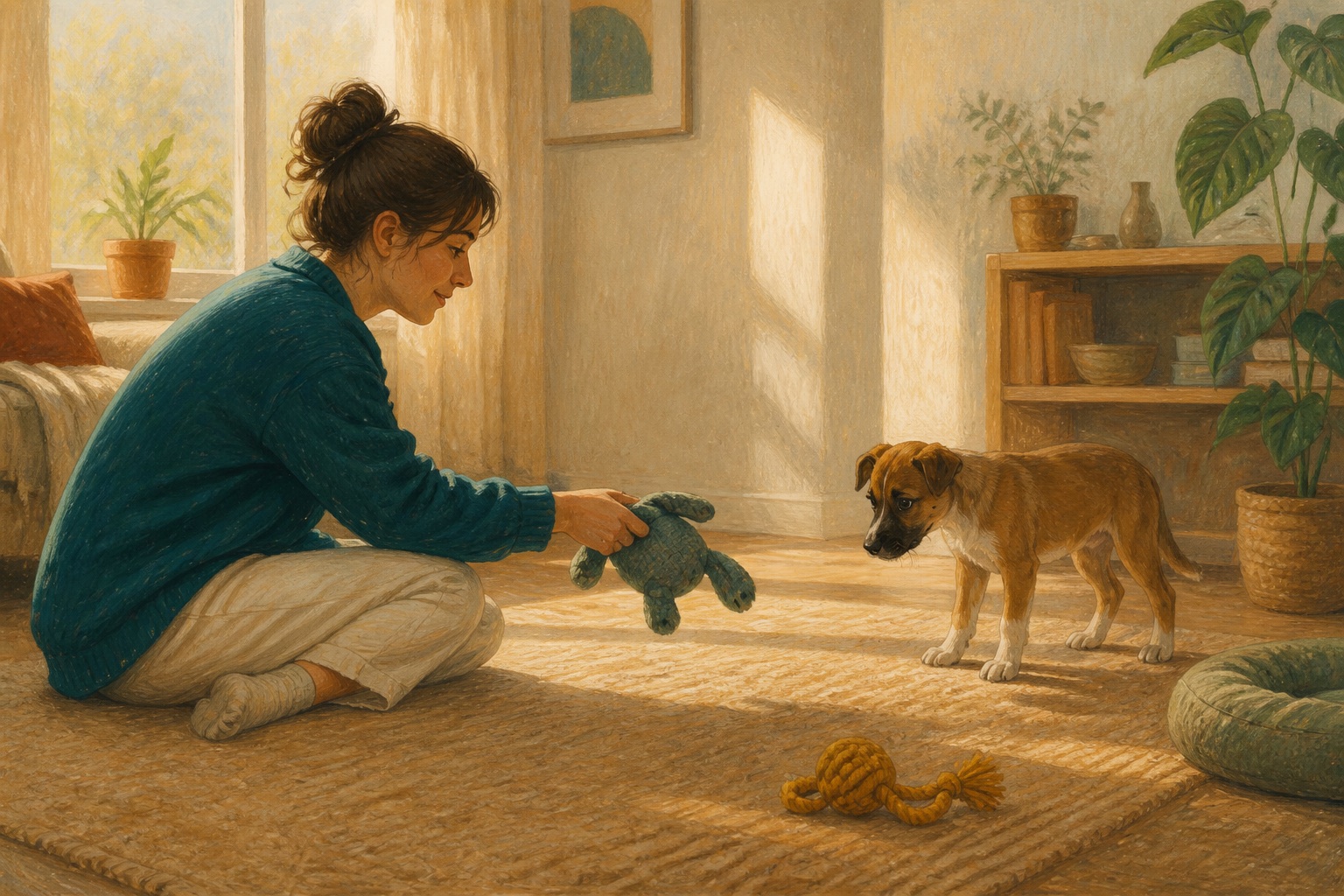
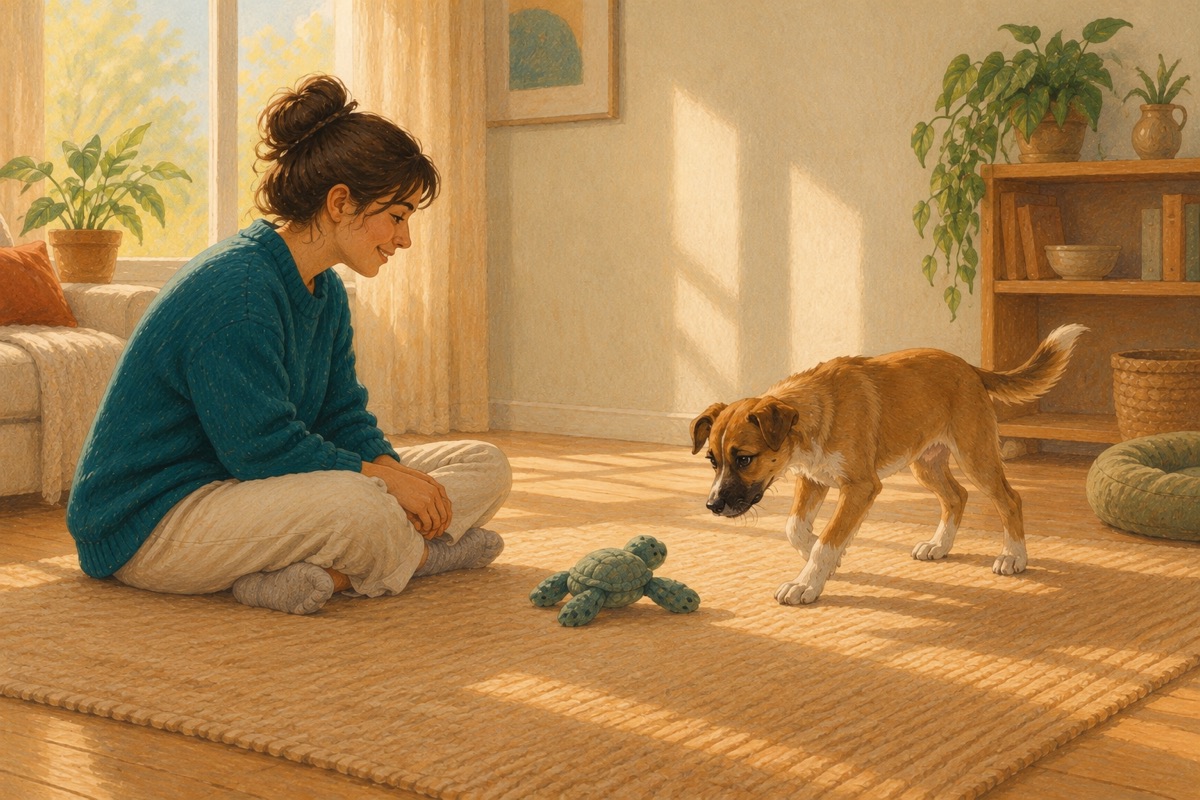
Offer the toy at a comfortable distance, move it briefly and pause. Avoid pushing it into the dog’s face, lifting the dog into position or repeatedly following when they move away. Curiosity may begin with looking, sniffing or one tentative approach.
Keep hands, clothing and children out of rough games. Use toys as the play object and supervise interactions. RSPCA guidance recommends safe toys and regular opportunities to play, while also teaching a dog to release an item without prising it from the mouth.
Use a consent check during dog play
After a few seconds, make the toy still and relax your body. If the dog steps back in, nudges the toy or offers another familiar play invitation, you can continue. If they turn away, sniff elsewhere, lie down or leave, let the game end.
A pause is not a test the dog can fail. It is a simple way to stop adding pressure and check whether the activity still has voluntary momentum. Short rounds also make it easier to notice changes in movement or escalating excitement.
Check toys, space and arousal before continuing
Choose non-toxic, size-appropriate toys without loose or damaged pieces and put away anything unsafe for unsupervised access. Use a surface with secure footing and remove breakable objects. A game that is safe in a garden may not be safe on a slippery floor or in a narrow hallway.
Pause when the dog repeatedly collides with people or furniture, cannot release the toy safely, becomes increasingly frantic, freezes, avoids, hides or shows a sudden change in movement or breathing. Give space and let the dog settle; do not punish signals that tell you the game has become difficult.
End while the game is still easy to repeat
Use a familiar exchange or scatter a few appropriate pieces of food away from the toy when that fits the dog’s plan. Put damaged toys away, offer water and allow a quiet transition. Do not turn the end into a chase for possession.
Notice recovery as well as enthusiasm. If your dog is reluctant to play, changes how they move, seems unusually irritable or needs much longer to recover, record the factual change and discuss it with a veterinarian when it is new, repeated or concerning.
Make play easier to say yes to
- Start at their distance
Place the toy nearby rather than in their face. For a cautious animal, watching the toy from a safe distance can be participation too.
- Match the activity to the individual
Some companions prefer scent, scratching, searching, gentle chasing or a short tug. Watch what creates relaxed attention rather than assuming one toy suits everyone.
- Keep sessions short and finish well
Pause while interest is still present and let them come back. Ending before frustration or fatigue helps play remain something they can choose again.
- Make safety part of the setup
Use items sized for the animal, check them for damage and put away anything that is not safe for unsupervised access. If you are unsure about an item, choose a simpler option.
Signs to respect
Turning away, freezing, leaving, repeated lip-licking, hiding or losing interest are reasons to pause and give space. The goal is not to interpret every signal perfectly; it is to make opting out safe and normal.
Sources and further reading
This general guidance was researched against the following veterinary and animal-care sources:
Frequently asked questions
How long should I play with my dog?
There is no universal duration. Start with a short round, pause and use the dog’s engagement, movement and recovery to decide whether to continue.
Is tug safe for dogs?
It can be suitable for some dogs with a sturdy size-appropriate toy, secure footing and an easy exchange. Health, mobility or guarding concerns need individual professional advice.
How do I know if my dog wants to keep playing?
Pause the toy and your movement. Voluntary re-engagement can invite another round; turning away, leaving or settling elsewhere should end it.
Can I use my hands as toys?
Use an appropriate toy instead. It gives the game clearer boundaries and reduces accidental contact with skin or clothing.
When should reduced play interest concern me?
Discuss a new, repeated, persistent or worsening change with a veterinarian, especially when it appears with altered appetite, movement, breathing, behaviour or recovery.
These articles offer general, everyday guidance. They do not replace advice from a qualified veterinary professional.
Make room for play
Add one short, repeatable play moment to the day.
Nuzzleway helps you keep gentle daily activities visible and adapt them when energy, mobility or routine changes.