The short answer
Introduce unfamiliar rabbits gradually, beginning with separate complete living areas and a secure barrier that prevents bites. Check health and neutering with a rabbit-competent veterinarian, then arrange supervised meetings in neutral space with ways for each rabbit to retreat and enough resources for both. Move forward only after repeated calm contact. Fighting, biting, persistent chasing or injury means stop, separate safely and seek qualified help. Avoid forced or stress-based bonding methods.
Rabbits are social, but two strangers should not simply be placed in one enclosure. First discuss health, neutering and compatibility with a rabbit-competent veterinarian or experienced rescue. Prepare separate living areas where each has enough space, hay, water, litter and shelter. Move from safe awareness of one another to brief supervised meetings in a neutral area only when both rabbits are ready.
| Stage | What to look for | Pause or get help when |
|---|---|---|
| Before contact | Both rabbits are healthy, eating normally and have a veterinary plan for neutering and preventive care. | Either is unwell, recovering or their status is uncertain. |
| Separate spaces | Each can eat, rest, hide and move away; the barrier prevents bites. | One charges the divider, stops using resources or cannot retreat. |
| Neutral meetings | Both explore, eat or rest without persistent tension during constant supervision. | There is biting, fighting, persistent chasing or a risk of injury. |
| Shared home | They have been consistently calm together and can access duplicated resources. | Blocking, injury or renewed conflict appears; step back and seek advice. |
This is an overview, not a timetable or a substitute for individual guidance from a rabbit-competent professional.
Before choosing a second rabbit
An already bonded pair from a responsible rescue can remove much of the uncertainty of introducing strangers. If a rabbit needs a new companion, ask the rescue about temperament, health, neutering and the support it offers with pairing. No combination guarantees a bond. Give the existing rabbit’s age, mobility, diet and ordinary behaviour as context, and make sure the home can meet the needs of two individuals.
Arrange a health check and discuss the appropriate vaccination, parasite and neutering plan with a rabbit-competent veterinarian. Do not set a surgery date or a waiting interval from an online checklist. The rabbits need to be fit for the activity and for any contact. If one stops eating or passing droppings, that health concern comes before bonding and needs immediate veterinary advice.
Begin with two complete living areas
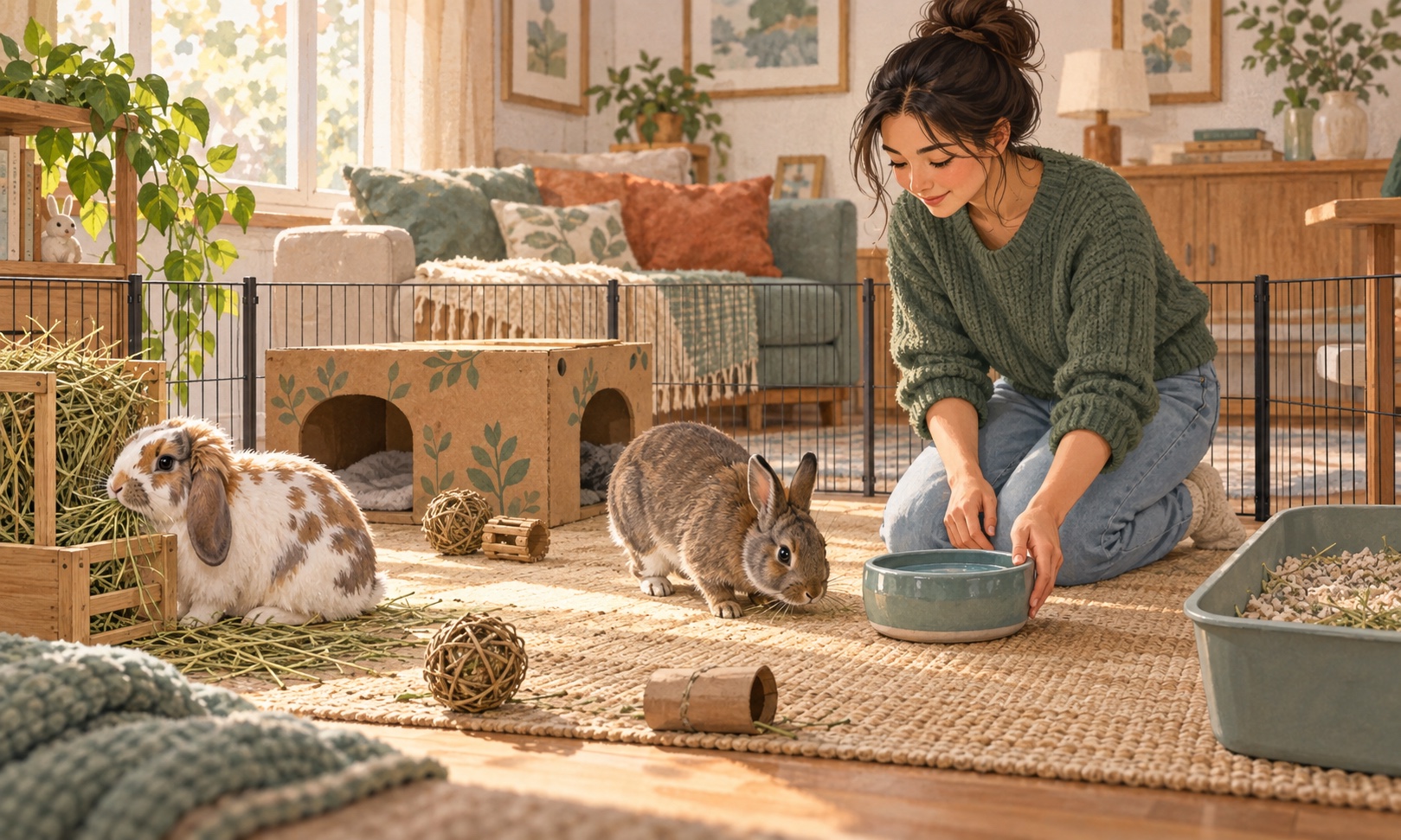
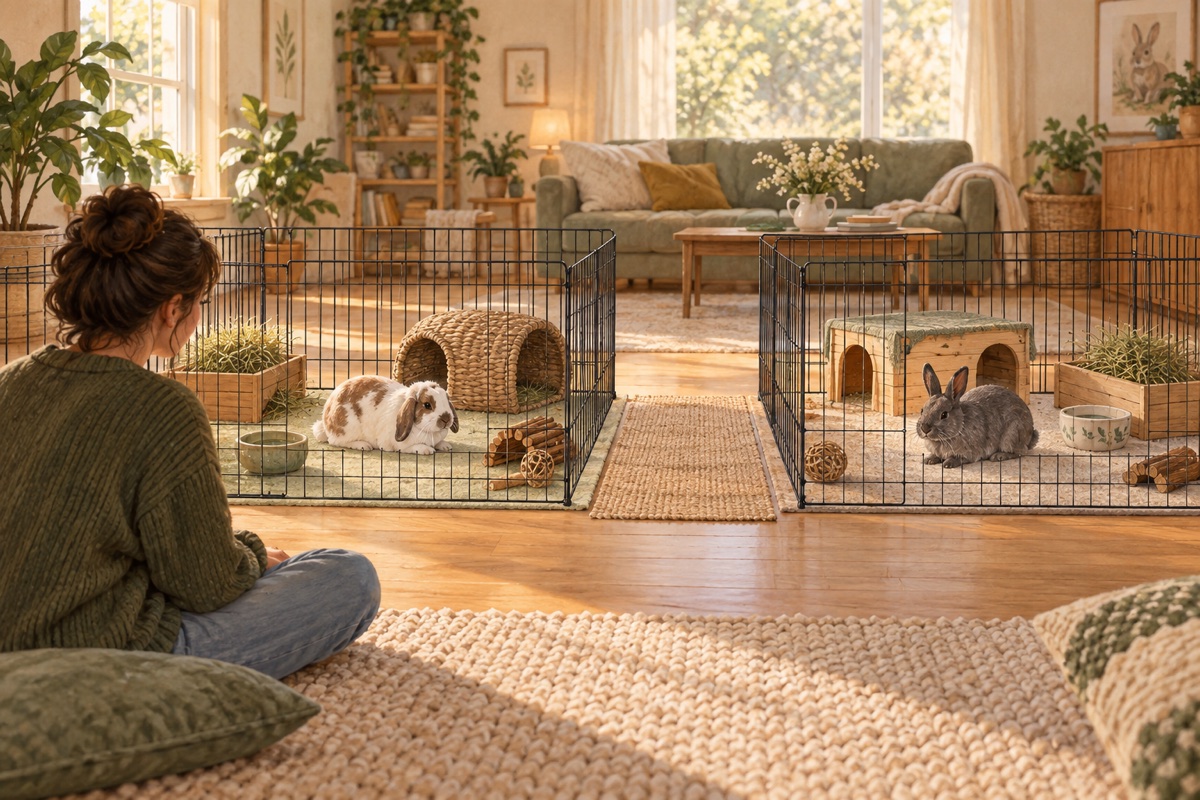
Each rabbit needs a safe, adequately sized area with its own hay, water, litter and hiding places. Place the areas so the rabbits can become familiar with one another at a distance while a secure barrier prevents nipping through it. Both must be able to move away from the barrier and retreat out of sight. The Rabbit Welfare Association & Fund bonding guide describes gradual introductions and rejects stressful, cramped bonding setups.
Observe each rabbit separately: are they still eating, moving and resting in their normal way? Some rabbits may sit calmly near the divider; others need more distance. If there is repeated charging, fixation or loss of access to essentials, increase separation and ask for help. The rabbit enrichment guide explains why space and duplicated options remain important even after a bond forms.
Plan short, supervised meetings in neutral space
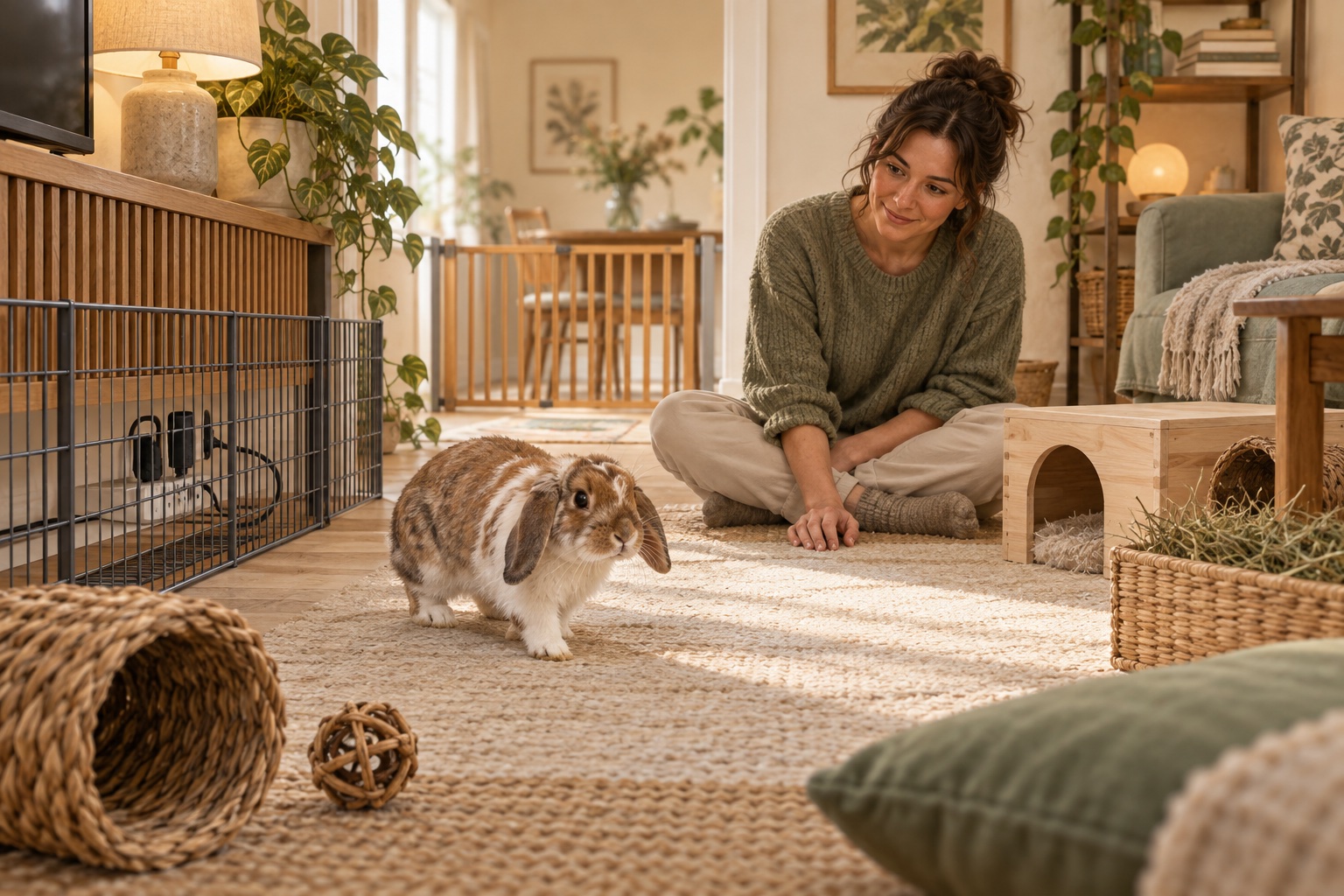
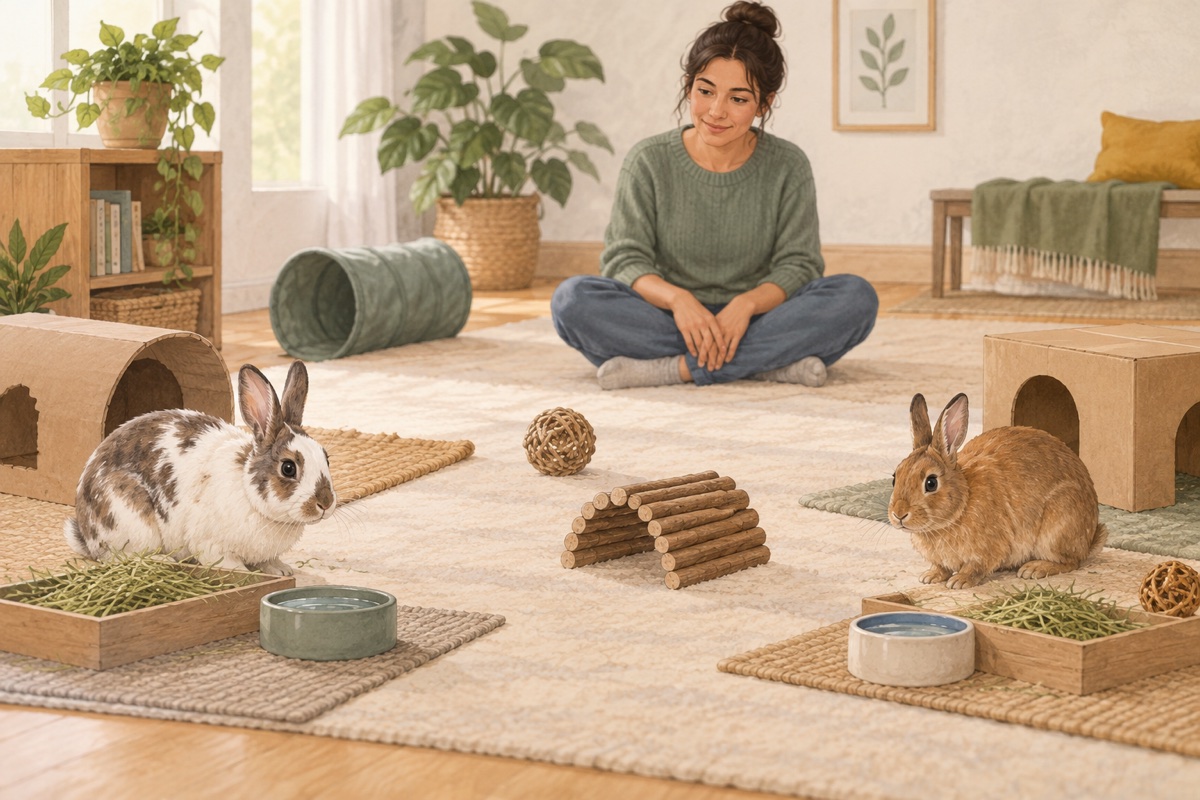
When both rabbits are comfortable with the sight and smell of each other, prepare an area neither regards as its own. Remove cables and hazards, block trapping points and keep paths open. A professional or experienced rescue can help choose the area and plan how to intervene safely. During every meeting, stay present and watch both rabbits; do not leave them alone together because one session looked calm.
RSPCA guidance on rabbit companionship describes gradually lengthening meetings when the rabbits remain relaxed. Calm exploration, normal eating, resting at a comfortable distance and later positive contact are encouraging. Persistent chasing, fast circling, biting, boxing, lunging or injury mean stop and separate them safely. Seek veterinary help for injuries and qualified advice before retrying. Do not use a car journey, very small space or another stressful situation to force proximity.
Move to a shared home only after repeated calm contact
Consistent calm in neutral meetings is the point to discuss a shared living area, not a single friendly moment. Prepare enough hay, water, litter and hides for both rabbits and more than one route through the space. Supervise the move and follow the individual plan from the rescue or veterinarian. A bond may need revisiting if illness, separation or a major change disrupts it.
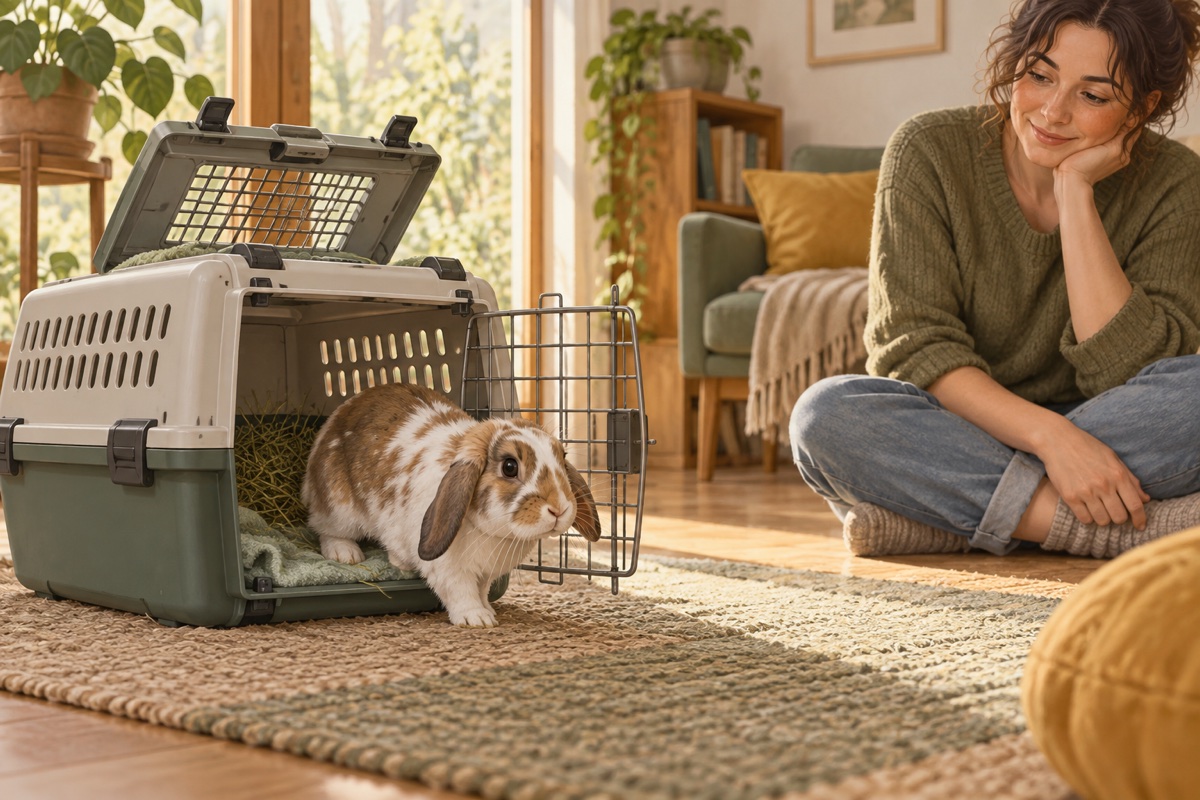
There is no deadline. If the pairing is not working, the answer is not to keep forcing contact. Return to safe separate housing and ask an experienced rescue, rabbit-competent veterinarian or qualified behaviour professional about the next step or a different match. The daily rabbit-care routine can help keep each rabbit’s appetite and ordinary behaviour visible during a household change. If a veterinary visit is needed, see the rabbit transport guide.
Prepare a safe rabbit introduction
- Get individual advice first
Ask a rabbit-competent veterinarian or experienced rescue about health, neutering, compatibility and the specific introduction plan.
- Set up two full spaces
Give each rabbit enough room, hay, water, litter and hides. Use a barrier that allows awareness but prevents injury, with a retreat available on both sides.
- Meet briefly on neutral ground
When both are comfortable, supervise short meetings in a safe neutral area with open routes. End and step back at signs of persistent tension.
- Share space only after calm repeats
Prepare multiple feeding, drinking, litter and hiding options. Continue supervision as they enter a shared area and follow qualified advice.
A pause can protect both rabbits
No fixed number of sessions proves a bond. Consistent relaxed eating, resting and exploration together are more useful than a deadline. If conflict escalates or one rabbit stops accessing food or water, return to safe separation and ask a rabbit-competent vet, qualified behaviour professional or experienced rescue for help.
Sources and further reading
This general guidance was researched against the following veterinary and animal-care sources:
Frequently asked questions
Can I put two unfamiliar rabbits together straight away?
No. First check health and neutering with a rabbit-competent veterinarian, provide separate suitable living areas and plan gradual, supervised contact. An experienced rescue may help choose and introduce a compatible companion.
How long does rabbit bonding take?
There is no reliable universal timetable. Move forward only when both rabbits remain comfortable at the current stage, and ask for qualified help if conflict persists.
What signs mean I should stop a meeting?
Stop and separate safely for fighting, biting, persistent chasing or circling, repeated head mounting, injury or severe distress. Seek veterinary help for injuries and qualified bonding advice before another attempt.
Do the rabbits need separate food and water?
Yes, each must have reliable access to hay, water, shelter and a place to toilet during separate housing and after they share a home. Provide enough routes and resources that one cannot block the other.
Should I use a car ride to make them bond?
No. Rabbit Welfare Association & Fund does not support stress-bonding methods such as unnecessary car journeys or very small spaces. Use gradual, supervised introductions and qualified advice instead.
These articles offer general, everyday guidance. They do not replace advice from a qualified veterinary professional.
A new chapter for both rabbits
Keep their separate routines visible while they settle.
Nuzzleway can help you track each rabbit's ordinary care and a few factual observations during a change at home. A rabbit-competent vet or experienced rescue should guide the introduction itself.