The short answer
Place a roomy, low-entry litter tray in an area your rabbit already chooses, using a safe, low-dust, non-clumping material and keeping suitable hay nearby. Give each rabbit reliable access, clean the tray regularly and reward voluntary use without punishment. A few droppings outside the tray can happen. A sudden change in toileting, straining, blood, pain or a wet rear needs rabbit-competent veterinary advice; a rabbit that stops eating or passing droppings needs immediate help.
Many rabbits choose one or more places to pass urine and droppings. Litter training works best when you put a suitable tray where the rabbit already prefers to go, make it comfortable and accessible, and let a routine develop without punishment. It is not a reason to shrink a rabbit’s permanent living area or ignore a sudden change in toileting.
| What you notice | First adjustment | When to ask for help |
|---|---|---|
| The rabbit uses one corner | Place a roomy tray in that chosen area and keep it available all day. | If the spot changes suddenly alongside discomfort or altered appetite. |
| The rabbit perches on the edge | Try a larger tray with an easier entrance and enough room to turn. | If entering seems painful or movement has changed. |
| One rabbit blocks the tray | Add another tray in a genuinely separate, accessible location. | If competition, chasing or injury persists. |
| A previously reliable rabbit has accidents | Check access, cleanliness and recent changes; note when and where it happens. | Seek prompt veterinary advice for a sudden or concerning change. |
A tray is a care tool, not a diagnosis. A rabbit that stops eating or passing droppings needs immediate veterinary advice.
Choose a tray the rabbit can actually use
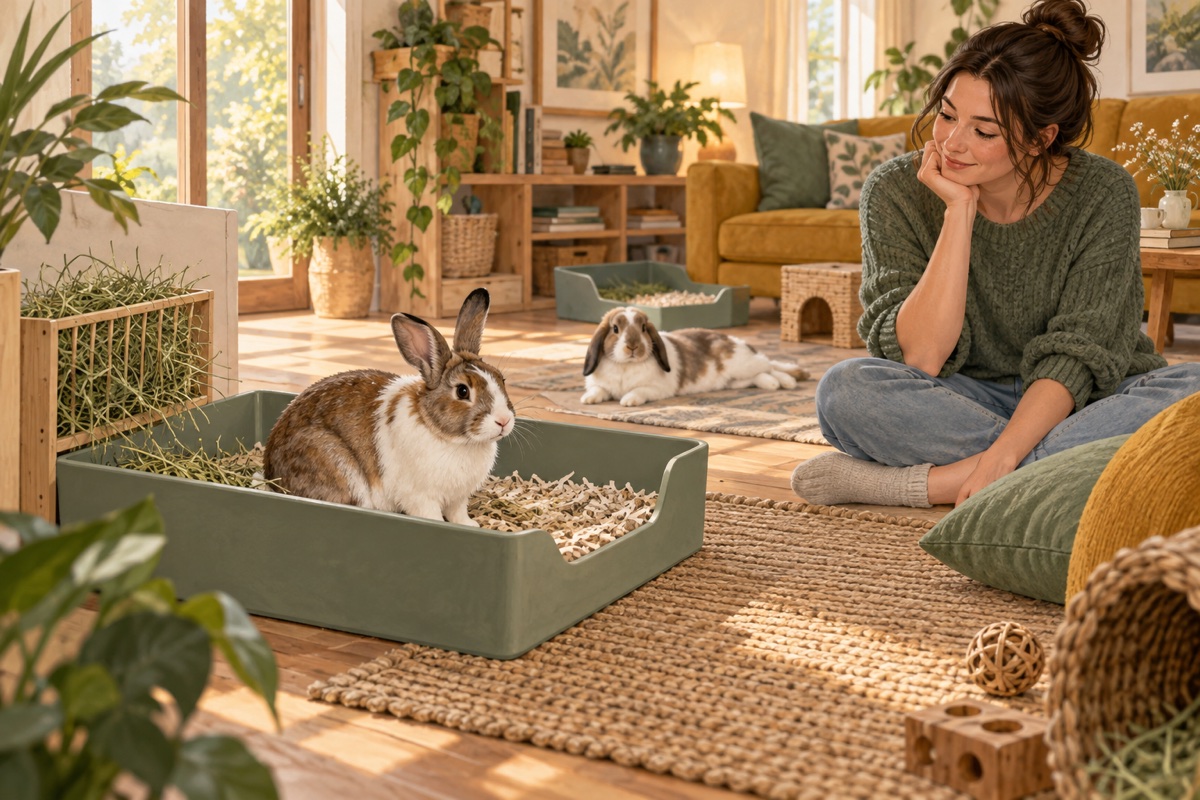
The rabbit should be able to step in, turn around and sit comfortably. A small corner tray may look tidy but can be too cramped, especially for a larger rabbit or a bonded pair. An open rectangular tray with a low entry side is easier to assess and can help rabbits with limited mobility. Avoid a wire or mesh floor under their feet, as RSPCA’s indoor housing advice recommends.
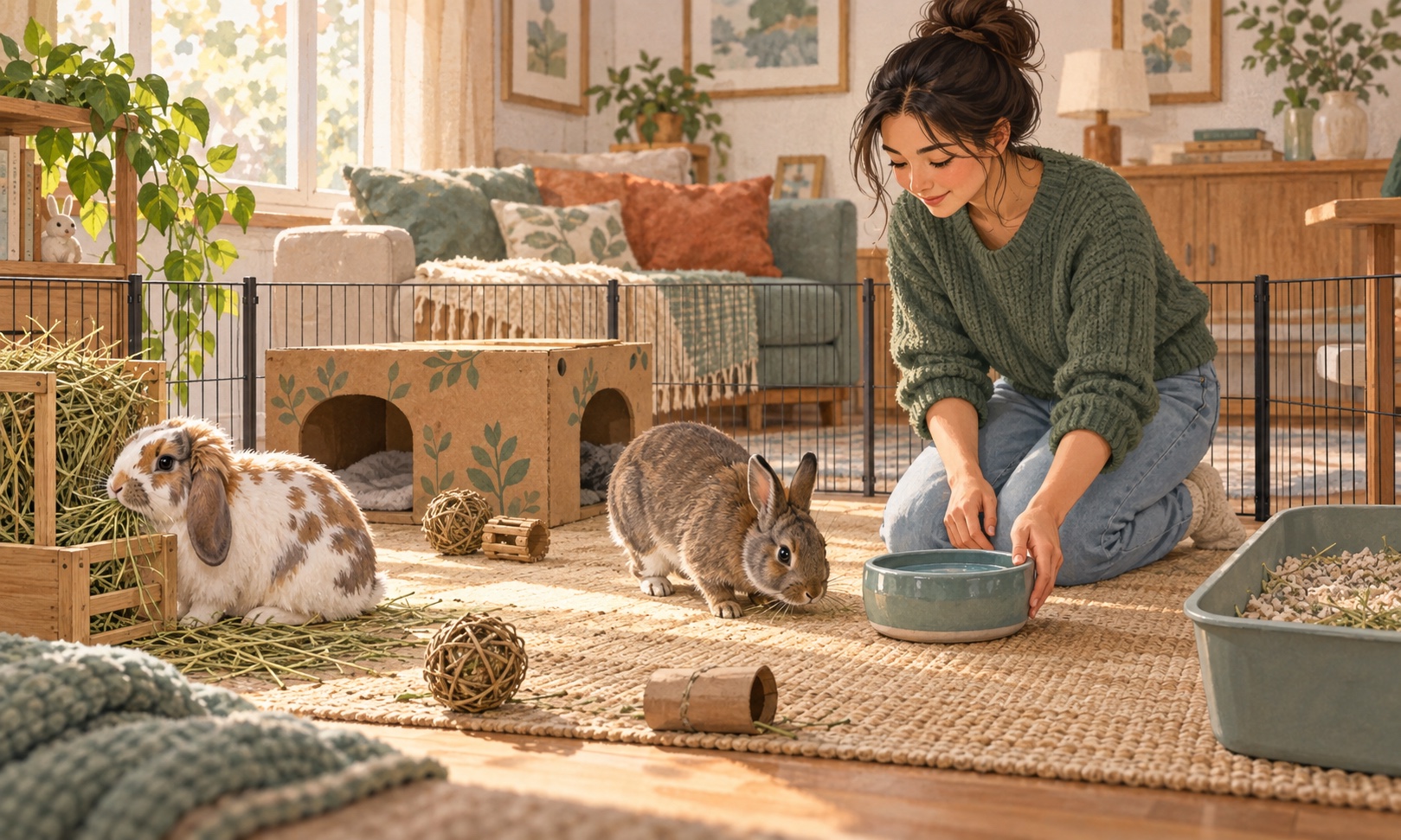
Put the tray in the rabbit’s usual living space, away from the sleeping area but always reachable. If the home has several zones, one tray at the far end may not be enough. In a pair, start with more than one useful location so one rabbit cannot guard the only option. Keep the wider area spacious, secure and suitable for normal movement; the rabbit-proofing guide covers room hazards separately.
Use rabbit-safe litter and keep hay accessible
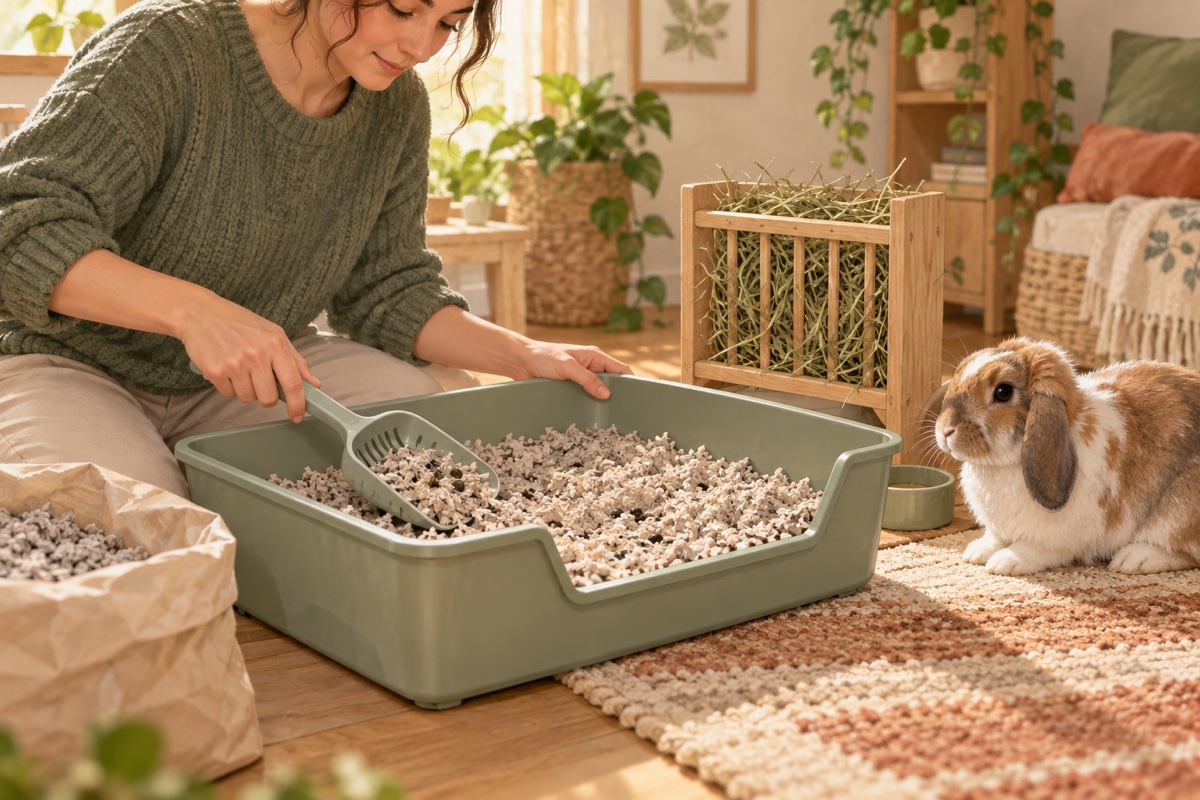
Choose an unscented, low-dust, non-clumping litter that is appropriate for rabbits. Paper-based options are a practical starting point. The House Rabbit Society litter guide advises against clumping clay cat litter and pine or cedar shavings; also avoid silica crystals. If a product’s ingredients or processing are unclear, check with a rabbit-competent veterinarian or welfare organisation before using it.
Rabbits often eat hay while using the toilet. Offer suitable hay in a rack beside the tray or in a clean part of it, without restricting their normal access elsewhere. Replace wet or soiled material and check that the hay stays usable. The tray should make ordinary care easier, not become the only place where a rabbit can eat.
Encourage use without forcing it
Start where the rabbit already toilets. You can move a few of their ordinary droppings or a small amount of used litter into the new tray to make its purpose familiar. Leave the route open and allow the rabbit to investigate. Reward voluntary use with a calm voice or a small part of their usual ration if that suits their existing diet; do not add treats just to make training work.
Clean accidents outside the tray with a rabbit-safe method and revisit the setup. A dirty tray, high edge, slippery approach or blocked doorway may matter more than training. Never shout, chase, lift the rabbit into the tray repeatedly or withhold access to other essentials. Keep expectations realistic: a few dry droppings outside the tray do not mean the entire routine has failed.
If the rabbit is new to the home, let them settle into a safe, adequately sized base area before expanding access to another room. Add another tray when a new zone makes the previous one hard to reach. This is an adjustment to access, not confinement as punishment.
When a change is about health rather than training
A rabbit that suddenly urinates elsewhere, strains, has blood in urine, has wet fur around the rear, moves differently or seems uncomfortable may need veterinary assessment. Do not assume the cause is marking or dislike of the litter. Write down the observable change and its time, then contact a rabbit-competent veterinarian promptly. If eating or droppings stop, seek immediate advice rather than trying a new tray first.
For everyday checks of appetite, droppings and habitat, use the rabbit-care routine. For a short factual record to share with a clinician, see the pet care journal guide.
A calm litter-training setup
- Follow the chosen corner
Put the tray in a familiar toilet area within the rabbit’s normal, adequately sized living space. Keep the route open at all times.
- Make entry and material comfortable
Choose a tray large enough to turn in, with a low entry and rabbit-appropriate non-clumping litter. Avoid wire flooring and dusty or scented substrates.
- Keep hay and alternatives accessible
Offer hay beside or in a clean part of the tray while maintaining ordinary hay access elsewhere. In a pair, distribute enough trays that one cannot block the other.
- Clean and observe without blame
Remove wet material, clean accidents safely and notice factual changes. Never punish a rabbit for eliminating outside the tray.
When training is the wrong explanation
New accidents can reflect access, social conflict, pain or illness. Record what changed and speak to a rabbit-competent veterinarian promptly when the change is sudden or concerning. Do not wait to trial another litter if the rabbit stops eating or passing droppings.
Sources and further reading
This general guidance was researched against the following veterinary and animal-care sources:
Frequently asked questions
Can rabbits learn to use a litter tray?
Many can. Place a roomy, accessible tray in an area they already choose, keep hay nearby and reinforce voluntary use. Occasional droppings outside it can be normal territory marking rather than failed training.
What litter is safe for a rabbit?
Choose an unscented, low-dust, non-clumping material recommended for rabbits, such as an appropriate paper-based litter. Avoid clumping clay litter, silica crystals and strongly scented softwood shavings. Ask a rabbit-competent professional about a specific product if uncertain.
How many trays do two rabbits need?
One tray per rabbit plus an extra is a useful starting point when there is space. Place them where each rabbit can reach one without another blocking access, then adjust to their actual use.
Should I punish accidents?
No. Punishment can create fear and does not make a tray easier to use. Clean the area, check access and placement, and reward calm voluntary use.
When should I call a veterinarian?
Contact a rabbit-competent veterinarian promptly for a sudden change in litter habits, straining, blood, wet or soiled fur, pain or other concerning signs. If eating or droppings stop, seek immediate veterinary advice.
These articles offer general, everyday guidance. They do not replace advice from a qualified veterinary professional.
Keep the care rhythm simple
Make litter care part of an ordinary day.
Nuzzleway can keep a light cleaning routine and brief, factual changes together. The tray setup and any health decisions still depend on your rabbit and a rabbit-competent professional.