A Labrador’s short coat has two layers and sheds. Gentle brushing removes loose hair; it cannot stop the natural process. Adjust short sessions to the coat and your dog’s comfort, avoid routine shaving and contact a vet for bald patches, itching or sore skin.
Dogs · Dog coat care
Labrador shedding: how to brush and care for the double coat
Build a gentle Labrador coat-care routine: choose a suitable brush, adjust sessions during shedding and recognise skin changes that need a vet.
Written and translated with AI assistance; checked against the linked animal-care sources on 14 October 2026. No individual veterinary review.
This guide is for the practical task of caring for a Labrador’s coat at home. For activity, feeding, rest and care by life stage, see the Labrador Retriever care profile.
Why a short-haired Labrador still sheds
The outer coat and denser undercoat form a double coat. Loose hair can be noticeable throughout the year, with heavier periods of shedding. The AKC Labrador grooming guide describes regular brushing and more frequent combing during a heavy moult. There is no reliable household hair count that defines a healthy Labrador.
Use the dog’s usual coat and skin as your comparison. Hair on the sofa alone is different from a newly bare patch or a dog repeatedly scratching one area. Do not assume that every increase is seasonal.
Choose a brush you can use gently
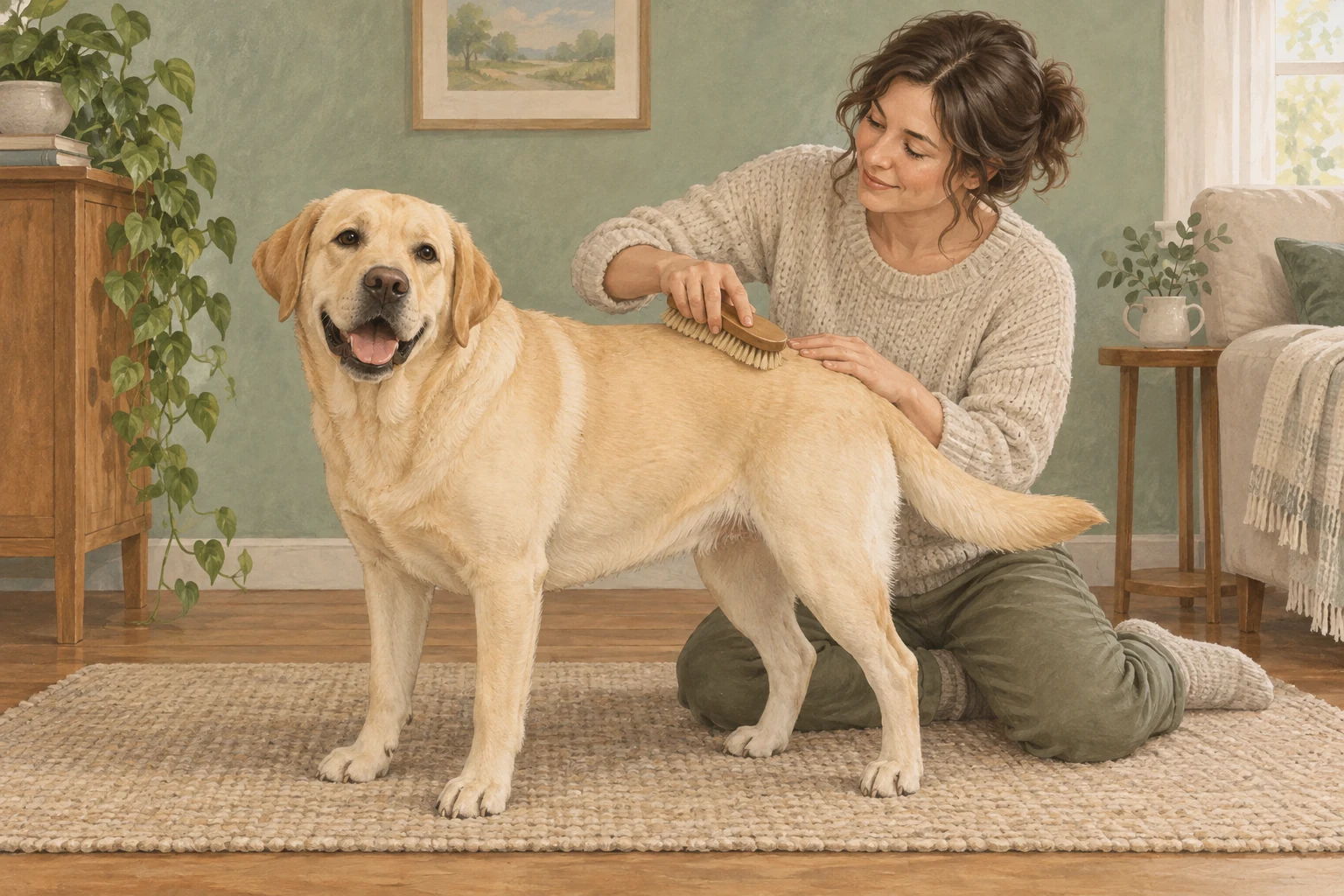
Start with a tool suitable for a short, dense double coat, rather than the most aggressive tool marketed for shedding. A grooming professional can show how a soft brush or grooming mitt works on your dog and whether another tool is needed to reach loose undercoat. The Royal Kennel Club explains that tools and techniques depend on coat type.
Try a few light strokes where the dog accepts touch. The tool should move without snagging, scraping or making the skin red. Do not dig harder because little hair comes out. Ask for a demonstration before using a bladed shedding tool; force or repeated passes over the same patch can irritate skin.
A short brushing session, step by step
- Prepare a stable space. Use a non-slip floor, good light and a position your dog finds comfortable. Put the brush and rewards within reach; you do not need to lift a large dog onto a table.
- Look before brushing. Check the area gently for redness, sores, unexpected bare patches or sensitivity. Stop and ask a vet about new skin changes.
- Offer a few light strokes. Work in the direction of hair growth, beginning in an easy area. Pause, reward comfortable participation and let the dog move away.
- Check both dog and skin. A dog turning away, stiffening or repeatedly avoiding the brush needs a pause. Pain or a new reaction deserves veterinary advice.
- Finish before it becomes a struggle. Clean the tool and leave another area for later. The goal is comfortable maintenance, not removing every loose hair in one sitting.
For a puppy or a Labrador unfamiliar with grooming, start with seeing the brush and one brief touch. For an older dog, choose a supported position and shorter sections. These are editorial examples of making handling manageable, not a prescribed treatment plan.
How often to brush, and when to bathe
Choose regular short sessions that keep the coat comfortable. During a heavy moult, the AKC suggests daily combing; that is a reference to adapt, not permission to continue over irritated skin or a distressed dog. Outside those periods, review whether the coat needs attention rather than filling a fixed quota.
Bathing is a separate decision. Dirt, swimming, skin health and any prescribed shampoo affect the plan. Use a dog-appropriate product, rinse thoroughly and dry the coat gently. Ask your vet for a bathing plan if the skin is itchy or being treated; do not add frequent baths simply to chase loose hair.
Should you shave a Labrador to reduce shedding?
Routine shaving is not a solution to moulting or warm weather. The AKC guide to double coats explains the role of both coat layers and advises against routine shaving. Veterinary clipping for a procedure or a professional decision about a severely compromised coat is different. Follow the individual professional plan rather than a general rule from a grooming video.
Loose hair or a skin problem: choose the next step
| What you notice | Useful next step |
|---|---|
| Loose hair, with an even coat and comfortable skin | Keep brushing gently and compare with the dog’s familiar pattern. |
| New bald patches, redness, scabs or repeated scratching | Contact a vet. Stop brushing the affected area; do not treat it as ordinary shedding. |
| A tool snags or grooming becomes uncomfortable | Pause and ask a groomer to check the tool and technique. New pain needs a vet. |
PDSA’s veterinary guidance on hair loss distinguishes ordinary moulting from bare or patchy areas and advises veterinary assessment of new fur loss. Brushing cannot diagnose allergies, parasites or other causes. Avoid home remedies or changing a prescribed skin plan without advice.
Keep a useful grooming note
Record only what helps you repeat comfortable care: date, tool, area brushed, how your dog responded and any new skin change. A dated photo can help explain a change if your dog tolerates it; it should not delay a call. Shared caregivers can read the last note before brushing the same area again.
For broader record-keeping, see what to track in a pet care journal. The article’s sources support general care; a groomer or veterinarian can tailor the plan to your Labrador.
These articles offer general, everyday guidance. They do not replace advice from a qualified veterinary professional.
Remember what worked
Keep your Labrador’s grooming routine easy to follow.
Record the brush you used, your dog’s comfort and any skin changes in Nuzzleway’s journal. Share clear observations with your groomer or vet.