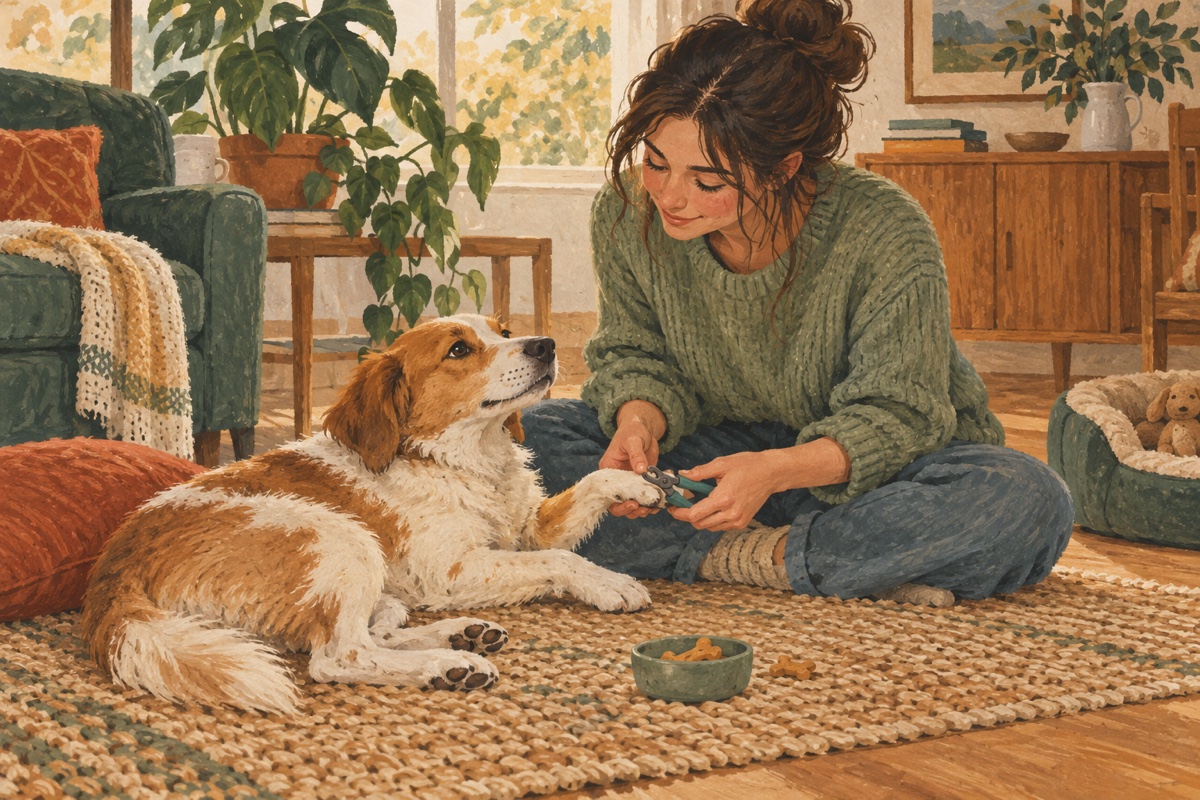
The short answer
Use good light and a sharp, correctly sized tool. Handle one toe comfortably and remove only a very small amount while leaving a clear margin from the quick. Stop if the dog is worried or you cannot identify a safe cut.
To trim a dog’s nails safely, prepare the tool and good light, position the dog comfortably, and remove only a small amount from one nail at a time. Stop before the sensitive quick. If the dog is worried or you cannot identify a safe cut, a groomer or veterinary professional can do the trim and show you an individual plan.
| Dog's response | Useful goal today | Proceed when | Stop when |
|---|---|---|---|
| Comfortable with paw touch | Show the tool, reward, touch one nail | Body remains loose and the dog re-engages | The dog withdraws repeatedly or stiffens |
| Comfortable with the tool | Trim one thin tip | You can see a safe margin and hold the toe steadily | You cannot judge the quick |
| Concerned by sound or vibration | Practise with the tool off or farther away | The dog can notice it and remain relaxed | They try to escape, freeze or refuse valued food |
| Painful, split or ingrown nail | Professional assessment | A veterinarian gives an appropriate plan | Do not attempt a routine home trim |
A partial session is still useful. Forcing completion can make the next trim harder and increase injury risk.
First check the paws and nails
Look for redness, swelling, discharge, cracks, a nail curling towards the pad or sensitivity on one toe. Check dewclaws as well because they may not contact the ground. A painful, torn or embedded nail needs veterinary assessment rather than an ordinary trim.
Listen to the dog’s movement, but do not use clicking on the floor as the only measurement. Nail shape, posture and surface differ. Ask your veterinary team or an experienced groomer to demonstrate the appropriate length and angle for your dog, especially the first time.
Prepare the tool and the room
Use sharp dog nail clippers of a suitable size or a pet nail grinder that is in good condition. Gather good lighting, high-value rewards and styptic powder recommended by your veterinary team. Choose a non-slip surface and a position that does not twist the dog’s leg.
If you use a grinder, introduce its appearance, sound and vibration separately. Keep each contact brief because grinding creates heat. Keep hair clear of rotating parts. If you use clippers, replace blunt blades that crush or split the nail.
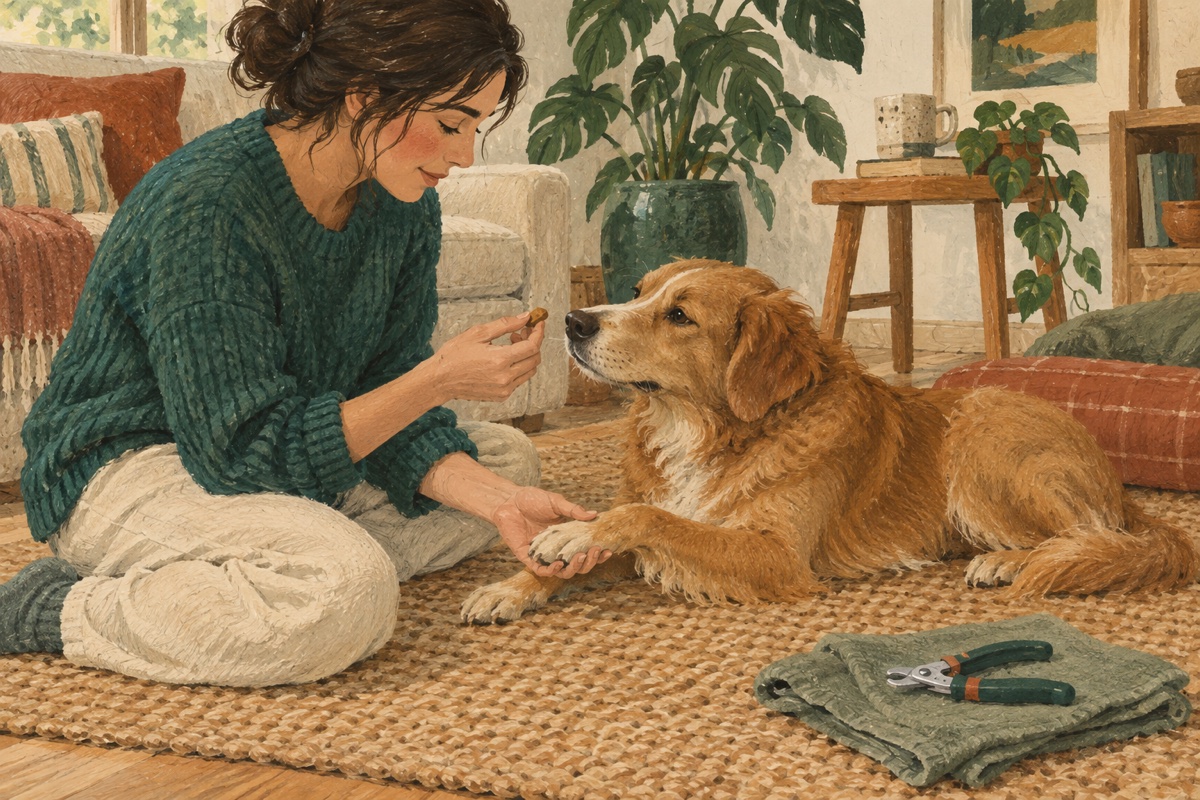
Build comfort before cutting
Start below the point that worries the dog. Touch the shoulder, move briefly down the leg, release and reward. Over several short sessions, progress to holding the paw, touching a toe and resting the tool against a nail. A dog who pulls away is asking for an easier step.
Use a stable, comfortable position instead of pinning the dog. Some dogs prefer lying on a mat; others stand while a second person delivers rewards. Keep faces away from the dog’s face and stop if you see freezing, repeated lip licking, struggling or an attempt to bite.
How to cut a small safe amount
Hold one toe gently and keep the tool steady. On a light nail, the pink quick may be visible through the shell; leave a clear margin. On a dark nail, remove very thin slices and inspect the cut surface after each one. If you cannot confidently judge the next cut, stop.
Trim at a controlled angle that follows the natural nail rather than taking a large blunt piece. One or two nails may be enough for a session. Remember the dewclaws and do not forget that front and rear nails can wear differently.
If you cut the quick
Stay calm and keep the dog on a stable surface. Apply styptic powder or the product your veterinary team has recommended, using gentle pressure. Prevent licking while you check that bleeding is stopping. Contact a veterinarian if bleeding continues, the cut is large, the nail is torn or the dog is in marked pain.
Do not make the next attempt immediately after a frightening incident. Return later to easy handling steps and, if needed, let a professional rebuild the plan with you.
How often should dog nails be trimmed?
Growth rate, exercise surface, toe alignment and age all change how often nails need attention. Check paws regularly rather than relying on a universal calendar. Record the date and which nails were trimmed so another caregiver does not repeat the job by mistake.
If nails have become very long, the quick may also be longer. Trying to reach an ideal length in one session can cause pain and bleeding. Ask a professional about small, more frequent trims and any gait or paw problem that needs assessment.
When professional help is the safer choice
Choose a groomer or veterinary professional if the dog is very fearful, has previously bitten during handling, has dark or severely overgrown nails, or needs a painful nail assessed. A veterinary team can also discuss an individual plan when pain, arthritis or intense fear makes positioning difficult.
Avoid unprescribed sedatives or improvised restraint. Bring notes about the paws the dog protects, tools already tried and signs that appear before distress. That context helps the professional make the next session safer.
A short cooperative nail session
- Inspect before trimming
Look for pain, swelling, splits and nails curling towards the pad.
- Prepare the setup
Use a non-slip surface, good light, rewards and a suitable sharp tool.
- Ask for one easy step
Reward calm paw touch before adding the tool or cutting.
- Remove a thin tip
Take very small amounts and inspect after each cut, especially on dark nails.
- Finish before distress
One comfortable nail is better than forcing a complete set.
Know when to hand the job over
A painful, split or ingrown nail needs veterinary assessment. Choose professional help for severe fear, previous biting, very overgrown nails or any cut you cannot judge safely. If bleeding after a cut does not stop with the method your veterinary team recommends, contact them.
Sources and further reading
This general guidance was researched against the following veterinary and animal-care sources:
Frequently asked questions
How often should I trim my dog's nails?
There is no single schedule. Nail growth, surfaces, gait and individual anatomy differ. Check regularly and ask a veterinary professional or groomer to show you the appropriate length for your dog.
How do I avoid cutting the quick?
Use good light and remove only a very small amount at a time. The quick is often visible in light nails but harder to judge in dark nails; stop if you are unsure and ask a professional.
Are clippers or a grinder better?
Both can work. Clippers are quick but must be sharp and correctly sized. Grinders remove smaller amounts but add noise, vibration and heat, so they need gradual introduction and brief contact.
What if a nail bleeds?
Stay calm, apply styptic powder or another product recommended by your veterinary team with gentle pressure, and contact a veterinarian if bleeding does not stop or the injury is significant.
What if my dog will not let me touch a paw?
Do not restrain harder. Return to brief touch-and-reward practice below the dog's stress threshold, and ask a qualified professional or veterinarian for a cooperative plan.
These articles offer general, everyday guidance. They do not replace advice from a qualified veterinary professional.
Make care easier to repeat
Keep short handling practice and grooming dates in one place.
Nuzzleway helps you remember which paws felt comfortable, what tool you used and when professional support is due.