Scratching is normal cat behavior. To protect a couch, observe which part your cat chooses and offer a stable, appealing scratching surface nearby. Try different orientations and textures, reward voluntary use and protect the furniture while your cat learns. Avoid shouting or punishment: the goal is to offer an alternative place to scratch.
Why cats scratch furniture
Cats scratch to stretch, leave visible and scent marks, and remove the outer sheaths of cats’ claws. A couch’s texture, height and location can make it attractive. The Feline Veterinary Medical Association describes scratching as normal and recommends offering vertical and horizontal surfaces to discover individual preferences.
A post in an unused corner may be less useful than one beside the place your cat already chooses. Notice whether your cat scratches the upright arm of a couch, a horizontal rug or an edge near a window, and when the cat scratches, such as after waking or playing.
Choose an alternative and place it nearby
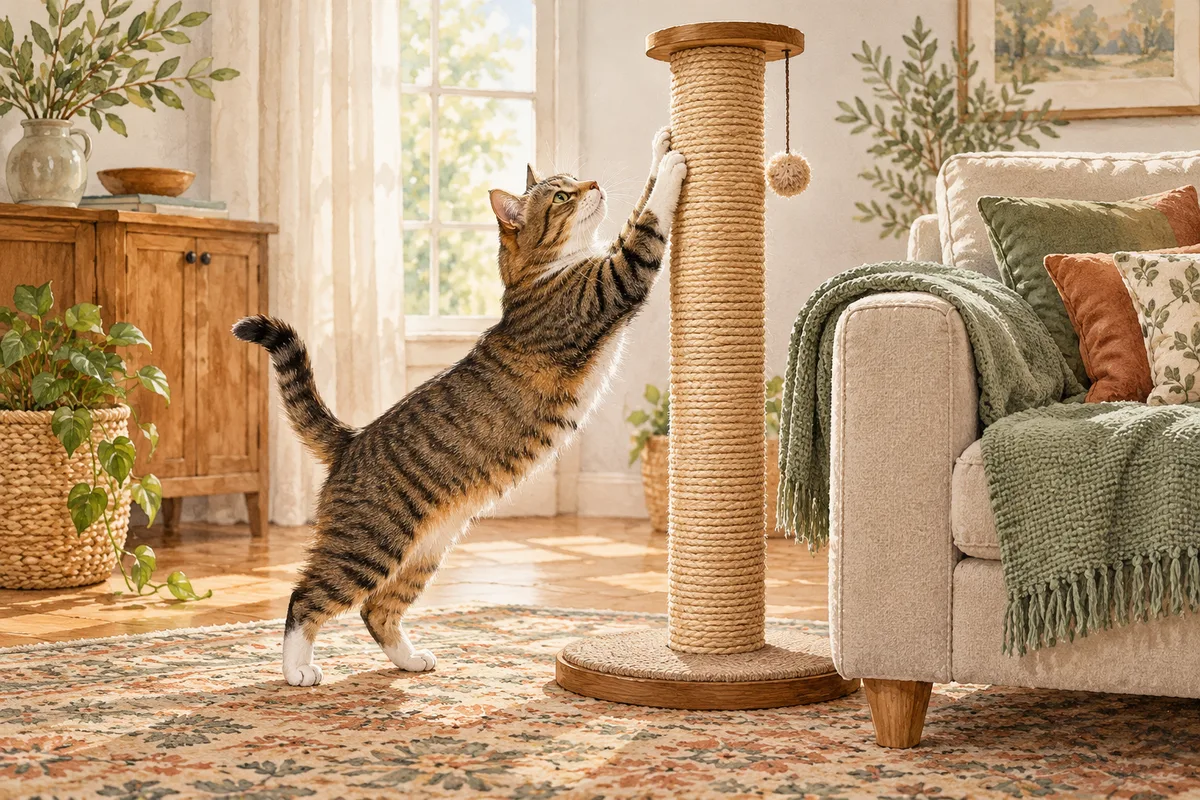
Try a stable vertical post tall enough for a full stretch, or a horizontal scratcher that does not slide. Cardboard, sisal and other textures may suit different cats. Place the alternative beside the scratched area without blocking the cat’s path or other resources. In a home with several cats, provide options in more than one location so cats can use the scratchers without competing for access.
| If your cat chooses | First option to try | Check |
|---|---|---|
| An upright couch arm | A stable post beside it | The cat can stretch and the post does not move |
| A rug | A nonslip horizontal scratcher | The texture and location appeal to the cat |
| A spot near the cat’s bed | An accessible scratcher nearby | Whether the cat uses it after waking |
Help your cat discover the scratcher
Let your cat investigate voluntarily. When your cat uses it, offer a suitable reward or gentle praise if your cat enjoys it. Playing nearby can encourage exploration without taking the cat’s paws or forcing the cat to scratch. Protect the couch temporarily with a safe, secure cover while keeping an alternative accessible.
If your cat ignores the scratcher, change one feature at a time: orientation, texture or position. Keep the surfaces that work. Once your cat uses the alternative regularly, you can move it gradually toward another nearby location if needed, checking that your cat continues to use it. There is no universal training deadline.
Responses to avoid
Do not shout at your cat. Do not spray your cat with water. Do not punish your cat for scratching. Do not force the cat’s paws onto a post. Removing claws for nonmedical reasons can cause harm and is not a welfare solution. The RSPCA recommends suitable surfaces, rewards and furniture protection, and advises against punishment.
When to contact your veterinarian
Ask your veterinarian if scratching suddenly increases, comes with changes in appetite, sleep, movement or behavior, or there is persistent tension between cats. A change deserves attention but does not by itself establish a cause. See our guides to behavior changes and indoor cat enrichment.
A brief note about the place your cat chose and the alternative you tried can help you adjust the home. Nuzzleway can organize routines and observations; using it requires an account and a paid subscription.
These articles offer general, everyday guidance. They do not replace advice from a qualified veterinary professional.