Start when you do not need to travel urgently. Let your dog approach the parked car voluntarily, reward comfortable steps and increase the challenge gradually. If your dog drools, vomits or shows distress, stop practicing and consult your veterinarian before trying again. Fear, motion sickness or both may be involved; one sign alone does not establish the cause.
Prepare a safe space
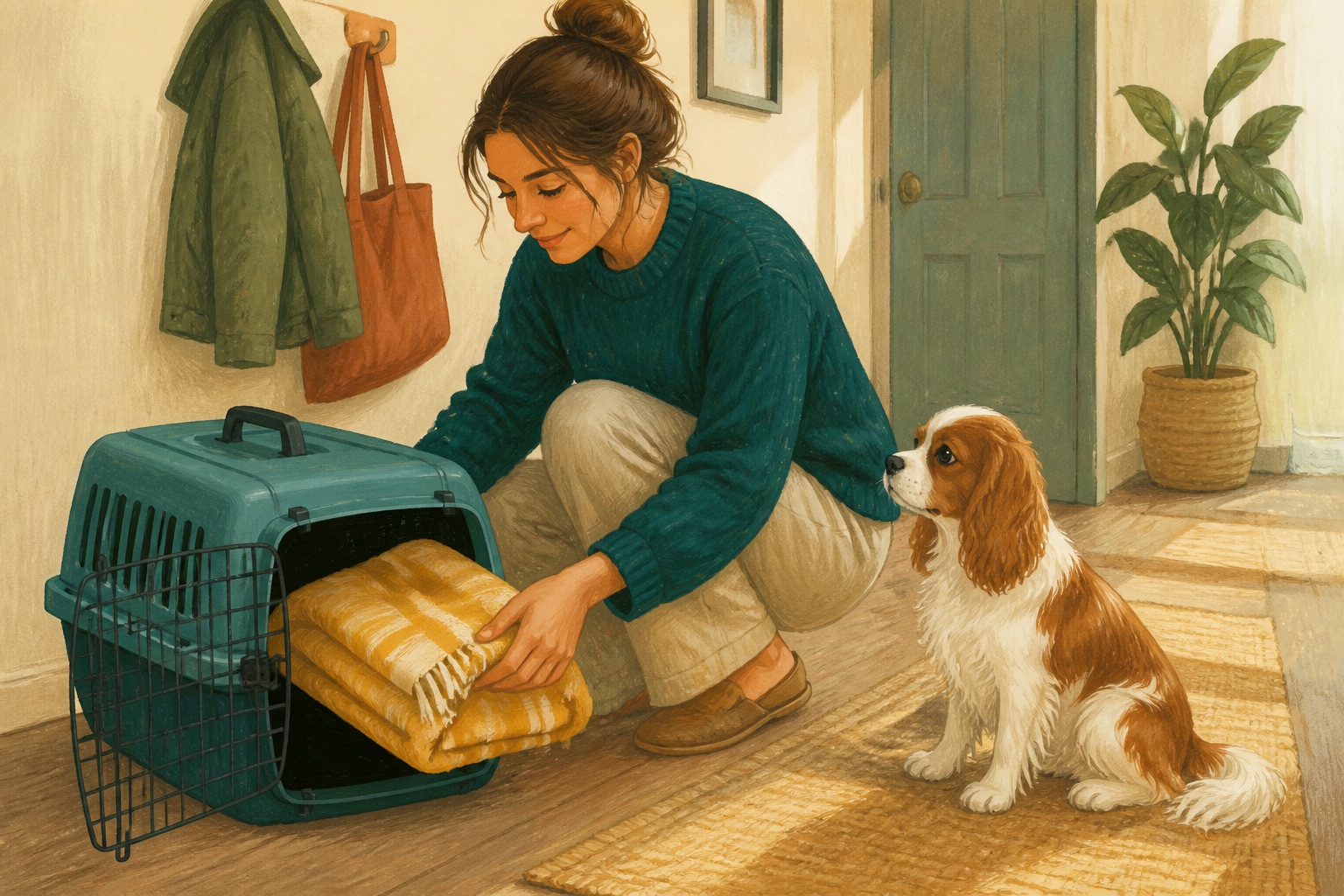
Practice in a quiet place with the vehicle parked and the engine off. Before driving, secure your dog using a car safety harness suitable for your dog and vehicle, or use a travel crate that is securely fastened to the vehicle and that your dog already knows. Do not allow your dog to travel loose or on the driver’s lap, and never leave your dog alone in a parked car. The AVMA advises getting pets used to travel equipment before a long journey and discussing motion sickness with a veterinarian.
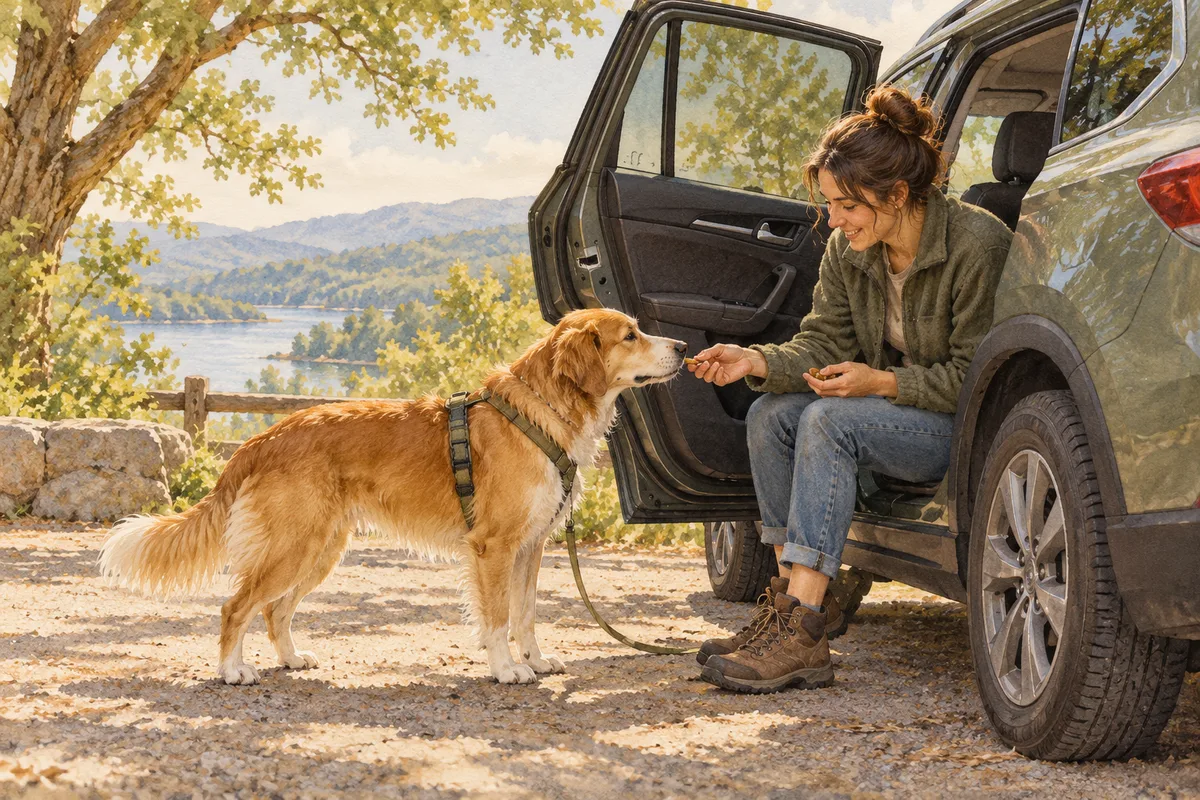
Do not begin with a long drive to make your dog “get used to it.” If your dog avoids the car, a first session may simply involve looking at it from a comfortable distance. Offer a suitable reward your dog enjoys and allow the dog to move away. Comfort and recovery matter more than meeting a deadline.
A progression you can adapt
| Stage | Practice | Go back a step if |
|---|---|---|
| Approach | Look at and sniff the parked car from a comfortable distance | Your dog freezes, tries to move away or refuses a usual reward |
| Explore | Approach the open door and move away voluntarily | They avoid the area or become more tense |
| Enter and leave | Enter voluntarily while the engine is off | They rush out or cannot relax |
| Engine | Spend a brief moment with the engine on and the car stationary | Sound or vibration causes distress |
| First ride | A short trip using a suitable restraint to a quiet destination | Distress increases or signs of motion sickness appear |
Move forward only when the previous stage is comfortable. If your dog shows fear, end the session safely and return later to an easier version. Do not force your dog into the car or scold the dog for vocalizing or vomiting. Cornell describes gradual acclimation and adapting the pace to the individual dog.
Is it fear or motion sickness?
Drooling, lip licking, restlessness, vomiting or vocalizing may occur during travel. A dog may also avoid the car before getting in. Note when the change starts: approaching the car, closing a door, starting the engine or moving. You do not need to decide whether the cause is anxiety or motion sickness before asking for help; your veterinary team can consider both.
Consult your veterinarian before repeating trips if your dog vomits, seems ill or is intensely afraid. Do not give your dog medicine intended for humans. Ask your veterinarian before giving your dog any medicine. Do not use a general guide to decide whether your dog should fast. If your dog needs urgent veterinary care, call the clinic for transport advice; an emergency should not wait for training to finish.
Prepare for the next journey
Check the restraint, ventilation and temperature, bring water and plan breaks appropriate to your dog’s age and needs. Do not let your dog put the dog’s head out of a moving car window. At stops, secure the leash before opening a door to reduce the chance of escape.
For an appointment, see preparing for a veterinary visit. A short note about the stage practiced and what you observed can help with the next step and your conversation with the clinic. Use paper or Nuzzleway’s journal. Using Nuzzleway requires an account and a paid subscription.
These articles offer general, everyday guidance. They do not replace advice from a qualified veterinary professional.