Mix movement with calm learning
Try sniffing and reward-based practice alongside walks. A working background suggests activities to explore, not a temperament guarantee or permission to exhaust the dog.
Boxer care: suitable activity, calm recovery, short-coat grooming and attention to breathing and facial folds.
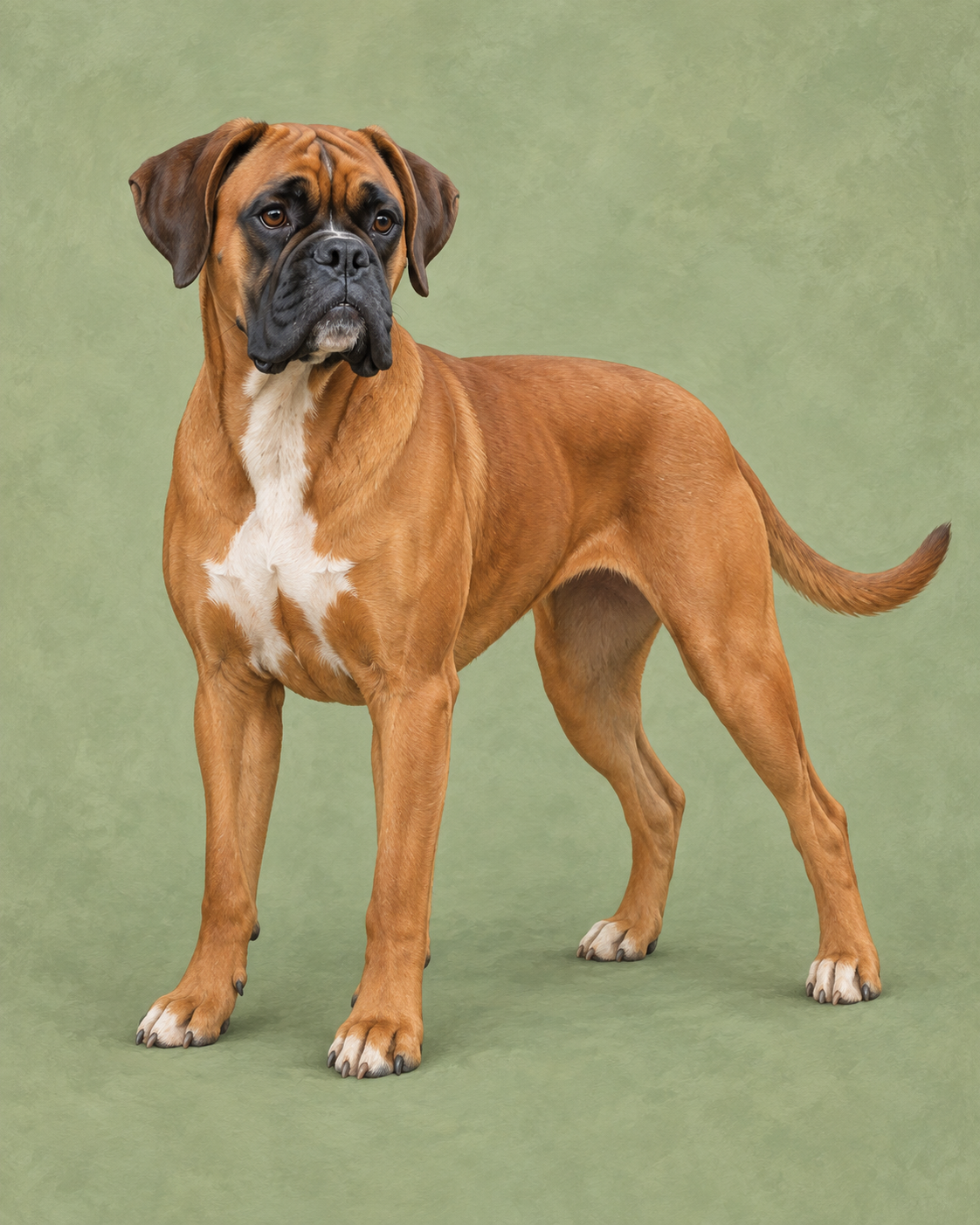
Adult-weight ranges are broad reference points, not a target for an individual dog. Age, sex, build, activity and veterinary advice matter.
A quick reference for broad breed traits. Your dog’s individual history and needs always come first.
Sources: PDSA · Boxer ↗ · Royal Kennel Club · Boxer ↗
A breed is context, not a prescription. Use these ideas to make care easier to notice and discuss.
Try sniffing and reward-based practice alongside walks. A working background suggests activities to explore, not a temperament guarantee or permission to exhaust the dog.
A shorter muzzle can affect comfort in heat and activity. Stop for laboured breathing; severe breathing distress or collapse needs urgent veterinary care.
PDSA recommends weekly brushing of the short coat. Keep facial folds clean and dry; redness, smell or soreness needs veterinary advice.
Choose cooler hours and a route with an easy return. The 40 + 30 + 50 minute example below is only for a healthy adult already comfortable with that activity; shorten it for heat or poor recovery.
Make calm greetings and settling part of short, rewarding practice. Supervise play with children because a large, excited dog can knock someone over. Puppies and frail seniors need the age-specific plan below rather than adult exercise minutes.
PDSA recommends weekly brushing of the short coat. Keep facial folds clean and dry; redness, smell or soreness needs veterinary advice.
Boxers can have heart conditions: new fainting or reduced exercise tolerance warrants veterinary assessment, not extra fitness work. A new or changing lump also deserves a check. Describe when a change began and what happened before it; breed risk alone cannot diagnose your dog.
Use the breed’s care notes above as context. Adapt the schedule to age, current weight and body condition, size, fitness, health, mobility, temperament, weather and your household. Sex alone does not determine a routine; neutering, heat, pregnancy and nursing also matter. Review changes with your vet.
No walks or adult meal schedule. If the mother is present, check that each puppy nurses effectively; do not replace successful nursing with a bottle timetable.
Seek urgent veterinary advice for failure to suckle, coldness, marked weakness, persistent crying, diarrhoea or breathing trouble. Do not wait for the next scheduled feed.
Sources: VCA ↗ · Merck Veterinary Manual ↗
Do not use the adult exercise minutes. Plan gentle outings around waking, meals and play, with rest between activities. Ask about growth and safe exposure before public walks; a fixed “5 minutes per month” rule is not supported by scientific evidence.
PDSA ↗Split the dog’s tolerated activity into easier outings. Note stiffness, limping or slower recovery and ask the vet to set durations if these appear. Age alone does not require switching food or dropping all exercise.
There is no single birthday that defines frailty. Difficulty rising, exhaustion, appetite changes or disrupted sleep matter more than applying the breed’s adult exercise minutes.
Collapse, breathing difficulty, sudden inability to stand, severe pain or inability to pass urine need immediate veterinary attention. New confusion, appetite loss or repeated falls also deserve prompt assessment, not dismissal as “old age”.
During heat, choose quiet routes and prevent unwanted mating. After neutering, review weight and portions rather than automatically changing walk minutes. Pregnancy and nursing need an individual nutrition and activity plan; male and female dogs do not need different clocks solely because of sex.
Choose cooler hours and a route with an easy return. The 40 + 30 + 50 minute example below is only for a healthy adult already comfortable with that activity; shorten it for heat or poor recovery.
This is a broad breed reference, not an individual target. Exercise includes suitable walks and play, not continuous running. The session lengths below are an editorial example for a healthy adult already comfortable with this activity. Adjust for fitness, weather and veterinary advice; never push the dog to finish the clock.
Move these hours to fit your household. Allow quiet recovery before meals; ask your vet about meal–exercise spacing for this dog. Add toilet outings whenever needed. Medication follows its own prescription, not this timetable.
| Time | Care | Duration / amount |
|---|---|---|
| Walk / suitable activity | 40 min | |
| Meal | ½ of the agreed daily meal ration | |
| Walk / suitable activity | 30 min | |
| Walk / suitable activity | 50 min | |
| Meal | ½ of the agreed daily meal ration | |
| Last toilet outing | As needed |
PDSA gives a reference of 14–16 hours or more of sleep in 24 hours, with individual variation. Count daytime naps as well as night sleep; quiet rest is not always sleep.
Example rest windows for a healthy adult
| Time window | Opportunity to rest |
|---|---|
| – | Quiet night period |
| – | Undisturbed daytime rest |
| – | Undisturbed daytime rest |
| – | Undisturbed daytime rest |
These windows offer 14 h 45 min of quiet time, not guaranteed sleep or a confinement plan. Let the dog sleep outside them too and provide toilet breaks whenever needed. Use a comfortable, accessible bed, a calm location, daylight by day and dim light at night; keep water available.
For weaned puppies, AKC describes around 18–20 hours of sleep per day, with naps often lasting 30–120 minutes. Offer quiet time after short activity and a toilet opportunity when they wake. Night toilet breaks may still be needed; do not use the adult timetable or keep a puppy awake to meet it.
For a newborn, sleep fits around nursing, warmth and the agreed checks. Orphan feeding continues overnight as prescribed; an adult night block must never delay a feed or a veterinary assessment.
For a very old or frail dog, protect comfortable rest without setting a universal hourly target. Provide an easy-to-reach bed and assistance with toileting. New night pacing, confusion, panting or repeated waking merit a veterinary review of pain, health and sleep-wake changes; do not give sleep medicines yourself.
Share when the dog settled, estimated sleep, awakenings, toilet needs and who helped. Compare with this dog’s usual pattern rather than treating time spent in bed as time asleep.
Consult for a persistent or sudden change in sleep, difficulty settling or daytime lethargy. Difficulty waking, collapse or breathing trouble need urgent veterinary attention.
Before walks or training, set aside part of the measured daily food allowance for rewards and search games. Tell every caregiver what is left, so enrichment does not quietly become an extra meal.
For many healthy adults, two meals work as a starting pattern: 08:00 and 20:00, 12 hours apart. Weigh the agreed daily allowance first, reserve any food used for rewards, then divide the meal portion. No single gram amount is correct for every dog of this breed.
General feeding guide for weaned puppies: under 4 months, 4 meals (07:00, 11:00, 15:00, 19:00); 4–6 months, 3 (07:00, 13:00, 19:00); from 6 months, discuss moving to 2. These are example times, not a fasting rule. Confirm the pattern for very small puppies, illness or a prescribed diet.
UK Pet Food ↗Only schedule medication prescribed for this dog. Record the name, prescribed dose, route, interval, start and end dates, food instructions and who gave it at what time. Include vet-directed preventive treatments. For a missed dose or a reaction, contact the clinic; do not double a dose or change treatment yourself. Nuzzleway organizes reminders, not prescriptions.
| Prescribed interval | Time |
|---|---|
| 24 h | 08:00 |
| 12 h | 08:00 · 20:00 |
| 8 h | 06:00 · 14:00 · 22:00 |
Only if the prescription specifies this interval: every 24 hours → 08:00; every 12 hours → 08:00 and 20:00; every 8 hours → 06:00, 14:00 and 22:00. These illustrate spacing, not a choice of treatment. Confirm the starting time, food requirements and what to do after a late, missed or vomited dose with the clinic before setting reminders.
FDA ↗Agree who handles each walk, meal and prescribed dose, then share the times and care notes with family or a sitter. Mark what was actually done, with the time and person, so the next caregiver can check before repeating it. Keep the agreed routine and observations together in Nuzzleway and review the plan when the dog’s needs change.
Example handover: “18:40 — walk completed by Alex, 25 min, settled comfortably. Dinner not given yet. Check the medication log before any dose.” Record actual times and completion, not just reminders.
Sources: PDSA ↗ · AAHA ↗ · PDSA ↗ · PDSA ↗ · AKC ↗ · AAHA ↗ · UK Pet Food ↗ · FDA ↗ · AAHA ↗
Nuzzleway
You do not need to measure everything. Start with what is ordinary, then keep a brief note when something is different.
Recovery after familiar walks, breathing, facial-fold comfort, new lumps, appetite and sleep.
General guides that can help you build a kinder routine around this dog.
Everyday care
Everyday wellbeing
Life stages
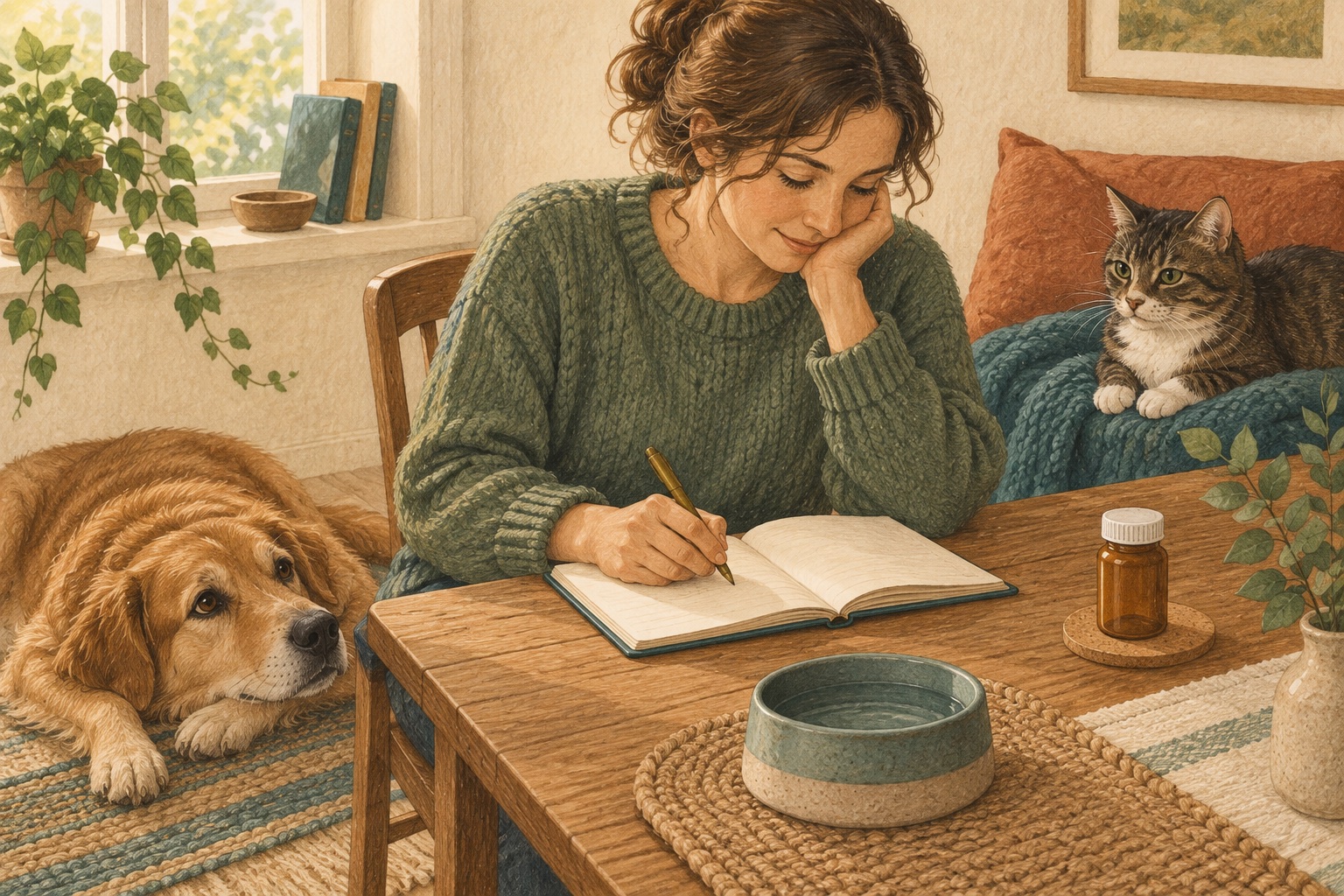
Care moments
Nuzzleway brings routines, care dates, gentle check-ins and private memories together for the dog you know.