Check feathering for tangles
The longer hair on ears, legs and underside can catch debris. Brush gently and check after outdoor time, adjusting frequency to the individual coat.
English Cocker Spaniel characteristics and care: a sporting spaniel with a silky, feathered coat, scent-led interests and a need for regular grooming.
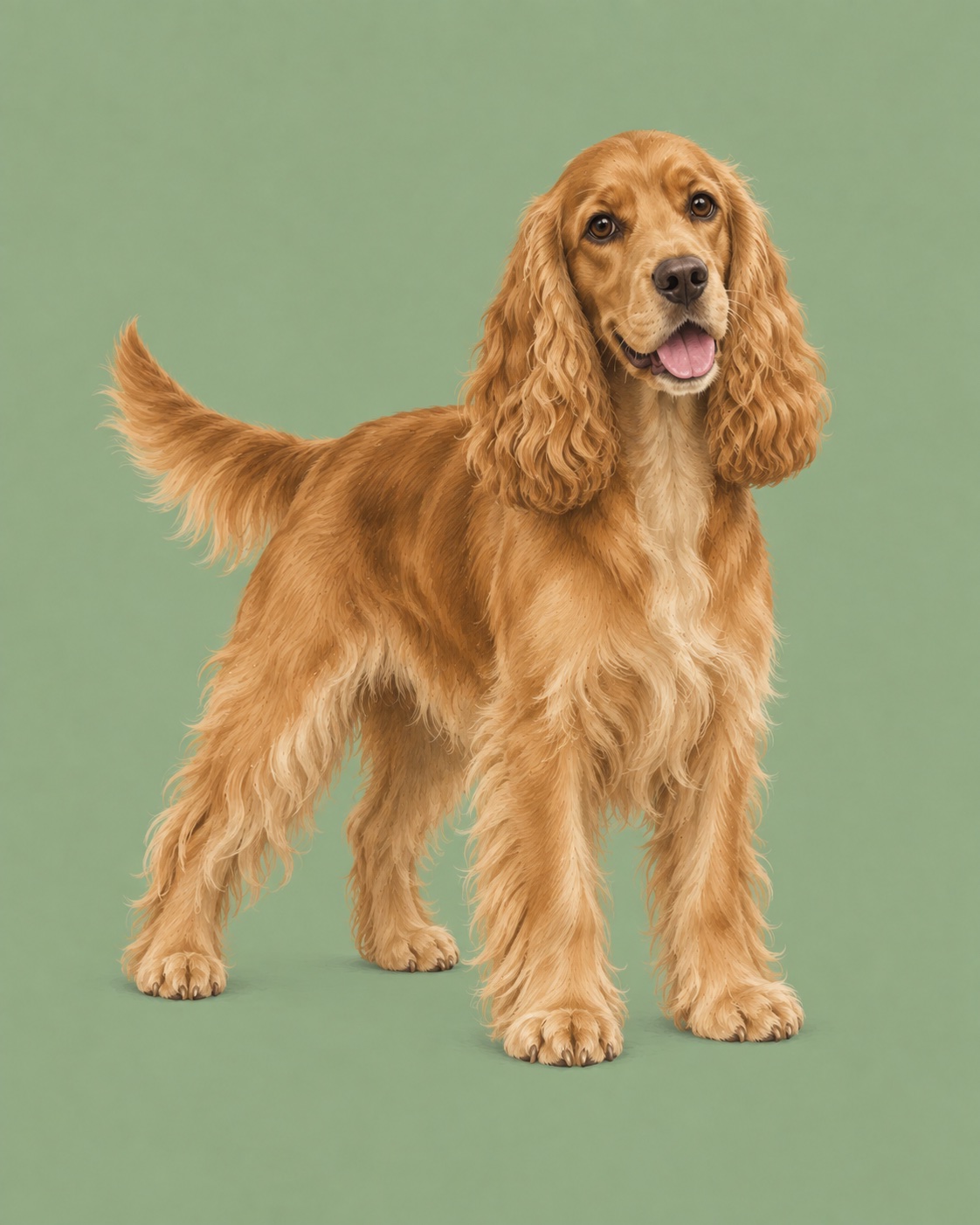
Adult-weight ranges are broad reference points, not a target for an individual dog. Age, sex, build, activity and veterinary advice matter.
A quick reference for the broad traits behind the name. Your dog’s individual history and needs always come first.
Sources: Royal Kennel Club Cocker Spaniel profile ↗ · AKC English Cocker Spaniel care overview ↗
A breed is context, not a prescription. Use these ideas to make care easier to notice and discuss.
The longer hair on ears, legs and underside can catch debris. Brush gently and check after outdoor time, adjusting frequency to the individual coat.
A relaxed sniffing walk or easy food-search game can add interest alongside suitable movement. Use safe routes and build attention with rewards.
Look for a new smell, redness, discharge or repeated head shaking. Ask a veterinarian about persistent signs instead of treating them at home.
The English Cocker Spaniel was developed to find game birds, especially woodcock. Many individuals enjoy following scents, exploring and taking part in activities with their people. Those tendencies are useful context, but breed alone cannot predict a dog’s temperament or daily exercise needs.
Offer walks that allow safe sniffing, short games and time to rest. Reward-based practice helps build everyday cues in increasingly distracting places. If an older or less mobile Cocker changes pace, adapt the outing and discuss a persistent change with the veterinary team.
The silky medium-length coat has feathering that can tangle around the ears, legs and belly. Brush and comb gently, checking for debris after walks. A groomer can help set a realistic schedule for the dog’s particular coat and show you how to handle difficult areas without pulling.
During ordinary grooming, glance at the outer ear and notice whether the dog reacts differently to touch. Redness, odour, discharge or repeated head shaking should be assessed by a veterinarian. Avoid putting products into the ear without the veterinary team’s advice.
Nuzzleway
You do not need to measure everything. Start with what is ordinary, then keep a brief note when something is different.
Comfort on walks, interest in scent games, tangles after outings, ear comfort, appetite and rest.
General guides that can help you build a kinder routine around this dog.
Nuzzleway brings routines, care dates, gentle check-ins and private memories together for the dog you know.